- Sunday, 3 May 2026

KMC to build box culverts over Tukucha

BY A STAFF REPORTER,Kathmandu, Jan. 29: Kathmandu Metropolitan City (KMC) has launched initiatives to strengthen both urban infrastructure and public education, reflecting its focus on risk reduction, service efficiency, and accountability.
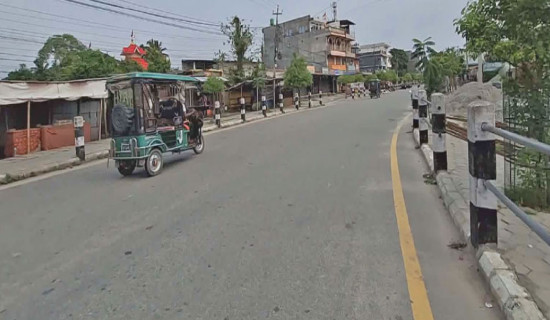
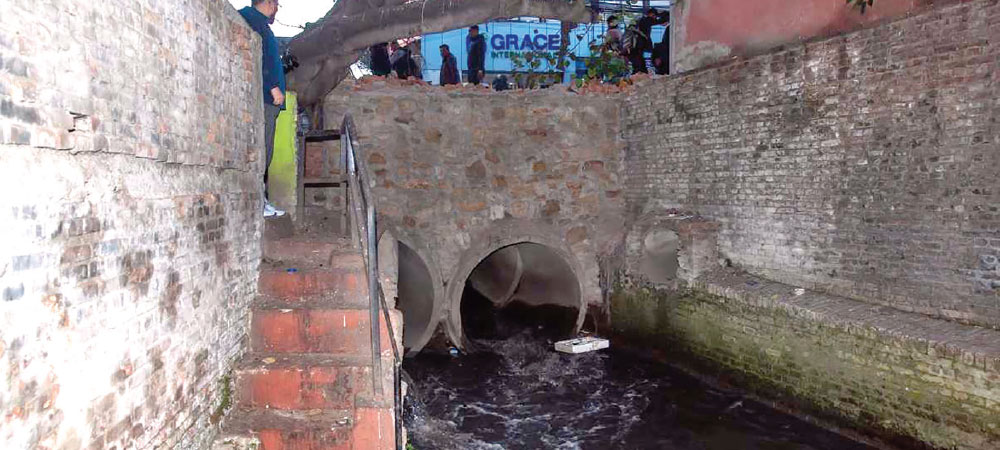
The KMC has decided to construct a box culvert over the Tukucha stream along the road section from Putalisadak through Bagbazaar to Ratna Park. According to the metropolitan city, the project, intended to improve water drainage and reduce flooding risks, has been contracted for Rs. 5.77 million with a deadline of mid-April.
The culvert will measure five metres on the roadside and 14 metres on the water-flow side. At present, water drainage in the area relies on old hume pipes, which have become ineffective. “During the monsoon season, water flow gets obstructed, increasing the risk of flooding and erosion,” said Dipak Bahadur Shahi, Sub-Engineer at the Department of Public Works. “The box culvert is being built to address these risks.”
Once construction begins, the road section will be fully closed for two months. The metropolitan city has coordinated with the Traffic Police Office to manage alternative routes. Vehicles traveling toward Bagbazaar via Putalisadak or Ramshah Path will be diverted through Kamaladi, passing the Kamaladi Ganesh Temple toward Ghantaghar.
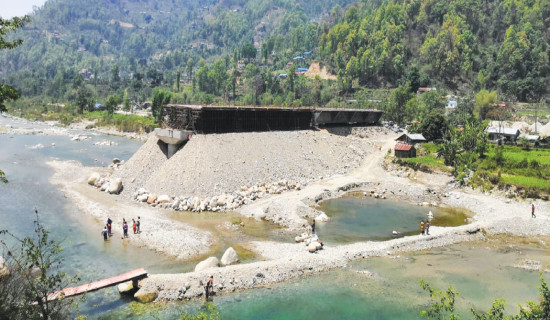
Additionally, the KMC is also constructing another box culvert near Rosebud School, before Dobhan, along the Dhobi Khola section. This project has been contracted for Rs. 22.12 million, and is scheduled for completion by mid-January 2027. The culvert will be 17 metres long and seven metres wide.
The project came after an iron bridge at the site was destroyed, along with its foundation, during the 2023 Dhobi Khola flood. Ward No. 11 Chairman Hira Lal Tandukar said several agencies had previously expressed interest in rebuilding the bridge but failed to do so. “When it became possible to build it through the metropolitan city’s central budget, the project finally moved forward,” he said.
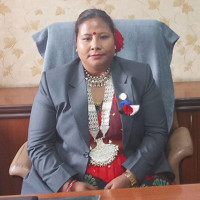
Meanwhile, Acting Mayor Sunita Dangol instructed the Education Department and the Information Technology Department to fully digitise attendance records of teachers, staff, and students in community schools within seven days on Tuesday.
Issuing the directive during a review meeting on departmental performance and ongoing best practices, Dangol stressed that accountability must extend beyond students. “Regularity is required not only from students but also from teachers and staff. The midday meal programme must be linked to digital attendance,” she said.
With the Secondary Education Examination (SEE) approaching, Dangol emphasised the need to improve the SEE results compared to last year. She called for stronger preparatory and extra classes, as well as timely management of teachers and classrooms, warning that improvements must be reflected in measurable data, with no exemptions for anyone.
The meeting also reviewed outcomes from support provided to the Bhrikuti Mandap Library, infrastructure assessment reports of community schools, the quality of skill-based education programmes, and issues such as deregistration of non-operational schools, management of early childhood development classes, and school-level sports and extracurricular activities.
-original-thumb.jpg)