- Tuesday, 2 June 2026

Procedural hurdles hamper Nepal’s hydropower ambitions
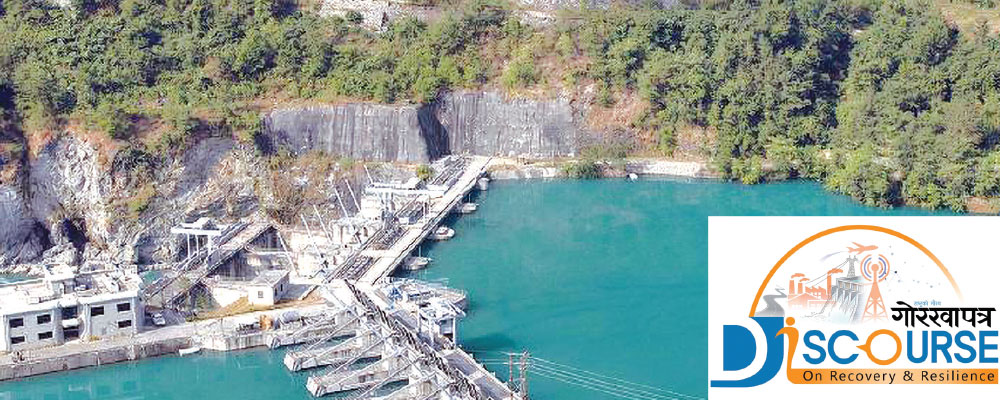

Kathmandu, Dec. 18: Nepal is endowed with immense hydropower potential, yet, structural, financial and institutional challenges continue to prevent the country from achieving year-round energy self-reliance.
The pace of hydropower development remained sluggish for more than a century, producing only around 4,000 MW since the establishment of the 500-kW Pharping plant in 1911.
However, the sector gained momentum over the past decade due to somewhat supportive government policies, increased private investment, access to foreign markets and a global shift toward clean energy.
The country, which endured up to 18 hours of daily load-shedding until a decade ago, was declared load-shedding-free in May 2018. Installed capacity has since risen rapidly to nearly 4,000 MW, enabling seasonal electricity exports to India of more than 900 MW.
However, Nepal Electricity Authority is still compel to import electricity during the winter season to meet the domestic demand.
Hydropower producers have expressed grievances that structural challenges—such as delays in government decision-making, forest-related issues, and land acquisition—remain major bottlenecks to accelerating hydropower development and completing projects on time.
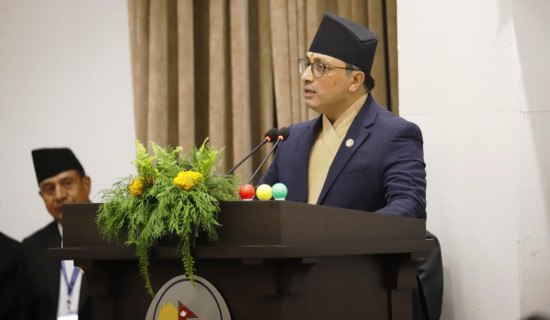
Minister for Energy, Water Resources and Irrigation Kul Man Ghising has admitted that challenges including tree felling, land acquisition, and procedural delays have hindered the timely completion of hydropower projects.
“There are problems related to forests. It takes years to obtain permission from the concerned authorities to cut even a single tree. Similarly, land acquisition is another major challenge, and the process also takes years,” he said.
Minister Ghising, who previously served as Managing Director of the Nepal Electricity Authority, said poor coordination among ministries has forced developers to visit multiple ministers and government offices, further slowing hydropower construction.
He added that developers often face resistance from local communities once they reach project sites, causing additional delays. Moreover, many development projects, including hydropower schemes, have remained stalled due to contractor-related issues. He stressed that there is no alternative to resolving these challenges other than streamlining procedures to harness Nepal’s hydropower potential without delay.
Although hydropower development is a government priority, the country has not been able to harness its potential as expected, said Ganesh Karki, President of the Independent Power Producers’ Association, Nepal (IPPAN).
Recalling a bitter fact that no hydropower project was completed in time in 115 years’ history of power generation in Nepal, he stressed the need for timely solutions to the problems related to land acquisition, forest and others, which surface while building hydropower and transmission lines. Project delays increase construction costs, which has discouraged private-sector investment in hydropower, he said.
Existing laws and regulations related to hydropower development need revision, particularly concerning forest land acquisition, licensing procedures, and environmental clearances.
Encouraged by recent progress, the government has set a target of generating 28,500 MW of electricity by 2035 and is working to establish the necessary groundwork. Of this, 13,500 MW is planned for domestic consumption, while the remaining 15,000 MW will be exported to India and Bangladesh.
The government should promptly address issues such as tree felling at project sites during hydropower and transmission line development to realise this ambitious target, said Karki.
He said that the government should create a conducive environment by formulating necessary acts and regulations and making amendments to the existing policies to attract both the domestic and international investors to invest in hydropower.
Stating that there was a compulsion to visit dozens of ministries and other government bodies to develop a hydropower while local levels are also there to create problems, he suggested managing a one-door system to complete all procedures to construct hydropower.
Focus on reservoir projects
The core challenge lies in Nepal’s heavy dependence on run-of-the-river hydropower projects. While these projects generate surplus electricity during the monsoon due to high river flows—allowing Nepal to export more than 900 MW to India in the rainy season—production drops to less than 50 per cent of installed capacity in winter when water levels decline sharply. This seasonal fluctuation has undermined energy security for decades.
Considering this situation, the government has moved forward the construction of reservoir hydropower projects to address the challenges and realise the target of producing 28,500 MW electricity by 2035, said Ghising.
Currently, construction process of large reservoir and semi-reservoir hydropower projects -- 1,200 MW Budhigandaki and 635 MW Dudh Koshi reservoir hydroelectric projects, 1,063 MW Upper Arun semi-reservoir and 417 MW Nalgad hydropower project are advancing.
The investment modalities for the 1,200 MW Budhigandaki reservoir-based and the 1,063 MW Upper Arun semi-reservoir-based hydropower project have been prepared.
The modalities have been designed to construct both hydropower projects through domestic investment.
Other hydropower projects, including 900 MW Arun III are also under construction phase.
Study on the 10,800 MW Karnali Chisapani hydropower project, which is a project of strategic importance, has also started, said Minister Ghising.
He said that the Detailed Project Report (DPR) of the Karnali Chisapani Project—linked to the economic prosperity of not only Sudurpashchim Province but also the entire country—is being prepared through the Nepal Electricity Authority.
He added that the project could be developed as a model hydropower project in the South Asian region.
However, political instability, policy indecision, frequent changes in leadership, and weak institutional coordination delayed their implementation, keeping these strategic projects stalled for years, said Karki.
Many hydropower projects require land located in forest areas, creating conflicts with environmental regulations and local communities. This has posed a challenge to achieve the country’s energy development goals, he said.
Stating that projects with a total capacity of 13,000 MW have been waiting for Power Purchase Agreements (PPAs) for years, Karki said that in such a situation, developers cannot be expected to increase investment.
“First, the government should present a clear vision for hydropower development and strengthen the ministry to accelerate the pace of hydropower development,” he said.