- Thursday, 7 May 2026

Baburam a model farmer in parbat
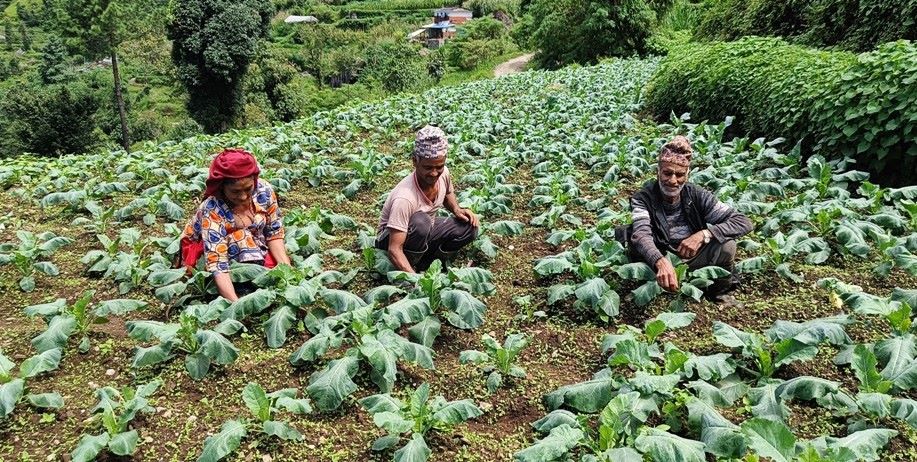
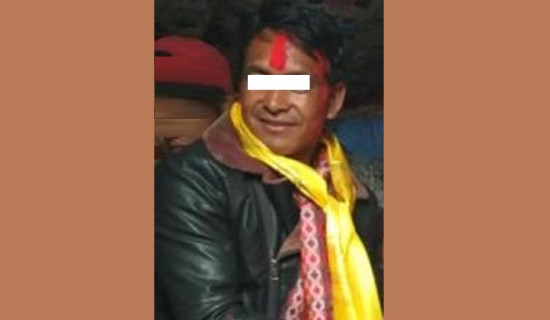
Photo: Thakur Prasad Acharya/TRN Baburam Regmi of Salija in Jaljala Rural Municipality-6 working in his field.

By Thakur Prasad Acharya,Myagdi, Aug. 22: Baburam Regmi of Salija in Jaljala Rural Municipality-6 has successfully transformed his life through vegetable farming.
His dedication to agriculture has supported not only his family expenses but also funded the education of his two sons, one of whom has now become an engineer and the other an agricultural technician.
After spending 10 years abroad searching for a good opportunity, Regmi returned to his village and took up the profession his father had once embraced, ultimately achieving remarkable success.
Through the money he earned from farming, Regmi invested thousands of rupees to ensure his two sons excelled in technical education.
In addition to achieving financial prosperity for his family through agriculture, Regmi has become an exemplary farmer in his community.
Regmi’s eldest son has completed his graduation in civil engineering and is now pursuing a master’s degree in the UK while his youngest son, who graduated in agricultural technology from Rampur Agricultural Campus, has returned home district to begin his career.
Regmi’s success challenges the belief that one has to go abroad to afford quality education to children by proving that hard work on your land can also lead to prosperity.
Baburam’s success in agriculture has proven not only its potential but has also instilled hope among the villagers.
Local youth, like Dilnath Sapkota, see Baburam as an inspiring example of how hard work and dedication in agriculture can culminate in significant achievements.
Baburam Regmi grows seasonal vegetables on about 15 ropanis of land, producing 50 kg of cucumbers daily, which are soon to be taken to market. He has just planted seeds for cauliflower and cabbage.
His wife and father support him in his endeavour. Regmi, who earns half a million rupees by planting potatoes in rainy seasons, also sells vegetables up to worth Rs. 1/1.5 million annually.
He has planted the golden kiwi in his paddy field. He aims to earn Rs.200,000/300,000 annually from kiwi farming, with the rural municipality providing him with kiwi saplings as a subsidy.
Regmi said, “I had no other source of income, so I sold vegetables to support my sons’ education in their chosen fields. Although people advised us to go abroad for better opportunities, I chose not to follow that advice. Good education is expensive, but I managed it through hard work.”
“Through this profession, I was able to educate my sons well. The neighbours who once criticised me are now appreciating my work,” he said. He shared his experience that producing off-season crops avoids market competition and ensures better prices.
Father Kaladhar Regmi is proud that his son has become an exemplary farmer in the entire village by choosing this profession. He said he also introduced his sons to farming to teach them the value of hard work.
Kaladhar said, “I introduced my son to education through vegetable farming. My son’s progress in the agricultural profession has given me great happiness and self-satisfaction.”
He added, “With the income from vegetable farming, my grandchildren pursued a good education. I advised my son not to leave the profession, as he has excelled in the agricultural work that his ancestors embraced.”
He recalled that, back then, there were no road transport facilities like today, so vegetables had to be carried in dokos (v-shape basket made from bamboo strips) and transported to Beni, Baglung and Kusma.
Kaladhar said, “I educated my sons through vegetable farming. With the income from my son's farming, my grandsons became engineers and agricultural technicians.”
Regmi said that during the rainy season, when roads are blocked, vegetables produced in the village often can’t reach the market, leading to the wastage of labour.
Raju Gautam, head of the Agriculture Division at Jaljala Rural Municipality, said that the municipality offers a 50 per cent subsidy on seeds to hardworking farmers.