- Saturday, 9 May 2026

Antim Paat: Wonderful reading
 Avaya Shrestha
Avaya Shrestha
Avaya Shrestha
Kathmandu, Feb. 29: 'The Last Leaf' is one of the famous short stories by American short story writer O. Henry. The story concerns a poor young woman named Johnsy who is seriously suffering from pneumonia. She believes when the ivy vine on the wall outside her window lacks all its leaves, she will die.
A lifelong unsuccessful artist named Behrman, who is also her neighbour, tricks her by painting a leaf on the wall. Eventually, Johnsy recovers by thinking that the tree did not lose the last leaf, but Behrman himself catches pneumonia while painting the leaf and dies.
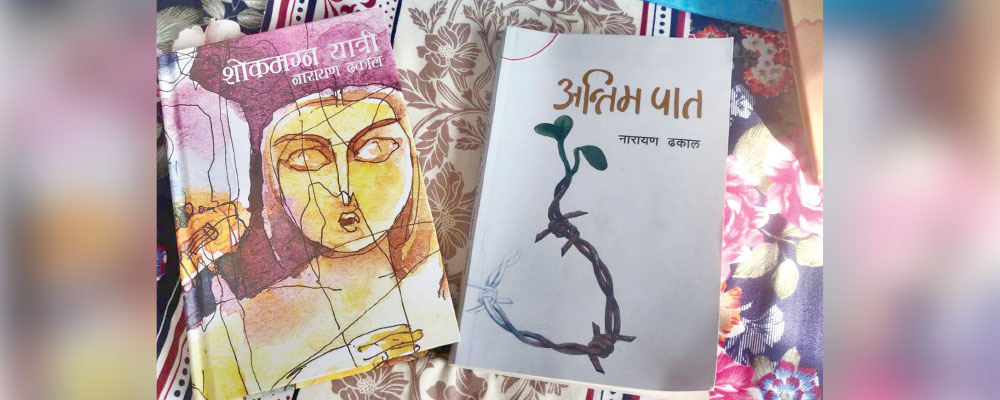
Antim Paat (The Last Leaf), the latest collection of essays by veteran Nepali author Naryan Dhakal carries the same title as the author is also inspired by O Henry’s above-said short story.
In the title essay, Dhakal has mentioned the same story while writing his America exile. This anthology is the second part of his famous essay book Shokmagna Yatri (The Mournful Traveller) which won the Uttam Shanti Award.
Dhakal is a sensible author as well as an avid reader. Also a Marxist activist and former lawmaker, he seems a master at articulating the essence of the books he reads and connecting it to the present scenario. The readers get information as well as a critical approach while reading him. He repeatedly mentions the works by Gabriel Garcia Marquez and Allen Ginsberg which seem new to general Nepali readers.
Moreover, they find him very humble and confessing his own mistakes. He criticises the blunders made by his leaders and he feels himself morally responsible for the same. In fact, these are the articles published in various newspapers and magazines.
In Shokmagna Yatri, we find a very sensible essay titled Ghum Pahad Dekhi (From Ghum Pahad) in which he writes about the troubles he and his friend Bijay faced in India. It is informed that they had fled their homes.
In Antim Paat, we can read the second part of their India trip. It is more sensible, rather well-written and heart-touching. He owes some rupees to Ram Bahadur, a resident of Rangeli, Morang. But he is unable to pay the debt in time. After some time, he heard the news of Ram Bahadur's demise. In this predicament, he writes, "When I heard the news, I felt it was the news of my own demise, not of Ram Bahadur.”
Antim Paat has three parts. Under the title Yatra (Travelogue), there are three articles while Pathan (Reading) has nine and Purbapithika (Background)10.
In Tin Srashta Ek Path (A lesson from three authors), Dhakal evaluates the Great Poet Laxmi Prasad Devkota, essayist Shankar Lamichhane and veteran poet Bhupi Sherchan. He compliments the great talent of Devkota in poetry but he criticises the act of deifying him. He seems a great fan of Lamichhane and Sherchan's writing skills.
Lokpriya Sahitya Ra Bazaar (Popular Literature And Market), Hajurba Ko Redbook (My Grandfather's Redbook), Naghna Nasakieko Tolstoy Yug (Iimpenetrable Age of Tolstoy), Banira Ko Pahilo Prem (The First Love Of Author Banira Giri), Pragya: Panchayat Ko Jutho Tapari (Academy: Promiscuity of Panchyat System) are other essays that are more worth reading.
-original-thumb.jpg)
-square-thumb.jpg)