- Wednesday, 3 June 2026

On Indigenous Culture

Parmeshwar Devkota
The indigenous people clad in their traditional attires celebrated the International Day of the Indigenous People throughout the country last Wednesday. This write-up does not aim to provide a detailed account of how indigenous organisations are working and how the political sector is striving to cement harmony among people of diverse cultures, customs and languages but seek to make indigenous youths aware on specific challenges the sector is facing as indicated in this year’s slogan ‘Indigenous youth as agents of change for self-determination’.
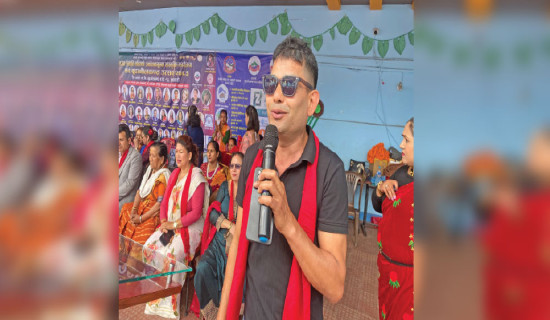
On the occasion, Minister of Culture, Tourism and Civil Aviation Sudan Kirati in traditional attire showed up on the stage of a programme carrying on a huge drum and beating it with drumsticks. We have over dozens of organisations committed to safeguarding and promoting the languages and cultures of the indigenous people. It is the country of unity in diversity. The recent population census states that over 125 indigenous peoples reside and over 123 indigenous languages and cultures are practiced active in this country. The political leaders often make it a point of enshrining the rights of the indigenous people in the constitution.
Similarly, the indigenous leaders and workers boast how they actively participated in the movements of restoring their rights and identity. When the country was on the verge of communal riot, the leaders of indigenous groups demonstrated their wisdom and forged agreements with the mainstream parties to defuse the tension, which were also reflected in the national charter. Part 3 of the Constitution has special provisions for the socially or culturally backward indigenous people along with other minority citizens. It stipulates that the indigenous people enjoy the constitutional rights, but if they are deprived of getting rights to be equal, the State will take extra responsibility to safeguard them.
Languages, cultures and traditions are living entities, and they are enriched if the people use and embrace them continuously. If cultures are shared among communities, there is high probability that they are refined and become common asset of all. Similarly, when traditional attires are given new design, they may catch the fancy of fashion-loving youths of the community as well as other communities. But, if we hesitate to speak mother languages, they die out.
Languages and cultures can be compared with the fishes in a pond. As big fish eat smaller ones, the widely-used and popular languages and cultures force the ones belonging to minorities to take a back seat, leading to their eventual demise. For example, Nepali language can be a challenge to other minority languages and cultures in our society because it is common language for virtually all segments of population. It is rich and modifies as per the changing spirit of time. So, the people of any indigenous community feel easy to express their thoughts in Nepali.
Similarly, Hindi language and culture is another challenge to not only indigenous languages and cultures but also to Nepali language and culture as well. On the other hand, the English language and culture pose greater threat to Nepali, Hindi, Mandarin and other languages practiced around the world today. Therefore, the youths of the indigenous communities should work hard to promote their languages, cultures and customs instead of indulging in high-sounding political slogan - ‘agent of self-determination’.