- Friday, 22 May 2026

Panchthar highlands look beautiful in monsoon with grazing sheep
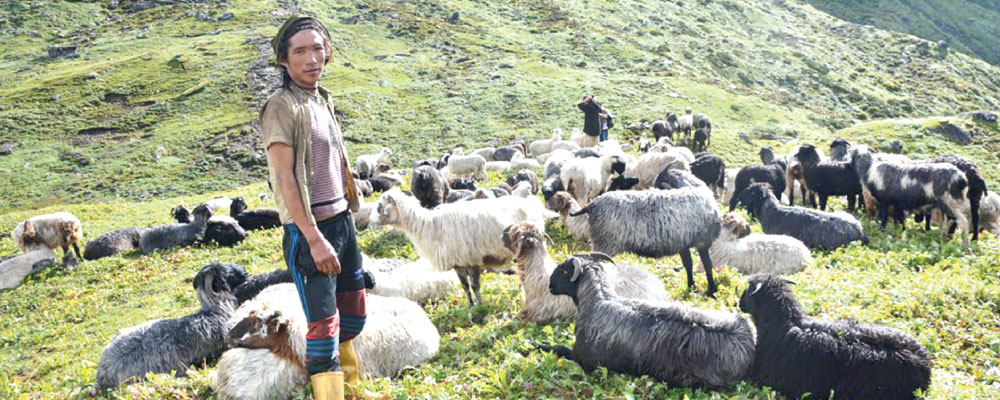

By Narayan Tumbapo,Phidim, Aug. 12: Anyone who has been to the high hills this season has seen flocks of sheep happily grazing on the lush green slopes. Shepherds have climbed up from the lowlands for the summer, bringing their sheep with them to the high-altitude pastures.
Many pastoral communities in Nepal have been practising transhumance for centuries. Herders take their animals up to the mountains during the summer and come down to lower altitudes in the winter. This allows animals to graze on nourishing fresh grass every season.
This year, the shepherds that come to the highlands of Panchthar have come with 100 to 300 sheep. They have built sheds for their animals and have pitched tents for themselves. This has enlivened the quaint hilltops.
But it’s not something to be romanticised. Herders will tell you how hard it is to travel every season with so many animals. They have to fend off predatory creatures, including those that call themselves humans, carry huge loads of food and remain away from their friends and family for months without any means of communication.
Many Himalayan farmers in Panchthar, Ilam, Taplejung, Lamjung, Rukum, Jumla, Nuwakot and Kaski districts earn their living by keeping sheep. Rearing the animals for their wool, meat and milk is often the only way they make money. Sometimes, sheep are also used as beasts of burden. In addition to providing direct income, businesses believe the shepherding practices of the mountains also lure tourists.
However, the occupation is now under threat. Many shepherds have become farmers or have gone abroad for work. Pastures have been turned into community forests or private fields. Young people do not want to rear sheep and choose to migrate out of villages. As a result, Panchthar, which once had dozens of sheep farms, now only has one.






1662885410-original-thumb.jpg)