- Tuesday, 2 June 2026

Collaboration With Private Sector

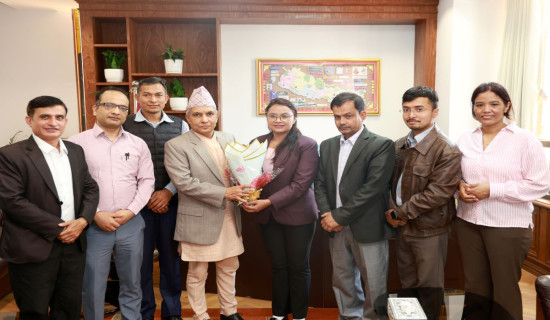
With the national economy reeling from troubling indicators and trends, taking timely measures targeting recovery and growth is the call of the hour. Coming out of the slackness and giving momentum to the economic activities stuck in stagnation is the real challenge the nation is facing. In this regard, it is vital to accelerate development activities which create employment opportunities and lead to production boost. But neither the government nor the private sector can possibly achieve these goals in isolation. It is in this context that Prime Minister Pushpa Kamal Dahal Prachanda was emphasising the need of strong collaboration of the government with the private sector to achieve the goals of national development.
Addressing the annual general meeting of the Confederation of Nepali Industries in the capital the other day, the Prime Minister aptly expressed the realisation that sustainable development goals are hard to achieve by keeping the private sector actors out of the development mainstream. In truth, the private sector which generates employment by running industries, trade and production ventures and the government can play an important role through policy facilitation, legislation and incentives. The private sector is an important agent of economic activities and desired growth is hard to achieve if it is left out of necessary government support. Public-private partnership is a model of development in many countries that has proved fruitful to carry out development activities and attain sustainable growth.
The Prime Minister said that working closely with the private sector for best economic results has been the priority of the government ever since he joined the high executive office and added that the ultimate goal of sustainable development can hardly be achieved ‘without a strong partnership between the government and the private sector.’ In this regard, he pledged to provide policy related support, technology promotion and similar other steps for growth stimulation. Such a partnership is all the more contextual in the present situation of unprecedented growth challenges. Nepal’s economy is largely import based and this had a devastating consequences in maintaining foreign exchange reserve at a critical time when tourism industry, revenue earning and remittance inflow was hard hit by the COVID-19 pandemic.
Situation of economic stability moved from bad to worse after the Russian invasion of Ukraine that sent the prices of petroleum fuels and other commodities soaring. In this scenario, it is very important for Nepal to focus its attention to boost production and substitute import. Achieving food security and energy self-sufficiency can go a long way in saving foreign currency reserves and making us less dependent on import. Business houses and industries work hard for their own growth and larger profit income but ultimately this business motive generates jobs, increases transactions and helps stimulate growth. However, industries and businesses that are dependent on imported workers and raw materials will not do much good to the nation.
In this respect, the Prime Minister has made it clear that the industries with higher reliance on imported raw materials would not contribute much to the economy. Therefore, the government through its annual budget plan of the coming fiscal year has given priority to the industries that use domestic raw materials. Meanwhile, Finance Minister Dr. Prakash Sharan Mahat highlighted the restructured characteristic of the budget with focus on manufacturing promotion and protection of domestic industries. The aim of all this is to make the economy production based rather than import based.