- Friday, 29 May 2026

Small Venture, Big Impact


Nepali economy is now beset with multiple challenges. Post-pandemic recovery has become slow as manufacturing sector is not performing well. Owing to inability to utilise the full capacity of this sector, the government has decided to scale down its growth target of 8 per cent for the fiscal year 2022/23. Low capital expenditure and high current expenses created a sort of economic imbalance.
This has apparently hindered the construction of big mega projects, which generate employment opportunities. Liquidity crisis and high interest rate of banks have hit the business and trade sector hard. Many small enterprises are on the verge of collapse as they risk becoming defaulters. They demand for readjusting their loans and reducing the interest rate along with stimulus packages to give a new lease of life to their shrinking business. The economic recession, precipitated by internal and external factors, needs to be fought with indigenous economic policy, strategy and schemes.
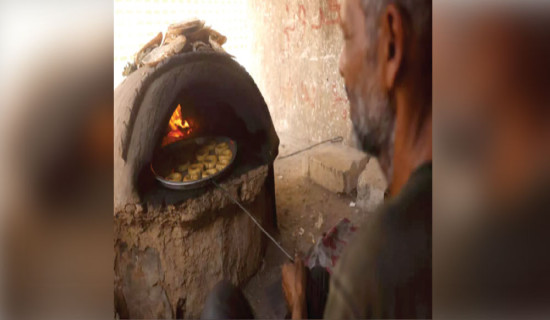
Against this backdrop, the agro-based cottage and small industries hold potential to minimise ongoing economic woes and vulnerabilities. There are currently 246,000 cottage and small industries that employ around 2.46 million people across the country. The sector has drawn an investment worth Rs. 353 billion, with products ranging from agriculture, garment, food, natural fibre, spices and pickles to leather-made items.
This industrial sector was also hit hard by the COVID-19 pandemic and is now struggling to come out of crisis. Now the entrepreneurs involved in the cottage and small industries have good news. The other day, Prime Minister Pushpa Kamal Dahal Prachanda announced that the cottage and small industries would be freed from all taxes for a certain period of time and special scheme would be launched to enhance their capital, technology and access to finance and market.
While opening the 16th International Industry Trade Fair and Cottage Industry Fair and 6th Organic Agriculture Exhibition 2023 in the capital, the Prime Minister expressed his commitment to introducing special programmes by redefining the subsidised loans to cottage and small industries in the manufacturing sector. The government is expected to simplify the complicated procedure for the registration and renewal of such industries.
The entrepreneurs have to submit documents and revenue to local and federal governments as well as the Company Registrar's Office to set up and renew their industries. It is not that the cottage and small industries were not in the priority of the government in the past. The successive governments had unveiled the policy to establish micro-enterprise village, cottage and small industry village at the local level but the idea could not take off in the absence of investment and proper business climate.
The Prime Minister Prachanda has announced the plan to provide grants to the local government to establish and run the industrial village. However, it is necessary for the three-layer governments to work in tandem to make such local industries successful by creating congenial business atmosphere. Moreover, institutional efforts are needed to make sure that federal funding is not misused and concessional loans given to women, youth and agricultural entrepreneurs are properly utilised. Nepal has comparative advantage in the agriculture-based products as there is knowledge, skill and workforce for this but what the agro sector lacks is investment, incentive and market support. Now time has come for the government to formulate and implement effective strategy to promote agriculture-based industries and businesses so as to prop up national economy.






-original-thumb.jpg)