- Thursday, 28 May 2026

Earthquake compounds Turkish leader's woes as election nears
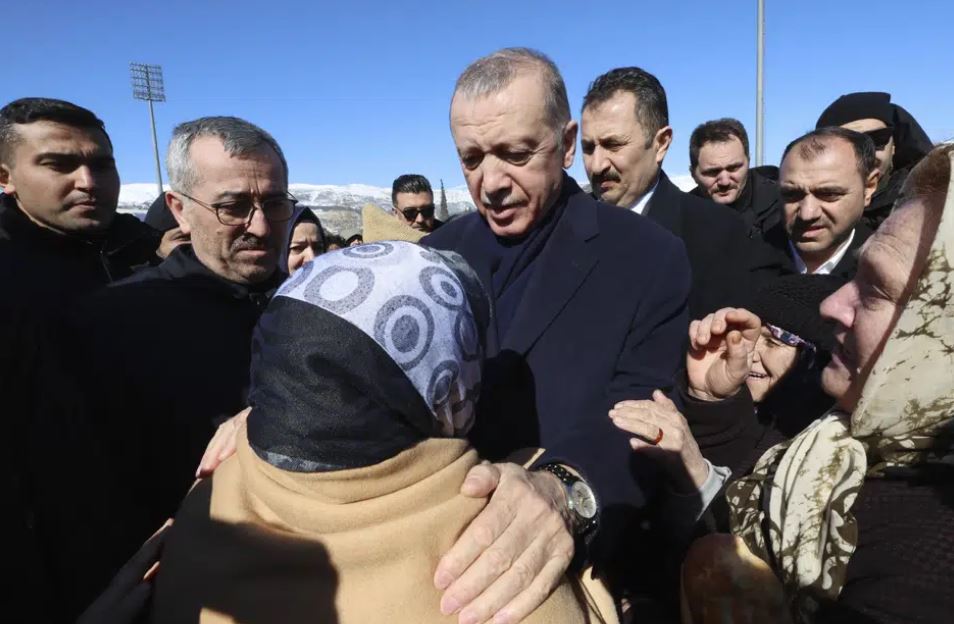

Ankara, Turkey, Feb. 12: Turkish President Recep Tayyip Erdogan came to power 20 years ago riding a wave of public outrage toward the previous government's handling of a deadly earthquake.
Now, three months away from an election, Erdogan’s political future could hinge on how the public perceives his government's response to a similarly devastating natural disaster.
“It is going to be a big challenge for Erdogan, who has established a brand for himself as an autocratic figure but an efficient one that gets the job done,” said Soner Cagaptay, a Turkey expert at the Washington Institute and the author of several books on Erdogan.
The aftermath of a massive earthquake isn't the only parallel to the election of 2002. Back then, Turkey was in the midst of a financial crisis that was punishing its economy.
Today, Turkey's economy is being hammered by skyrocketing inflation, and Erdogan has faced widespread criticism for his handling of the problem, which has left millions of poor and middle class people struggling to make ends meet.
Erdogan's political rivals have already begun criticizing his government's response to the earthquake, saying that over the course of two decades he failed to prepare the country for the inevitable. Experts point to lax enforcement of building codes as a major reason why this week's quakes were so deadly. But with less than 100 days before the election, Erdogan's rivals have yet to put forth a candidate to run against him.
The memory of how Bulent Ecevit, the late prime minister, was undone by his poor handling of financial and natural disasters two decades ago must be on Erdogan's mind as he tries to contain the twin problems he faces today, analysts say.
The 7.8-magnitude earthquake that struck on Feb. 6 was followed nine hours later by another powerful quake, killing more than 24,000 people in both Turkey and Syria.
The devastation spreads across a wide swath of Turkey, affecting 10 provinces in the country's southeast, and it has strained the ability of domestic and foreign crews to quickly execute rescue efforts. In the first few days after the quake, Turkish television and social media showed people waiting helplessly beside piles of debris in frigid conditions, or using their bare hands to claw through rubble. “We’ll still have to see the outcome of the relief efforts, whether subzero temperatures continue, casualties increase, whether international assistance which is flowing could make a difference,” said Cagaptay.
Erdogan, who toured the region this week, conceded shortcomings in the initial stages of the response but insisted that everything was now under control.
“If the disaster response is strong, the ruling administration will be rewarded, likely in the polls — if it is poor, the opposite,” Timothy Ash, an analyst at BlueBay Asset Management in London, wrote in an email.
Ecevit blamed the poor response after the 1999 quake that killed some 18,000 people on the vastness of the destruction. Similarly, Erdogan said the response to this week's quake — which he described as the “strongest in the history of this geography” — has been hampered by winter weather and the destruction of a key airport, making it difficult to quickly reach people trapped in the rubble. (AP)


-original-thumb.jpg)