- Thursday, 28 May 2026

Sudan’s tropical disease spike reflects poor health system
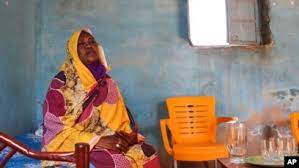

El Obeid, Sudan, Feb. 10: The two Sudanese women thought they had malaria and were taking their medication, but things took a dire turn. Both complained of a splitting headache and fever that didn’t respond to the anti-malaria treatment.
By the time she was diagnosed with dengue fever, Raqiya Abdsalam was unconscious.
“Soon after they examined me, I fell into a coma,” she said, recounting her ordeal some three months ago. Both women have since recovered and are at home in the city of El Obeid in the central province of North Kordofan.
For decades, Sudan’s underfunded public health sector has struggled to effectively diagnose or treat patients as significant government spending went to its vast security services. A recent spike in mosquito-borne diseases — such as dengue fever and malaria — has underscored the fragility of the African country’s health system, boding ill for future challenges driven by climate change.
Sudan’s best-equipped hospitals are concentrated in the capital, Khartoum, leaving those from far-flung provinces reliant on aid projects. But many of those have disappeared.
In October 2021, Sudan’s leading military figure, Gen. Abdel-Fattah Burhan, led a coup that derailed the country’s short-lived democratic transition. The move spurred a sharp reduction in aid, with the U.N Office for the Coordination of Humanitarian Affairs reporting that funding levels fell to less than 50% of required needs for both 2021 and 2022.
Burhan with his ruling generals and several other political forces pledged in December to install a new civilian government. But political wrangling is impeding a final deal, and it remains unclear when — and if — donor funding will return to previous levels.
In late fall, a young doctor at a North Kordofan hospital thought that what she was seeing was a new malaria outbreak. Patients arriving at her hospital had malaria-like symptoms — high fever, body fatigue and a migraine-like headache.
But after blood samples were sent to a laboratory in Khartoum for testing, a worrisome picture emerged. Some of the patients did have malaria, which is caused by a parasite, but others had dengue fever — similar in symptoms but caused by a virus. If severe and untreated, dengue fever can lead to organ failure and death.
The young physician said the hospital lacked the facilities to deal with the outbreak. “Patients had to either lie on the floor or bring their own beds to the hospital,” she said.
While malaria is common across central and southern Sudan, large dengue outbreaks are rare. But last fall and winter, dengue fever spread to 12 of the country’s 18 provinces, killing at least 36 people and infecting more than 5,200, according to Sudan’s Ministry of Health. However, the actual numbers are likely higher, given the limitations on testing. (AP)





-original-thumb.jpg)