- Saturday, 6 June 2026

Rituals listed as intangible heritage
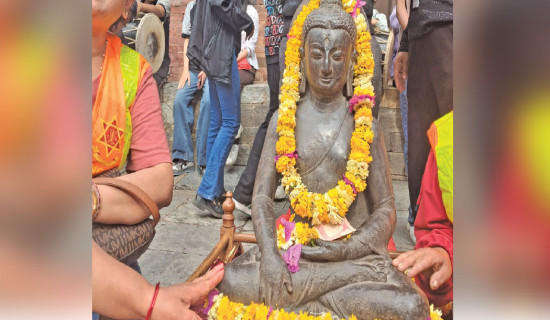
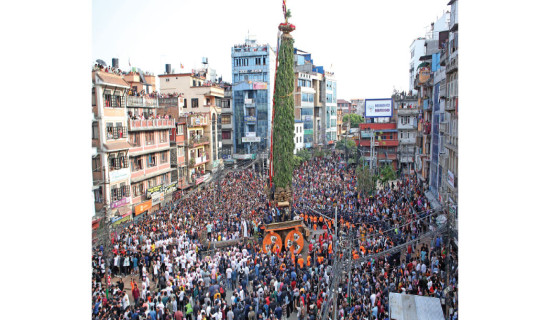
Kathmandu, Apr. 24: From morning to evening, people from different communities and castes perform various traditional rituals. However, they have not kept proper records or documentation to preserve these practices for future generations. Most people follow these rituals as part of their daily routine, without realising that they are forms of Intangible Cultural Heritage (ICH) that should be documented and safeguarded.
Beyond daily practices, there are many rituals performed throughout life from birth to death as per the tradition and religions of given communities. Yet, these are generally followed as traditions without recording the methods or processes involved.
Recognising the importance of such rituals, the Ministry of Culture, Tourism, and Civil Aviation (MoCTCA) began the process of listing such ICH in a national register to protect cultural heritage in the fiscal year 2024/25. The MoCTCA issued a public notice inviting communities to participate in the documentation process.
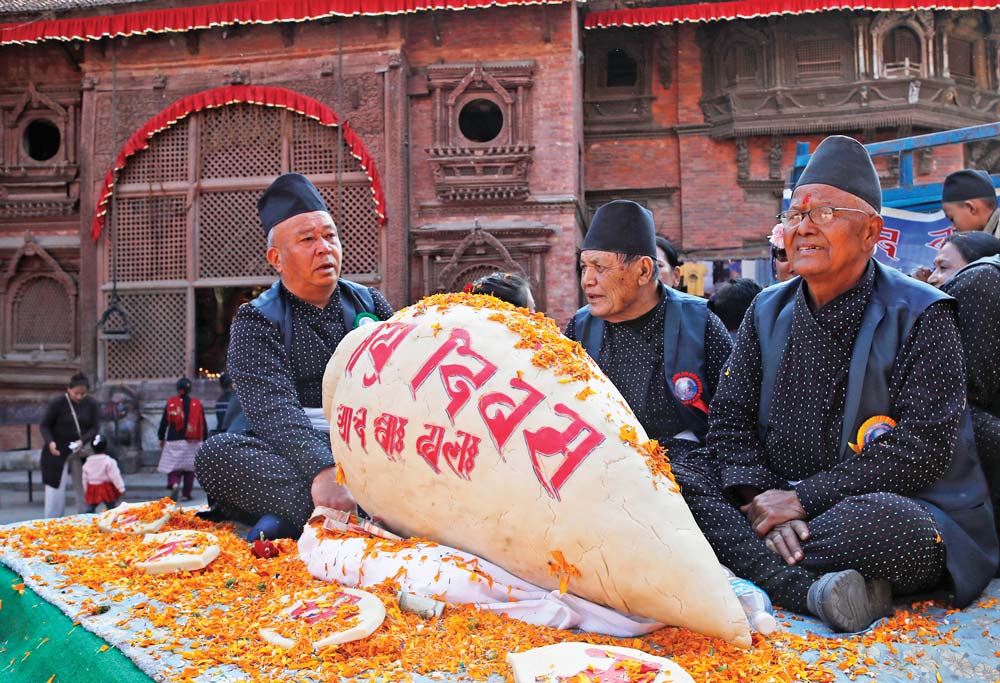
In the fiscal year 2024/25, it officially listed Yomari, a traditional dish of the Newar community, as an Intangible Cultural Heritage element. The Ministry stated that after the Newar community completed all necessary procedures and submitted supporting evidence, Yomari was included in the ICH list based on recommendations from the evaluation committee. According to a call made by the Ministry last year, approximately 105 applications were received. The Ministry clarified that only Yomari was listed as other applications fell short of valid procedures.
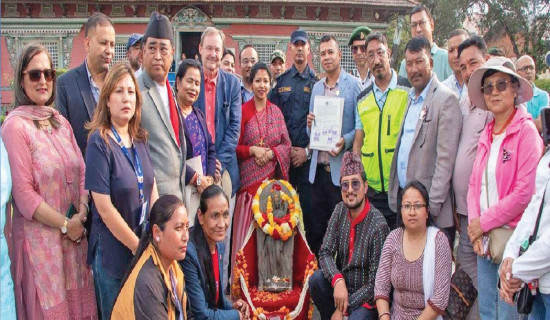
As part of this initiative under the 2003 Convention for the Safeguarding of Intangible Cultural Heritage (ICH), the project titled “Development of Inventory of Intangible Cultural Heritage Covering All Seven Provinces of Nepal” was officially launched on 17 April 2026.
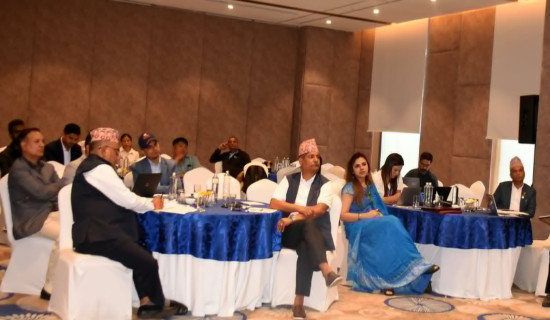
At the launch programm held in Kathmandu, Dr. Suresh Surash Shrestha, Joint Secretary at the Ministry of Culture, Tourism and Civil Aviation and Chief of the Culture Division, stated that with changing times, the pattern of celebrating cultural activities and daily rituals has changed, but the main essence should not change. He said, “We all practice ICH activities daily, but most of us are not aware that these fall under ICH, and they should be documented and preserved for the future.”
The programme “Development of Inventory of Intangible Cultural Heritage covering all Seven Provinces of Nepal” aims to safeguard Nepal’s ICH through a participatory, community-based approach. It will result in an inventory and video documentation of 20 ICH elements from 17 indigenous communities across seven provinces, contributing to national ICH inventory and ensuring long-term preservation.
Its specific objectives are to raise awareness about the protecting ICH and the 2003 Convention and its implementation, build capacity for community-based inventorying, and develop an inventory of at least 20 ICH elements across all five domains.
Training will be provided to at least 50 community members from 17 communities representing all seven provinces, along with approximately 15 cultural officers from MoCTCA and Masters-level students. National ICH facilitators will lead the training.
The project aims to contribute to the safeguarding of ICH and support the Ministry of Culture, Tourism and Civil Aviation by identifying intangible cultural heritage elements from local communities across all seven provinces. Community experience in preserving oral traditions, performing arts, traditional craftsmanship, festivals, rituals, and living cultures will be invaluable in ensuring that overlooked traditions and practices are included.
The project also aims to build capacity for community-based inventorying and develop an inventory of at least 20 ICH elements from 17 indigenous communities across Nepal. These communities include Sherpa, Dhimal, Tajpuriya, Santhal, Danuwar, Newa, Tamang, Chepang, Thami, Gurung, Thakali, Siyar, Magar, Tharu, Mugal, Raji, and Byasi. The project is being implemented by UNESCO in collaboration with the Ministry.