- Saturday, 6 June 2026

Banana farmers still not getting fair prices despite market hike
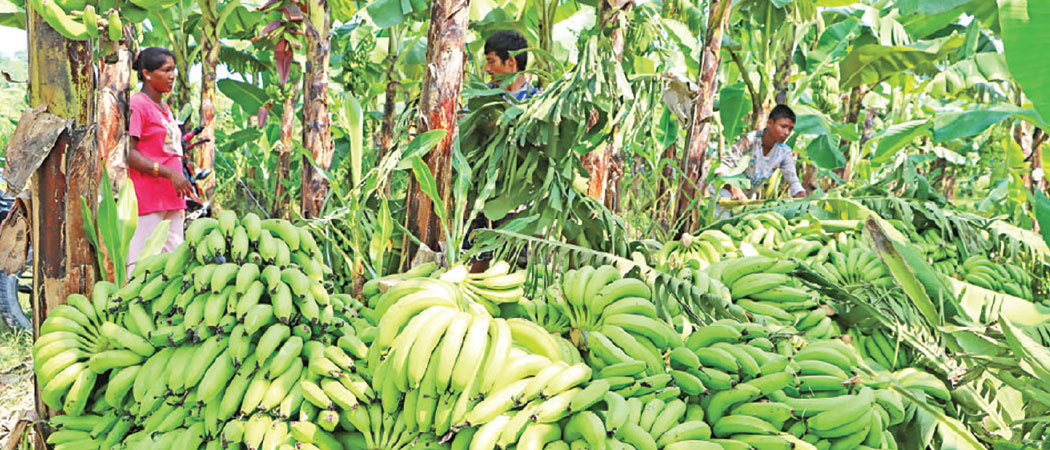

Kathmandu, Apr. 22: Banana prices in Kathmandu Valley have soared sharply in recent weeks, with retail costs reaching as high as Rs. 350–400 per dozen, raising concern among consumers and farmers alike.
However, producers said the spike is not due to shortages alone, but largely driven by artificial price inflation caused by intermediaries in the supply chain.
Organising a press conference in Kathmandu on Tuesday, the Federation of Nepal Banana Producers’ Ad Hoc Committee claimed that there has been no significant increase in the prices farmers receive compared to the market prices at which bananas are being sold.
Bishnu Hari Panta, president of the Federation, said that farmers are getting significantly lower prices at the farm gate than the prices charged in the market. Local varieties such as Malbhog are being sold for just Rs. 70–85 per dozen, while hybrid varieties like William and G-9 fetch only Rs. 50–60 per dozen.
Despite this, consumers are paying up to five times more in the retail market. “This huge gap clearly indicates excessive interference and manipulation by middlemen,” he said. “Both farmers and consumers are being exploited.”
He claimed that the prices the farmers get while selling them right in the field increased by only Rs. 6 per dozen compared to the same period last year. President Panta urged the government to intensify market monitoring to control artificial price hikes.
“If we find that farmers are encouraged to sell at higher rates for short-term benefits, we will take action against them,” he said.
Short-term problem
According to him, there is currently a short supply of bananas in the market as demand increases with rising temperatures. However, local production still covers around 70 per cent of market demand, even during this low production season.
“Around 50,000 to 60,000 tonnes of bananas are supplied monthly from various parts of the country, against a demand of 80,000 tonnes. Supply is expected to improve in the month of Asar,” he said.
According to the Federation, around 700,000 tonnes of locally produced bananas are supplied annually in major markets across the country, compared to a national demand of 900,000 tonnes.
In previous years, around 200,000 tonnes of bananas were imported from India annually to meet demand. However, imports from India have been affected since September 2025 following a government-imposed ban.
The restriction was introduced based on recommendations from farmers to prevent the spread of the dangerous TR-4 (Panama) disease, which threatens banana crops. The Plant Quarantine and Pesticide Management Centre imposed the ban on September 18, 2025, due to the potential risk of TR-4, which is considered highly dangerous for banana farming in Nepal.
Earlier, in September, banana farmers had requested traders to stop imports when local production was sufficient to meet domestic demand. Traders are now lobbying the government to lift the ban on banana imports to control rising prices.
However, the Federation also warned of a serious agricultural threat: the spread of Tropical Race 4 (TR-4). Illegal imports of bananas, they say, could introduce this pathogen into Nepal, potentially devastating local production.
“In the past, bananas would rot in farms due to lack of market access. Now, farmers are encouraged as they are getting better prices,” he said. He warned that without the import ban, farmers might have been displaced, and the country would have had to spend large amounts on imports.
Self-reliant in banana in next two/three years.
The government’s recent move to restrict banana imports has been welcomed by producers as a necessary step to protect national biosecurity and support local farmers.
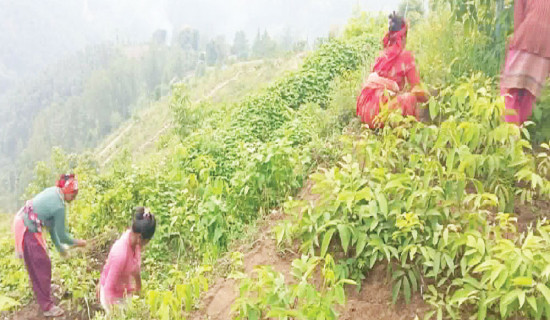
He emphasised that bananas are one of the few fruits where Nepal has strong potential for self-sufficiency. While most fruits in the market are imported, domestic banana production is expanding rapidly, with an estimated 4–5 million new plants being cultivated nationwide.
“Even though there may be supply issues for the next two to three months and consumers may have to pay higher prices, banana prices will drop once supply improves,” said Panta.
Producers said that within the next one to two years, Nepal can achieve full self-sufficiency in banana production—if proper policies, market regulation, and farmer support systems are implemented.
The Federation also asked the government to fix a minimum support price for bananas and to simplify and improve agricultural insurance systems. Similarly, it demanded the availability of quality tissue culture saplings and easier access to chemical fertilisers.
He urged the government to strictly enforce the ban on banana imports and encourage farmers for increase production.

-square-thumb.jpg)