- Sunday, 19 April 2026

Rani Customs point remains flexible for shoppers
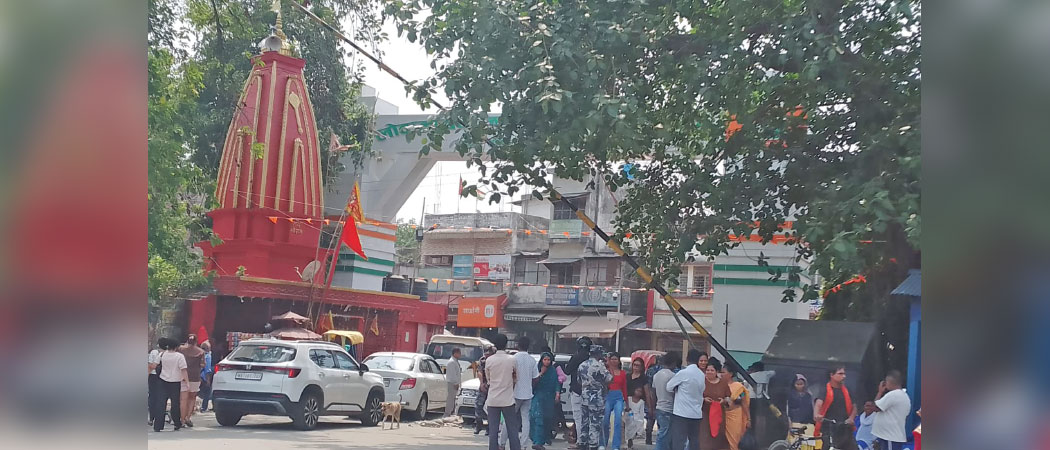

By Shashidhar Parajuli,Biratnagar, Apr. 19: While the government claims to have tightened controls at border points to curb revenue leakage, it remains relatively easy for Nepali consumers to bring essential goods through the Rani border point in Biratnagar.
In areas such as Gaurigunj in Jhapa and Baradanga and Rangeli in Morang, considered minor customs points, Armed Police Force personnel and customs authorities have issued strict directives requiring customs duties to be paid on goods worth more than Rs. 100.
Public announcements are regularly made to inform consumers.
However, despite these measures, the flow of Nepali consumers to the Indian border market of Jogbani has not declined.
Compared to markets in Biratnagar, the volume of Nepali shoppers in Jogbani remains significantly higher.
The price gap between Nepali and Indian markets continues to drive consumers across the border, often at personal risk.
Unlike smaller border points, enforcement at the Rani crossing appears less stringent.
There is a notable difference in prices of daily essentials, from sugar, cooking oil and pulses to clothing, between Jogbani and Biratnagar.
For instance, cooking oil is nearly Rs. 100 cheaper per litre in Jogbani, while sugar costs up to Rs. 30 less per kilogram.
For consumers struggling with rising prices, these savings provide considerable relief, contributing to the heavy footfall in Jogbani.
Although the Morang District Administration claims to have tightened border checks following directives from the Ministry of Home Affairs, the impact has not been clearly visible on the ground.
Local traders in Morang have complained of declining business and have urged stricter enforcement at the border. However, for ordinary consumers, travelling to Jogbani has become a necessity.
Pradeep Dhakal, a consumer from Morang encountered at the border, criticised the policy, saying, “Prices in Nepal are extremely high. Since goods are cheaper in Jogbani, we come here, especially on holidays. It has become a compulsion for us.”
At smaller border points, Armed Police personnel are actively enforcing the Rs. 100 customs threshold, and related videos have gone viral on social media.
However, at the main Rani border point, the situation remains largely unchanged. Thousands of consumers from Itahari and even more distant towns travel to Jogbani daily.
According to a study by the Morang Chamber of Commerce and Industry, Nepali shoppers crossing through Biratnagar to Jogbani collectively spend at least Rs. 50 million per day, effectively taking Nepali currency into India.
Chief District Officer of Morang, Yubaraj Kattel, said that stricter measures have been implemented at the border.
He added that customs authorities have been instructed to distinguish between goods brought for personal use and those intended for commercial purposes.
In recent days, Nepal Police and the Armed Police Force have increased seizures targeting organised smuggling and “carrier-based” trade.
However, illegal imports have not been fully controlled.
While security personnel attempt to curb professional carriers, ordinary consumers are often allowed to pass, resulting in weak enforcement despite repeated government efforts to tighten border controls.
-square-thumb.jpg)



-original-thumb.jpg)