- Thursday, 14 May 2026

Fiscal Council decides to increase equalisation grant
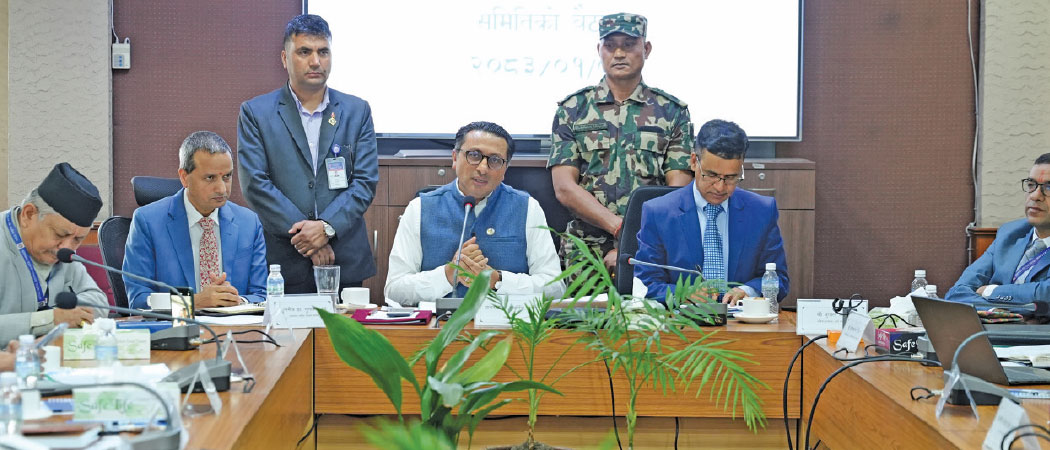
Kathmandu, Apr. 17: The Inter-Governmental Fiscal Council (IFC) has decided to increase the financial equalisation grant in proportion to the growth of the federal budget while improving the fiscal transfer and grant system.
It also decided to adopt a policy of gradually reducing conditional grants provided by the federal and provincial governments.
"To end the trend of fragmenting budgets into small projects and duplication, budget allocation arrangements shall be made according to the prescribed 'threshold' (minimum limit) for development projects," the meeting of the IFC and thematic committees held at the Ministry of Finance (MoF) on Thursday concluded.
These decisions are made to strengthen fiscal federalism, according to the MoF.
For allocative efficiency and capital expenditure effectiveness, all three levels shall mandatorily implement the concept of a 'project bank' while the National Planning Commission (NPC) shall manage the integration of the project banks of the three levels.
The MoF informed in a statement that the meeting agreed in ending the practice of keeping budgets in 'unallocated' categories, identifying and scraping or settling old 'sick' projects, and ensuring that federal, provincial, and local levels distribute annual programmes and projects in an activity-wise manner during budget formulation.
An agreement also made on reducing the economic liability of the state's recurrent expenditure while all three levels of government expressed their consent to strictly implement austerity policies.
All three levels of government shall emphasise reducing arrears and accelerate settlements by preparing classified details of arrears with a time-bound action plan.
The IFC meeting took notice of the hurdles in acquiring land needed to construct administrative buildings of the provincial governments and mobilising forest-based products and river-based materials, and decided to implement the annual budget and programmes of provincial and local levels and to accelerate the construction of administrative buildings and other government physical structures.
They will request the Office of the Prime Minister and Council of Ministers (OPMCM) for necessary coordination to address existing legal complexities and procedural delays in Land Acquisition.
Similarly, to increase the internal revenue of the federal, provincial, and local levels, request would be made to the OPMCM, the Ministry of Federal Affairs and General Administration, and the Ministry of Forests and Environment to remove legal, policy, and procedural hurdles regarding the sustainable and systematic utilisation and mobilisation of forest-based products and river-based materials, and to facilitate their collection and sale.
The three levels of government agreed to work in accordance with the spirit of federalism, focusing on service delivery and good governance so that citizens can directly experience the impact. They also implement a new formula to increase the share of local levels in royalties from electricity, mountaineering, forests, and mines, based on the recommendations of the National Natural Resources and Fiscal Commission (NNRFC).
Likewise, the meeting decided to coordinate between the three levels of government to control revenue leakage. Each level will prepare and implement a 'Revenue Collection and Leakage Control Improvement Action Plan' within the current fiscal year 2025/26 (or within the next three months) to prioritise internal resource mobilisation.
The Finance Ministry said although the rule-based system of fiscal transfer in Nepal has been institutionalised, the meeting focused on addressing the practical complexities observed in the performance capacity and resource management of the tiered governments.
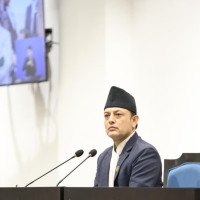
Speaking at the meeting, Finance Minister Dr. Swarnim Wagle stated that the federal government has taken the legitimate demands regarding fiscal transfer and autonomy put forward by the provincial finance ministers positively.
He expressed concern over the increasing 'grant-oriented' trend where lower levels remain dependent on federal grants due to weak revenue capacity. He committed to making this Council result-oriented by ending financial deviations.
Furthermore, the FM Dr. Wagle assured that the government would take concrete policy and legal reform steps in the coming days to make fiscal transfers more transparent, predictable, and equitable.
The meeting was attended by ministers for Economic Affairs and Planning from all seven provinces, ex-officio and expert members of the Council, the vice-chairman of the NPC, acting chairman of the NNRFC, finance secretary, secretaries from various ministries, deputy governor of Nepal Rastra Bank, and other high-ranking officials.
The provincial finance ministers and members expressed confidence that this meeting of the Council would be instrumental in resolving the policy and practical complexities observed in fiscal transfer and revenue sharing.