- Monday, 8 June 2026

The New Era Of Mobile Gaming

I entered the gaming industry in 2005, during the pre–App Store era, when Nokia’s dominance in mobile created a fertile environment for Finnish game companies to grow. I was fortunate to spend nearly a decade at Rovio, the creators of Angry Birds. The early global success of Finland’s gaming industry—driven by companies like Rovio and Supercell—sparked the creation of hundreds of smaller studios and helped shape a thriving ecosystem.
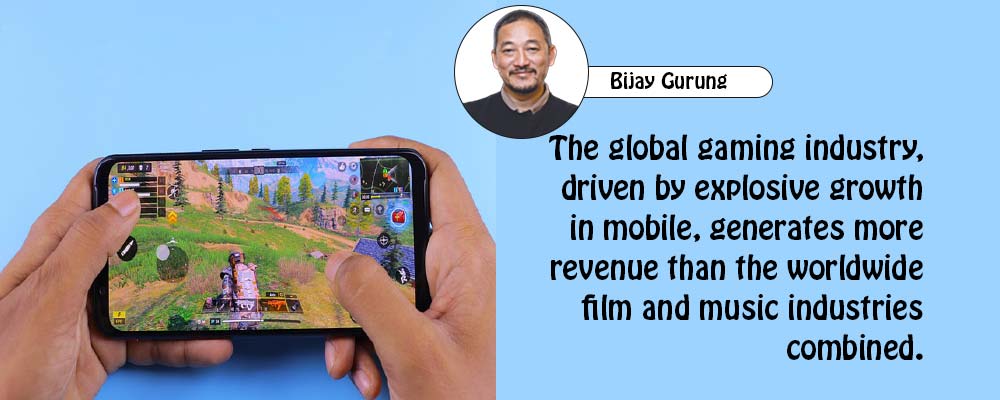
The global gaming industry, driven by explosive growth in mobile, generates more revenue than the worldwide film and music industries combined. Mobile games in particular have now overtaken other platforms to become a behemoth worth over $100 billion. Today, 500–800 games are launched daily on the App Store and Google Play. The market continues to grow increasingly saturated with both games and apps. In 2025 alone, releases increased by 25 per cent compared with 2024. Games made up a larger share of those launches, rising from 63 per cent in 2024 to 72 per cent in 2025. Overall, more than 1.4 million apps and games were released across Google Play and the App Store in 2025.
However, only a small fraction—around 10 per cent—gain meaningful user attention. Many launches receive only a handful of installs, or none at all. This has made mobile gaming one of the most competitive industries in the world. Free-to-play titles dominate: they are free to download and play but generate revenue through in-app purchases and advertising.
Because of this intense competition, substantial marketing investment is required for success. By some estimates, up to 70 per cent of annual revenue can be spent on marketing. Major marketing channels include Meta (Instagram), Google (Search, Play, YouTube), Unity, Apple Search Ads, AppLovin, and others. Increasingly, the winners are not just the best game developers but the best marketers—those who can produce high-performing creatives, optimise distribution across channels, and outspend competitors. As a result, breaking into the top-grossing charts has become extremely difficult for new and smaller developers. Fewer than 0.05 per cent of new games reach the top 100 by revenue.
In recent years, many of the most successful new titles have come from Türkiye. Turkish studios now account for five of the top 20 highest-grossing games in the U.S., widely considered the benchmark market for global success. Royal Match, one of the leading titles, generated roughly $110 million in in-app purchase revenue in a single month, excluding advertising. Türkiye’s rise has been rapid and largely concentrated in the match-3 casual puzzle genre.
Peak Games helped put the Turkish gaming industry on the global map, first with the $100 million sale of its card game assets to Zynga in 2017 and later with Zynga’s full acquisition of the company for $1.8 billion in 2020. Gram Games’ $250 million sale to Zynga further reinforced the perception that Turkish studios were not only successful operators but also prime acquisition targets.
This momentum fuelled a major investment wave in 2021–2022. Dream Games emerged as one of the fastest-rising Turkish unicorns, with its valuation approaching $5 billion. Most recently, Scopely (backed by the Saudi Public Investment Fund) acquired Loom Games—a studio only seven months old—at a valuation of around $1 billion. Its two founders graduated in 2020 and had just spent four to five years working on a modest startup before launching Loom Games in mid-2025.
All the routes trace back to Peak Games—one successful hit can generate multiple offshoots. Thus, Türkiye is now a top-tier export powerhouse despite a relatively modest domestic market, a weak currency, macroeconomic challenges, and limited PC/console footprint.
While Türkiye benefits from a population of nearly 90 million and a large base of young, well-educated, and highly ambitious talent, government support plays a pivotal role in fostering and accelerating the growth of the gaming industry.
Once a strong game concept is established and early performance metrics indicate scalability, a substantial marketing budget becomes essential to drive growth. Pixel Flow, as noted earlier (and illustrated below), is a clear example—scaling from zero revenue in September 2025 to nearly $20M by January 2026. This level of rapid expansion was made possible through strong government backing and support from key ecosystem partners.
Prior to 2010, Türkiye’s startup ecosystem was driven by entirely bootstrapped startups, with no presence of venture capital (VC) firms or angel networks and only a single fund of funds, the Istanbul Venture Capital Initiative (iVCI), operating in the space.
A single breakout hit can revitalise the entire industry. The early success of Peak and Gram Games sparked a surge of investment activity in 2021–2022. Now, Türkiye remains one of the top destinations for VC investments in gaming. There are now at least 35 VC funds that invest in video game startups based out of Türkiye. Why does this matter for Nepal?
Nepal is at a stage similar to where Türkiye once began—young, tech-orientated, and producing around 15,000 IT graduates each year. With the right ecosystem, this talent pipeline could be channelled into high-growth digital sectors, particularly gaming.
The Turkish experience shows that gaming can emerge as an early “unicorn sector” because it relies more on software, creativity, and global distribution than on heavy infrastructure. Nepali developers could quickly participate through mobile game development, AR/VR, and outsourced game art and animation, building export-oriented digital products from day one. Importantly, Türkiye demonstrated how a single successful exit can catalyse dozens of new startups, accelerating ecosystem growth.
Diaspora networks are another parallel. Turkish founders and investors abroad played a major role in funding and mentoring new ventures. Nepal can leverage its global tech diaspora in a similar way—supporting cross-border studios, remote collaboration, and early-stage investment.
A key lesson is the importance of clustering. Türkiye’s progress was driven by concentrated ecosystems linking universities, studios, venture capital, and accelerators. Nepal could replicate this through initiatives such as a Kathmandu-based game tech hub, university game labs, and public-private incubation programmes that connect talent with capital and markets.
Mobile-first development offers the most practical entry point for Nepali game studios. Mobile gaming reduces development costs while providing immediate global reach and scalable revenue opportunities.
By focusing on hybrid-casual titles, studios can blend locally and regionally appealing genres with strong monetisation design, creating games that are both culturally relevant and commercially viable.
Game including Ludo Star, developed by an Indian company, continues to make over 2 million USD in monthly revenue just from in-app transactions, growing steadily since its launch in 2017, reaching over 115 million USD in lifetime revenue with 50 per cent of the revenue coming from Saudi Arabia alone.
Another way to enter the mobile gaming industry is by becoming part of its value chain. One key area is Playable Ads—an essential component of mobile marketing creatives. These ads allow users to play a short, snack-sized version of a game directly within the advertisement itself.
Playable Ads have grown into a substantial industry of their own and are widely used by many of the largest game publishers. Working in this space can serve as a powerful entry point into the heart of mobile game development and marketing.
(Gurung is a Helsinki-based mobile gaming executive with over 20 years of experience in game publishing, partnerships, and business development.)











-original-thumb.jpg)