- Sunday, 7 June 2026

Religious Faith Flowing Through Kaligandaki
 Navaraj Pokharel
Navaraj Pokharel
Navaraj Pokharel
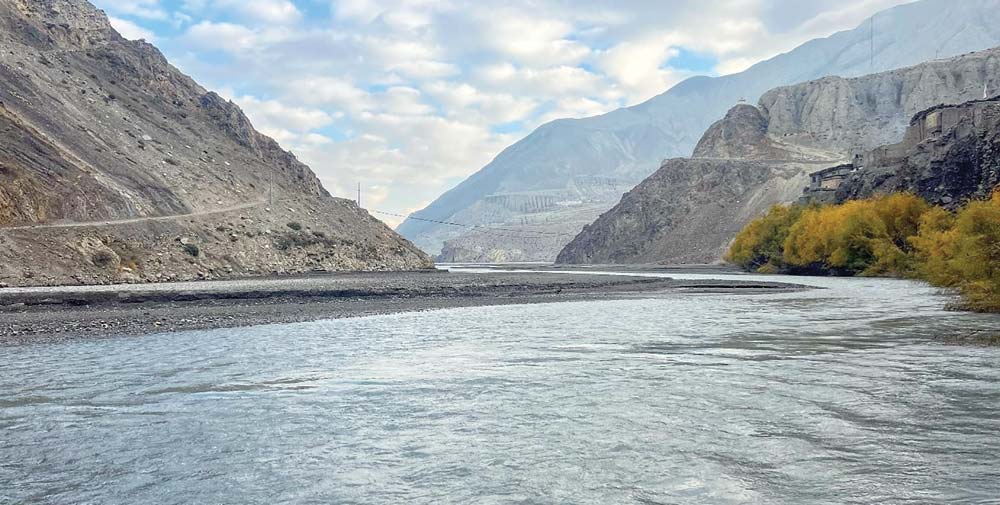
The Kaligandaki River is one of the three river systems of Nepal, a tributary of the Narayani River under the Gandaki. The Kaligandaki River merges with the Narayani River near the confluence of Chitwan and Tanhu near Debaghat Dham. The beginning of the Kali Gandaki River is from the Newbin Himal glacier area of the Mustang district of Nepal. The height of this area is 20,546 feet (6,268 metres). This area is on the border of Nepal and Tibet. At the local level, the initial stream is called Chhuma Khola. This stream is close to the famous Damodar Kund, an important tank of Hinduism. Then the Kaligandaki flows into the Lo-Manthang region. Before flowing into the Lo-Manthang region, it is also called Nichhu Khola or Choro Khola. After flowing into Lo-Manthang, the Kali Gandaki flows southwest, where this stream is also called the Mustang Khola. After reaching the Muktinath region, the major tributaries of Kali Gandaki, namely Jhong Khola, Kak Khola or the Krishna River, merge into Kali Gandaki.
Then the river flows southwards through the mountains called Kali Gandaki Ghati or Andha Galchi and Dhaulagiri Mountain (8167 m high) in the west and Annapurna I (8091 m high) in the east. This valley is the deepest gorge in the world. This gorge is 2520 m deep.
The Kali Gandaki River then flows southwards through a deep gorge. It joins the Rahughat Khola in Galeshwor, the Myagdi Khola in Beni, the Modi Khola near Kushma and the Badigad at Rudrabeni above Ridi Bazaar.
Then the river starts flowing from the northern edge of the Mahabharata region. While returning southwards, the Kali Gandaki crosses the Mahabharata and then reaches Devghat, where it joins the major tributary, Trishuli, and the East Rapti River and then continues on its way to Narayani. From Devghat, the river flows southwest of the city of Gaidakot. Later, the river turns southeast, and when it enters India, it is called Gandak.
Thus, the total length of Kaligandaki up to Narayani is 316 km. When it passes through Narayani, its total length is 814 km. Similarly, its total watershed area is 43,000 square kilometres. Since the Kaligandaki River originates and flows from the Himalayan region, its flow is of a uniform nature on average. Its average water volume has been measured as 1760 cubic metres per second.
Sacred Shaligram
Among the Hindu Puranas, the "Devi Bhagwat" Purana, written about the Mahatma of Devi Bhagwati, mentions a story about the Shaligram (a naturally fossilised ammonite shell) found only in the Kaligandaki River. The Purana describes a king named Dharmadevja who was initially a devotee of Goddess Lakshmi and later became her rival. Dharmadevja tried to cause a lot of pain to Lakshmi. His son Padmadwaja realised his father's mistake and became a devotee of Lakshmi. Pleased with his devotion, Lakshmi incarnated herself as Tulsi. Later, Tulsi fell in love with Lord Krishna. They got married to immortalise their bond. Lord Krishna transformed himself into Salabarga (Shaligram) and Tulsi into the Gandaki (Kaligandaki) River. Even today, Salabarga (Shaligram) can be found only in the Kaligandaki River. Similarly, as described in the Shree Swasthani Brata Katha, Lord Vishnu became a Shaligram in the form of a stone due to the curse of Jalandhar. The Shaligram stone found in the Kaligandaki River is considered a very sacred and important religious and cultural heritage in Nepali and Hindu society as a whole.
The Shaligram stone is a naturally formed black stone which is found on the banks and inside the Kaligandaki River, especially in the Mustang, Kagbeni, Jomsom and Setobeni areas, and although scientifically these stones are fossils of ancient marine creatures, ammonites, from a religious point of view, they are considered a direct and living form of Lord Vishnu.
According to Hindu scriptures—such as the Vishnu Purana, Skanda Purana and Padma Purana—it is believed that Lord Vishnu and Mother Lakshmi reside in the Shaligram stone. There is a religious belief that worshipping, seeing and touching the Shaligram stone destroys sins, fulfils desires and ultimately attains salvation, due to which its use is considered mandatory in Ekadashi fast, Satyanarayan Puja, Shraddha, Tarpan, Pitri Karya and other Vedic rituals.
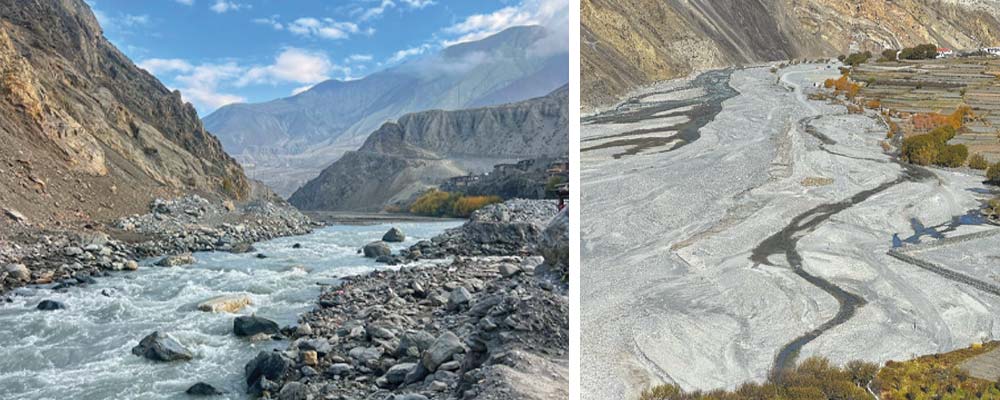
The Kaligandaki River is also known as the ‘Narayan River’, and as 'Shaligram'. stone is found naturally, it has further elevated the religious dignity of this river. From a cultural point of view, the Shaligram stone is the mainstay of the Vaishnava tradition that has been going on in Nepali society for generations, where Shaligram is regularly worshipped in the homes of Brahmins, Kshetri and Vaishnava communities. Keeping it in the house brings peace, prosperity, family unity and positive energy. The Shaligram stone has had special significance in Nepali festivals such as Harishayani and Haribodhini Ekadashi, Teej, Janai Purnima and various religious rituals, which shows its deeper connection with Nepali culture and religious life. In addition, the Shaligram stone is not only an object of worship but also a symbol of Nepali religious identity and cultural heritage, which inspires people towards faith, morality and spiritual discipline. In today's context, as the illegal trade of Shaligram stones and natural exploitation of this heritage are increasing, its protection, respect and proper religious use have become a common responsibility of the entire society because the Shaligram stone found in the Kaligandaki River has been enriching Nepali society by tying religious beliefs, cultural traditions and spiritual consciousness together. The Kaligandaki River is also known as the “Narayan River” due to its exclusive association with Shaligram. This has heightened the value of the river as one of the most sacred rivers in Hinduism. Beyond its religious value, the Shaligram stone is deeply embedded in Nepali culture and the Vaishnava tradition.
Geographically, the river flows from the Himalayas through various sacred locations, including Muktinath Temple, Kagbeni, Setiveni, Rudraveni, and Ramdi, before reaching Devghat. Muktinath, known as the “land of liberation", is especially significant, where pilgrims believe bathing and holy sites can free them from the cycle of rebirth. Kagbeni is renowned for ancestral rituals like Shraddha, while Setiveni and Rudraveni are associated with divine confluences. Ramdi, often called the “Haridwar of Nepal", attracts thousands during festivals like Maghe Sankranti.
These pilgrimage sites and rituals have preserved the religious continuity of Hindu society for centuries. Activities such as tarpan, fasting, chanting, and immersion of ashes connect individuals with spiritual purification and reinforce the tradition of respecting rivers as divine mothers. Moreover, religious gatherings along the Kaligandaki promote social harmony, cultural exchange, and unity among diverse communities.
The rituals and ceremonies performed at these religious sites on the banks of the Kaligandaki have maintained the religious continuity of Hindu society. Activities such as immersion of bones, offering of offerings, tarpan, fasting, chanting and penance connect people with spiritual purity. The tradition of worshipping the river as the mother has also developed a sense of respect and protection for nature. In Hinduism, rivers and religious sites are not only a means of worship but also a centre of social unity. Fairs, festivals and religious pilgrimages on the banks of the Kaligandaki bring people of different castes, classes and regions together. This has promoted social harmony, cultural exchange and religious tolerance.
In essence, the Kaligandaki River is a living symbol of faith, mythology, and cultural identity. Its connection with Shaligram, its role in sacred rituals, and its association with ancient traditions make it one of the most revered rivers in Hindu civilisation. However, in modern times, challenges such as illegal trade and exploitation of Shaligram stones have emerged, emphasising the need for collective responsibility to preserve this invaluable heritage. Protecting the sanctity of the Kaligandaki River ensures the continuation of a rich legacy that unites spirituality, culture, and nature in Nepal.
Religious importance
In Buddhism, it is known as Chumig Gyanat, meaning “hundred waters” in Tibetan, symbolising purity and spiritual cleansing. For Hindus, it is called Muktinath or Muktikshetra, meaning “place of liberation", where devotees believe they can attain freedom from the cycle of birth and death. This shared reverence highlights the site’s unique role as a bridge between two major religions.
Historically, the region played a vital role in the spread of Buddhism. Evidence suggests that as early as the 2nd century BC, Buddhist teachings travelled from Lumbini to China via the Mustang region.
During the reign of Emperor Ming of Han, a dream about the Buddha inspired him to send envoys, including Kai Yung, to South Asia. They later returned with Buddhist texts, a statue, and monks who are believed to have been connected to Nepal, possibly from Mustang. This region, rich in monasteries and archaeological remains, continues to attract global attention as a historic centre of Buddhist culture.
Geographically, the Kaligandaki River is one of Nepal’s most significant rivers. Originating in Mustang, it flows through key religious and cultural sites before merging with the Narayani River at Devghat. The river also forms the world’s deepest gorge between Dhaulagiri and Annapurna I.
The Kaligandaki River is one of Nepal’s major river systems and an important tributary of the Narayani River. It originates from the glacial region of Newbin Himal in Mustang near the Nepal–Tibet border and flows through significant areas such as Lo-Manthang, Muktinath, Kagbeni, Beni, Kushma, and Devghat before entering India as the Gandak.
Along its course, it forms the world’s deepest gorge between Dhaulagiri and Annapurna I. The river is about 316 km long within Nepal and supports a large watershed.
Religiously, the Kaligandaki holds exceptional importance in Hinduism as the only river where Shaligram stones are found, believed to be manifestations of Lord Vishnu. Sacred sites like Muktinath Temple and Kagbeni attract pilgrims seeking purification and liberation. Rituals such as Shraddha, Ekadashi, and Satyanarayan Puja are closely linked with Shaligram worship.
The river also holds significance in Buddhism, particularly in Mustang, where it is associated with the spread of Buddhist teachings. Overall, the Kaligandaki River is a vital geographical feature and a symbol of Nepal’s rich religious, cultural, and spiritual heritage.
(Pokharel is a PhD scholar on the Kaligandaki.)
Photo by Ajaya Shrestha