- Saturday, 6 June 2026

Nepal’s Democracy Takes Optimistic Turn

We are living at an incredible moment of history. Nepal’s political landscape has undergone a seismic shift. This is peaceful, taking place on the strength of the ballot. It has further nourished the country’s democratic roots. This change appears to be surrealistic. This seems improbable for those who have witnessed several political turning points spanning more than five decades. Nepal’s democratic upheavals were spearheaded by the political parties established in the course of fighting against the autocratic regimes of different hues.
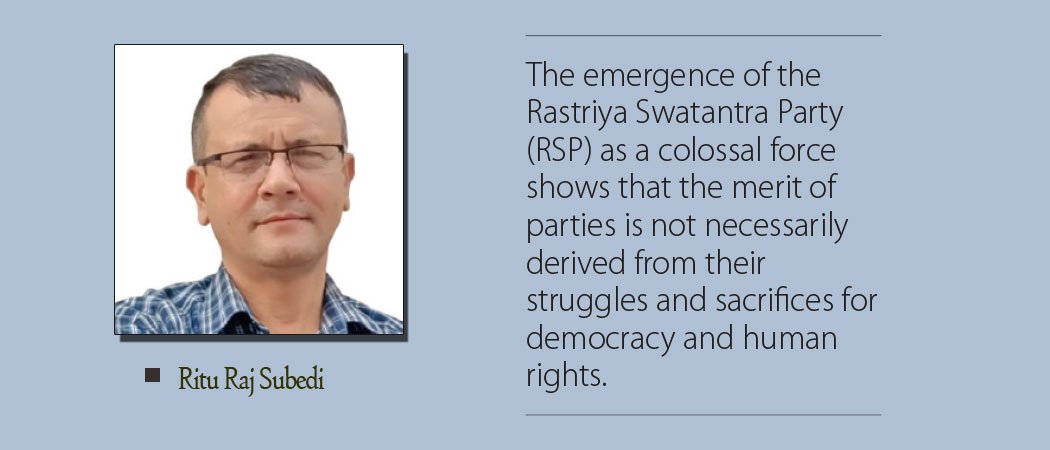
But the emergence of the Rastriya Swatantra Party (RSP) as a colossal force shows that the merit of parties is not necessarily derived from their struggles and sacrifices for democracy and human rights. The old parties built their legacy on their ability to dismantle the authoritarian rules, not on spearheading the nation-building campaign. This flaw eventually turned out to be mortal for them. The people sought a better option after the old parties were discredited and their logic of existence failed. Such a miraculous course is possible when the elections are fair or are not hijacked by extra-constitutional elements.
Fairy tale moment
This writer has minutely watched the democratic movements for more than three and a half decades. He was also an active participant in the 1990 democratic movement that overthrew the Panchayat regime. For him, the rise of Balendra Shah as a powerful Prime Minister seems like a fairy tale. However, there were subjective and objective factors galore for his meteoric political ascent during a short span of time. The credit largely goes to the old parties that created the ground for him to take a decisive plunge into politics. Those who offered far-fetched arguments to explain the RSP's electoral triumph have simply ignored the emerging realities. Now, new characters and narratives are set to dominate the political domain, pushing the old guards into the margins.
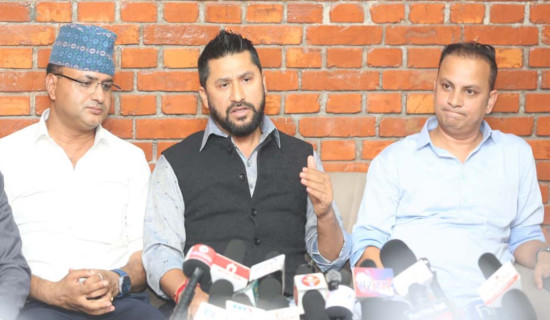
On Thursday, the first meeting of parliament, formed after the elections to the House of Representatives (HoR) on March 5, presented a different atmosphere. The top leaders of old parties were not there to make lengthy speeches filled with insults towards their opponents. Rastriya Swatantra Party (RSP) president Rabi Lamichhane, Shram Sanskriti Party chair Harka Sampang and independent lawmaker Mahabir Pun stole the show. The old parties were represented by second-rung or lesser-known figures. RSP’s chair, Lamichhane, made a balanced and responsible speech, indicating that his party is getting mature. His apology to the Dalit community for centuries of discrimination and injustice has drawn praise from all sections of society.
Quite the contrary, CPN-UML acting chair and Parliamentary Party leader Ram Bahadur Thapa stirred a hornet's nest through his controversial remarks. He attributed the RSP’s magical win to the backing of civil servants, the Nepali Army and foreign powers. But his uncalled-for comments triggered reactions from inside and outside the party. The other day, the party’s secretariat meeting corrected Thapa’s remarks, stating that it respects the bureaucracy, the national army and the international community. Back in 2008, Thapa was the defence minister in the CPN-Maoist-led government but his extreme posture brought him into conflict with the then army chief Rookmangud Katawal. After his attempt to sack Katawal was thwarted by the president, the erstwhile prime minister, Pushpa Kamal Dahal Prachanda, resigned from the post nine months after leading the first government under the federal democratic republic of Nepal.
Meanwhile, no sooner had the new government taken up the mantle than it swung into action. Former prime minister and UML chair KP Sharma Oli and former home minister Ramesh Lekhak were arrested over their alleged role in the killing of scores of young people in the Gen Z movement last September. The families of Gen Z martyrs were elated by this move, hoping that the Balen government would not allow the Karki report to gather dust. However, the detractors have said that the government has not followed due legal process in arresting the two leaders, which might weaken its legal proceedings against them in court.
On the other hand, this sent shockwaves across the rank and file of the two parties. Oli and his followers had often challenged the authorities to round him up ever since his removal from power. New Home Minister, Sudan Gurung, did not delay in accepting their challenge and put them behind bars. The UML leaders and cadres rushed to the streets, demanding the release of their chair but their protests were weak and became a subject of mockery.
UML faces ridicule
What is more worrying for the UML is the aversion that the people are expressing against its activity. Many are trolling the UML cadres who were beaten up or chased by the cops during the protest instead of showing sympathy for them. The majority of UML’s cadres, disappointed by the humiliating defeat in the recent polls, do not have the stomach for street agitation against the new government that has secured a huge popular mandate to govern the country. Oli’s arrest will further test the UML’s organisational strength, already degraded by the election loss. The condition of the Nepali Congress is more pathetic. Suffering from the worst factional feud, the NC has refused to launch a stir to press the government for the release of its tainted leader, Lekhak.
True to its pledge to ensure good governance and curb corruption, the government has intensified the anti-corruption drive. The Central Investigation Bureau (CIB) of Nepal Police has nabbed some powerful businessmen, including Deepak Bhatta and Shankar Agrawal, on charges of money laundering. The government sits on a mountain of problems, ranging from creating jobs, making service delivery effective and attaining robust growth. The new leadership must demonstrate its competence to sort out a glaring contradiction besetting the political economy - we have embraced a ‘socialist’ economy but practiced ‘neo-liberal’ policy. This requires policy overhaul and comprehensive reforms. This is where the litmus test of the new government lies.
(The author is Deputy Executive Editor of this daily.)