- Sunday, 24 May 2026

Listening To Youth
 Swaansh Mahat
Swaansh Mahat
Swaansh Mahat
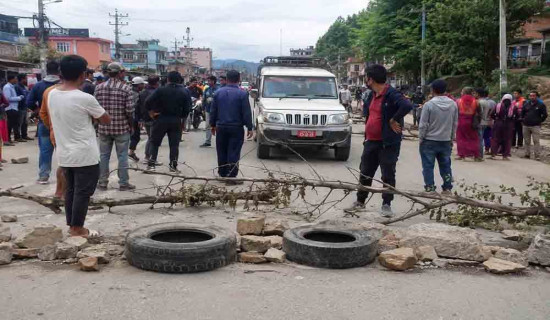
Nepal celebrates its youth but doesn’t understand them. For weeks, we watched young people flood the streets, being angry, loud, and unafraid. Placards in hand, voices cracking but persistent, they demanded change from a system that had stopped listening long ago. When the dust settled, when headlines softened, and the noise faded, a narrative took over almost instantly: the youth had awakened. It sounds hopeful. It sounds like progress. It is also incomplete. What we saw was not just awakening; it was exhaustion finally finding an outlet.
There is a tendency in Nepal to romanticise resilience, especially when it comes from young people. We praise their courage, their energy, their willingness to “fight for the country.” But we rarely ask what it takes for someone to reach that point. We rarely sit with the quieter truth that behind every protest slogan is a long history of being unheard.
Anger does not appear overnight. It accumulates. It builds in classrooms where critical conversations are avoided, in households where obedience is valued over expression, in a culture that still treats emotional vulnerability as weakness. By the time it spills onto the streets, it is already too late to call it sudden.
And yet, once the protests ended, the country did what it often does best: it moved on. The conversation shifted back to political analysis, policy debates, and leadership speculation. We discussed what the protests meant for governance, for democracy, for the future of the nation. But there was very little space for another, more uncomfortable question: what did all of this do to the young people themselves?
Protest is not just a political act. It is an emotional one. To stand in a crowd and shout until your throat hurts, to face uncertainty, to carry fear and still choose to stay. These experiences leave a mark. Not always visible, not always acknowledged, but real nonetheless. In a country where mental health is still spoken about in hushed tones, those marks rarely find language, let alone support.
We celebrate the visibility of youth when they are useful to a cause. We call them “the future” when they align with our hopes. But we struggle to engage with them as they are complex, overwhelmed, and often quietly struggling. There is something deeply unsettling about a society that applauds young people for breaking their silence but offers them no space to process what comes after.
The truth is, Nepal does not just have a political gap between generations. It has an emotional one. We do not lack awareness. We lack the willingness to confront discomfort. It is easier to praise resilience than to question why it is constantly required. It is easier to celebrate protest than to examine the conditions that made it inevitable.
If we continue like this, we risk misunderstanding an entire generation. Not because they are too complicated, but because we refuse to listen beyond the moments when they are loud. The streets may be quieter now. The slogans have faded. Silence, however, should not be mistaken for resolution.