- Thursday, 30 April 2026

PM Shah And Road Ahead

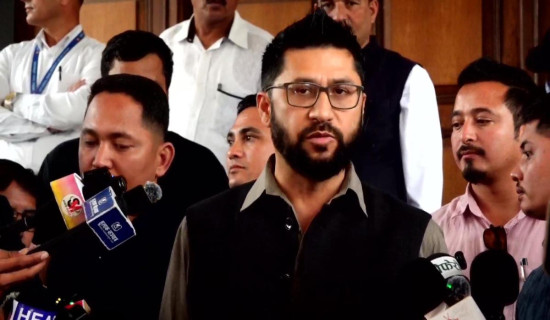
With the swearing-in of the members of the House of Representatives and the formation of a new Council of Ministers under Balendra Shah, the constitutional and democratic system has finally been restored to the right track. It had been derailed following the Gen-Z movement on September 8 and 9, 2025, which created a constitutional vacuum. The youth-led movement toppled the government, leading to the formation of an interim administration that also dissolved the House of Representatives (HoR). However, the interim government led by former Chief Justice Sushila Karki managed to fill the vacuum by successfully conducting the elections to the HoR within the stipulated timeframe. As a result, the country now has a new House of Representatives and a new Council of Ministers, both largely dominated by youth leaders. While the new members of the HoR assumed their office after taking the oath on Thursday, President Ramchandra Paudel appointed Balendra Shah, the senior and Parliamentary Party leader of the Rastriya Swatantra Party, to the post of the Prime Minister, formed a 15-member Cabinet, and administered them the oath of office and secrecy on Friday.
Balendra Shah is Nepal's youngest Prime Minister since the restoration of democracy in 1990. He is also the first Prime Minister of Madhesi origin. Previously, most prime ministers came from hill Brahmin or Kshatriya backgrounds, with Marichman Singh Shrestha of the Newar community being the only exception. His election to the top post marks another step towards inclusiveness. Shah's political ascent has also been remarkably swift. An engineer and rapper, Shah joined politics only in 2022, and contested the election to the post of mayor of Kathmandu as an independent candidate and won by defeating contenders from major political parties. In the March 5 elections, he was elected to the HoR, defeating CPN-UML chairman and former Prime Minister KP Sharma Oli in Oli's Jhapa-5 constituency with a margin of about 50,000 votes. No politician in Nepal has achieved such rapid success. The Rastriya Swatantra Party's sweeping victory is widely attributed to Shah's charismatic personality. He left a strong impression on voters during his nationwide tour before the polls.
His swift rise has now translated into equally swift action as Prime Minister. The first Cabinet meeting held on Friday made some important decisions, including the implementation of the recommendations of the Gauri Bahadur Karki-led commission formed to investigate the incidents of the Gen-Z movement, during which 76 persons were killed and public and private property, including Singha Durbar and Parliament Building, was set on fire. Following the decision, police arrested former Prime Minister KP Sharma Oli and former Home Minister Ramesh Lekhak on Saturday morning. They have been accused of responsibility for the killing of 19 youths, many of them in school dress, on September 8, 2025, the first day of the movement. The Karki-led Commission has reportedly recommended action against them, although the report is yet to be made public officially. The Rastriya Swatantra Party contested the elections with a commitment to good governance, and the government's initial actions reflect that promise. Rampant corruption and governance remain the country's greatest enemies. The Gen-Z movement itself was the manifestation of these systemic failures. The present parliament and the government formed based on that movement must leave no stone unturned to uproot these evils by punishing the genuine wrongdoers following due legal procedures and push the country towards progress and prosperity.
-original-thumb.jpg)