- Tuesday, 9 June 2026

Silence Fuels Sexual Violence Crisis
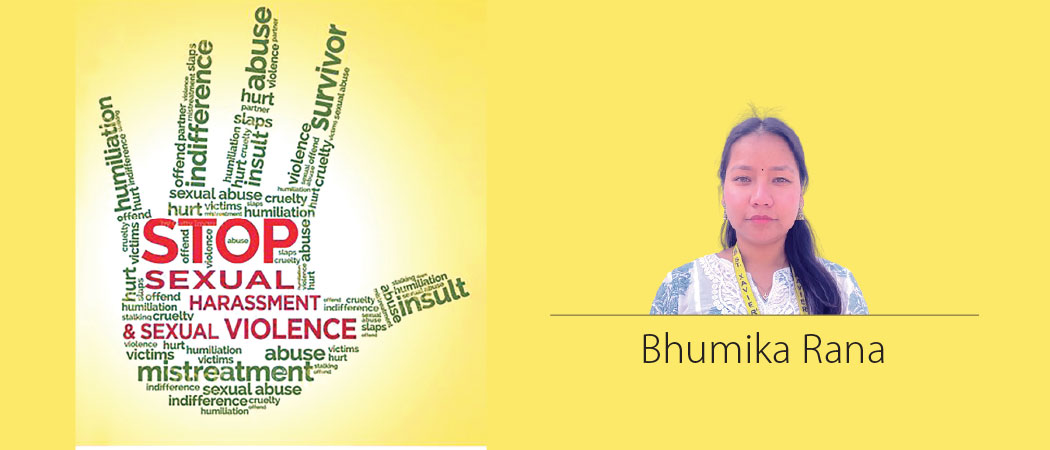

Sexual violence is one of the biggest social problems in Nepal. In spite of raising awareness and strengthening laws to deal with such crimes, reports of rape are surfacing from various places across the country. Every statistic hides a victim who must endure rape and the ensuing social ostracism. So, addressing rape is about social change, not just laws or policies. Recent statistics on crime rates in Nepal indicate how serious the problem is. Nepal Police records over 2,000 rape cases annually. In the financial year 2019/20, Nepal Police had logged 2,144 such cases. This statistic was followed by 2,532 cases in 2020/21, 2,380 cases in 2021/22, and over 2,500 cases in 2023/24. These figures are already alarming, and these are only a small percentage of actual incidents that are happening in the country. Experts believe that many such incidents are not being reported because victims are afraid to come forward due to social stigma or because of the lengthy process involved in dealing with such crimes.
The most worrying aspect of the cases is that a large number of child victims are being subjected to rape. The data collected from police reports indicates that the majority of rape victims are minor girls. Some reports found that over half of rape victims were under the age of 18. This is a worrying aspect of rape, as it is not just a gender concern but a child concern as well. The emotional and psychological effects of such a traumatic experience for a child can be devastating.
However, it's also important to note that most rapists are known to their victims. In most studies and media investigations, it has been found that most of the perpetrators are neighbours, relatives, family members, teachers, or people who are familiar with the victims. In most of the cases involving children, it has been found that the perpetrators are people whom the families trusted, making it a more tragic case for the victims.
The social setting of rape cases is also a major factor that has discouraged victims from taking action against their perpetrators. In most societies, sufferers are often blamed or viewed as culprits instead of being treated as victims. Blaming the victims' clothes, behaviours, or personal lives is more significant than blaming the culprit.
The social setting that has developed around rape cases has also discouraged women from pursuing justice, as they fear being blamed for the assault rather than receiving support and understanding from the legal system. In most societies, women are often viewed as perpetrators of rape instead of being protected. The social setting has created a scenario where women are often questioned about their clothes or behaviour instead of focusing on the perpetrator of the crime. The social setting has thus discouraged women from pursuing justice by choosing to remain silent instead.
The social setting is also more pronounced in rural areas where social reputation is paramount. Women in rural areas often fear ostracism from their communities if they report a rape case. In some instances, women are also afraid that if they report a rape case, it could affect their chances of getting a husband in the future. In some communities, women are also choosing to settle rape cases by involving their communities instead of going to court. This method has helped community peace, but it has also denied justice to women and allowed perpetrators to go unpunished.
In view of the gravity of the problem of sexual violence, the government has taken steps in the last few years to strengthen its laws. The National Penal Code of 2017 is a landmark step in strengthening Nepal’s laws with regard to the crime of rape. Depending on the circumstances and the victim's age, a rapist can be sentenced to 20 years. Another important step taken by the government is that it has made marital rape a criminal offence, which is a step towards acknowledging that marital rape is a form of sexual violence.
Likewise, it has extended the period of limitation for filing a case of rape from one to three years. Earlier, the period of limitation for filing a case of rape was very short, and this was a hindrance for victims of rape in filing a case. However, legal reforms are not sufficient in themselves. Implementation of laws appears to be one of the most significant challenges in dealing with the rape issue. Lack of proper evidence may hinder investigations in some cases. Occasionally, the lack of resources at police stations in rural areas can hinder the effectiveness of investigations. Even if the victim agrees to submit evidence, the court may not prove cases without proper investigation techniques.
The judicial process may also be time-consuming and emotionally draining for the victim. It may take years for a court case to come to a conclusion. Victims may have to recount their experiences repeatedly in court. It may be very difficult for a victim of rape to go through the judicial process without proper legal aid.
The topic of rape rises on some occasions and receives national attention. One of the most discussed rape incidents was the rape and murder of a young girl in the Kanchanpur district of Nepal in the year 2018. The incident led to public demonstrations against the crime. Protests raised awareness of police investigation loopholes and the need for institutional reform.
Civil society and youth movements have also contributed to the growing debate over the implementation of rape laws. Social media movements have motivated rape survivors to come forward. Such activism has also led to a challenge to the status quo regarding rape.
Another significant aspect in preventing sexual violence is education. Educating people, especially children, about the importance of consent and gender equality is crucial. It would help them understand the seriousness of sexual violence. If children were educated properly, they would never indulge in sexual violence. However, the government must also focus on providing support for sexual violence victims. This would help them recover from the trauma. Expanding crisis centres and helplines, especially in rural areas, would be highly beneficial for victims.
The war against rape in Nepal is ultimately a matter of collective responsibility. The extent of change will also depend on society's willingness to address its values and beliefs, in addition to laws and institutions. The focus of society must change from the victim to the perpetrator of the crime. Sexual violence is not only a personal tragedy for victims; it constitutes a violation of fundamental human rights and a challenge to social justice.
Every instance of a rape case is a failure of protection for vulnerable people and of our commitment to the values of equality and dignity. The country cannot resolve rape as a national priority unless it is serious about building a safe and just society. The country will never be able to end the cycle of silence and violence until victims of rape can speak out, societal responses are effective, and societal attitudes stop blaming victims.
(Rana is currently pursuing higher education in psychology and social work at St Xavier's College.)