- Friday, 22 May 2026

Several new wheat seed varieties developed
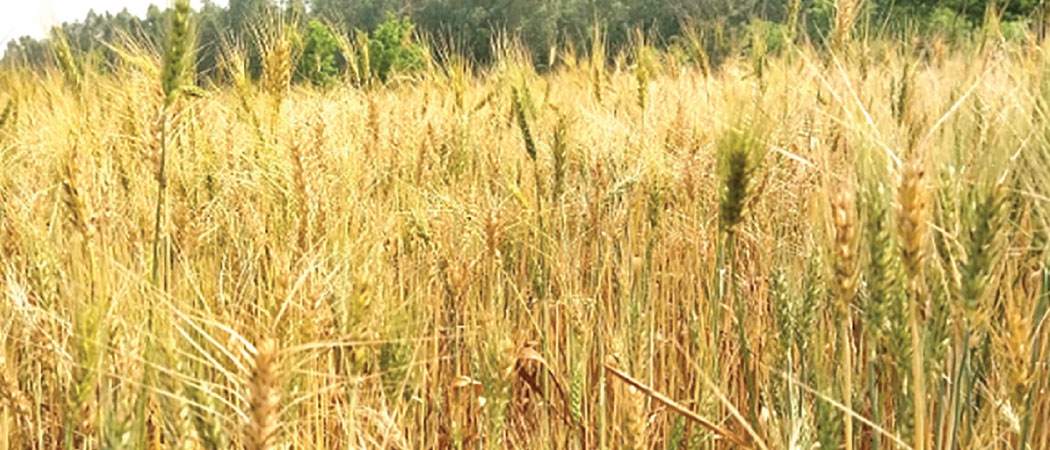

By Our Correspondent,Butwal, Feb. 25: The National Wheat Research Programme has announced the development of new wheat seed varieties of Zinc Wheat–1, Zinc Wheat–2, and Borlaug–2020 for the Tarai region.
Similarly, for the hilly region, it has developed the Khumalshakti, Bheriganga, and Himganga varieties of wheat seed.
According to National Wheat Research Programme, it has developed 54 improved wheat varieties in the last six decades, prioritising food security along with nutritional security.
Currently, four additional wheat seed varieties are in the recommendation phase, while 13 older varieties have been removed from the recommended list.
Dr. Roshan Basnet, Coordinator of the National Wheat Research Programme in Bhairahawa, said that farmers can get more production as these wheat varieties contain high levels of zinc and iron and have high ability to withstand the effects of diseases, pests and climate change.
He said that the new varieties can produce up to 5.5 tonnes per hectare.
He further added that if improved varieties are effectively delivered to farmers and proper management of fertilisers and irrigation is ensured, the country could not only become self-sufficient in wheat production but also reach the stage of exporting wheat.
Targeting wheat farmers in Rupandehi, the programme conducted a week-long training on improved wheat cultivation techniques through both theoretical and practical methods.
A total of 25 wheat farmers participated in the training. Most of the participating farmers said that they were previously unaware of the newly developed wheat varieties.
Ajay Kumar Yadav, a wheat farmer from Marchwar in Rupandehi, said he did not even know which wheat variety he had sown. He expressed his confidence that after learning about selecting appropriate varieties, seed treatment, timely sowing, and line sowing methods during the training, he would be able to increase production.
Yadav said that he also learned about soil testing and balanced fertiliser use, irrigation management, disease and pest control, weed management, harvesting, and storage techniques.
Dr. Basnet said that many wheat farmers in Rupandehi still bring wheat seeds from India, but higher yields can be achieved using improved wheat seeds developed in Nepal.
Ram Bharos Kurmi, a farmer of Sammarimai Rural Municipality in Rupandehi, said he had been cultivating wheat using traditional methods until now.
After receiving the training, he expressed hope that adopting improved cultivation methods would increase production.
The National Wheat Research Programme organised the week-long training with the objective of encouraging farmers to increase wheat production.
During the training, farmers gained technical knowledge on selecting certified improved seeds, sowing methods, balanced fertiliser management, timely irrigation, and disease and pest management.

-square-thumb.jpg)


1662885410-original-thumb.jpg)