- Sunday, 3 May 2026

Polls give momentum to local economy

By Our Correspondent,Lumbini, Jan. 31: As the upcoming House of Representatives elections to be held on March 5, 2026 draws closer, economic activities have started to pick up in various districts of the country.
Stakeholders have said that the election campaign that began with the nomination of candidates has had a positive impact on tea shops, hotels, transportation, fuel, printing houses and local products.
Increase in business activities in Butwal
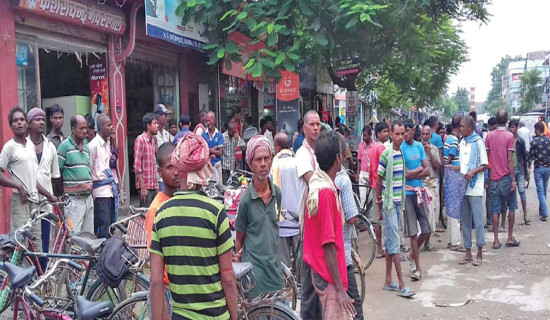
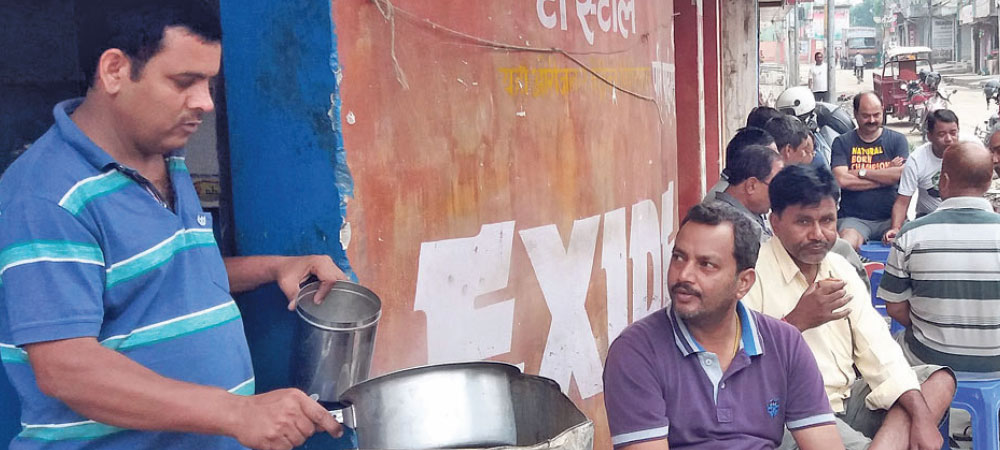
According to Hari Prasad Aryal, President of the Butwal Chamber of Commerce and Industry, the impact of the election has reached “from tea shops to farmers’ sheds.”
He said that people who previously drank one or two cups of tea at street corners are now drinking four to five cups while engaging in election-focused discussions.
The increase in tea sales has, in turn, boosted dairy production and farmers’ incomes.
Aryal said that election activities have increased people’s movement in the market, intensified the use of vehicles, and brought more customers to hotels and restaurants.
Prakash Dhakal, President of Rupandehi Chamber of Commerce and Industry, said that election-related activities have helped revive sluggish economic activity, estimating up to a 10 per cent increase in market transactions.
Similarly, Surendra Paudel, President of Sainamaina Chamber of Commerce, said that as election activities intensify, businesses—from tea shops to transportation services—have become more active, showing encouraging signs for trade and commerce.
Economic activities rising in Gulmi
Economic activity in Gulmi has also begun to gradually increase with growing election enthusiasm.
According to Punaram Kunwar, Operator of Srijana Hotel in Tamghas, hotel businesses performed well during police recruitment for the election and during the days of candidate nominations.
With voters starting to return from outside the district, he expects hotel businesses to improve further over the coming week.
Transport entrepreneur Chandra Bahadur Bista said that while no major change has been seen so far, vehicle usage is expected to increase as the election approaches.
General Secretary of Gulmi Chamber of Commerce and Industry Chetan Narayan Pandey also expressed optimism that business activities will pick up once voters return to their villages.
Rise in business from tea shops to campaign materials in Nepalgunj
In Nepalgunj, economic activities have increased noticeably since the start of election campaigning.
According to Tank Dhami, President of the Nepalgunj Chamber of Commerce and Industry, crowds have grown at tea and snack shops across major intersections.
In addition, businesses producing campaign materials such as boards, flags, leaflets, and pamphlets have seen increased transactions.
With the establishment of ward-level election mobilisation offices, shops around these offices have also seen higher sales.
Mohammad Salik Karigar, owner of a tea shop near Tribhuvan Chowk, said his tea sales have doubled.
Fuel consumption and demand for vehicle rentals have also risen.
Positive impact on hotels, transport in Ghorahi
As election activities intensify in Ghorahi, positive signs are emerging in the hotel, restaurant, and transportation sectors.
Snack shop owner Ramesh KC said the number of customers increased after candidate registration.
His shop’s daily turnover has risen from Rs. 8,000–Rs. 9,000 to Rs. 13,000– Rs. 14,000, he said.
Naresh Shrestha, Senior Vice-President of the Dang District Chamber of Commerce and Industry, said that although actual data is not yet available, election promotional programmes, increased vehicle use, and meetings at hotels are expected to boost business in the coming days.
Growing economic activity in rural areas of Eastern Rukum
Economic activities have also increased in rural areas of Eastern Rukum along with election enthusiasm.
Bharat Budha of Bhume Rural Municipality–2 said that businesses have become more active as discussions at tea shops, hotels, and public places have increased.
Although political parties have increased meetings and interactions, most gatherings are held at party offices or leaders’ homes, said Kumari Baral Gautam, District In-Charge of the Nepali Communist Party.
However, she noted that tea and snacks are usually taken from the local hotels.
(Inputs from Chhabi Pandey in Butwal, Toplal Aryal in Resunga, Siraj Khan in Nepalgunj, Liladhar Wali in Ghorahi, and Jayaman Budhamagar in Rukum East).
-original-thumb.jpg)