- Sunday, 3 May 2026

Snowfall hits high Himalayan districts, farmers hopeful of good harvest
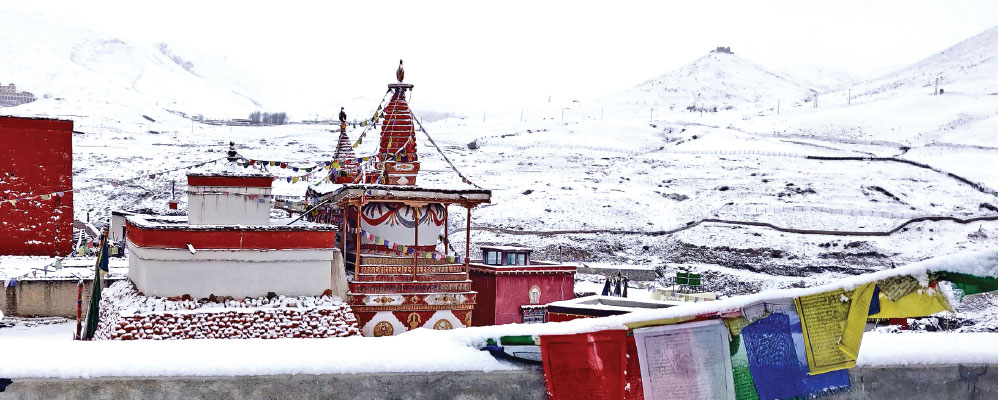
Photo: TRN Snowfall in Mustang

By A Staff Reporter,Kathmandu, Jan. 25: The country has received much-awaited winter snowfall and rainfall across several high Himalayan districts, including Dolpa, Humla, Kalikot, Mustang, Mugu and Bajura, bringing much-needed relief to drought-hit winter crops.
According to the Department of Hydrology and Meteorology (DHM), the country is currently under the influence of a low-pressure western system, with its impact stronger in the western region than in the central and eastern parts, while the central region has remained under cloudy skies since Saturday morning.
Under this weather system, several high-altitude districts have received snowfall, with Mustang witnessing widespread snow across both the upper and lower parts of the district. The snowfall has disrupted daily life but has also raised hopes among farmers for improved winter crops.
In Upper Mustang, snowfall occurred for the second time this season from early Saturday morning. Partial snowfall was recorded in settlements and the surrounding areas of Lo Manthang and Lo-Ghekar Damodarkunda Rural Municipality.
According to Umesh Paudel, Chief of the Annapurna Conservation Area Project (ACAP) office in Lo Manthang, snowfall was reported in several high Himalayan areas, including the Korala border point in Chhoser, Chhonhup, Ghami, Charang and Surkhang, which lie along the Nepal-Tibet border.
The snowfall has caused difficulties for vehicular movement along the Jomsom-Lo Manthang Road section, while high-altitude hills and ridges have turned completely white. Snowfall was also recorded in Samjung, Chumjung, Chhoser and areas surrounding the Korala border point.
Similarly, snowfall in Charang, Marang, Ghami, Dhakmar, Ghiling and Yara Ghara areas of Lo-Ghekar Damodarkunda Rural Municipality has affected daily life. While some elderly people and livestock herders remain in the villages, nearly 80 per cent of residents from Lo Manthang and Lo-Ghekar Damodarkunda had already migrated to lower regions by mid-winter. Community and monastery schools are currently operating mobile schools in Pokhara and other cities.
Meanwhile, Lower Mustang has experienced snowfall for the first time in four years. Snowfall began late on Friday night across Thasang, Gharapjhong and Baragung Muktikshetra Rural Municipalities, covering both urban and rural areas. Despite the snowfall, transport services along the Beni-Jomsom Road remain operational.
Karma Gyatso Gurung, Chairperson of Ward No. 4 of Baragung Muktichhetra, said daily life has been severely affected due to extreme cold. “After four years, snowfall has returned. The settlements are almost deserted due to the intense cold,” he said.
While tourism has slowed significantly, farmers are optimistic. According to Dr. Lalmani Aryal, Chief of the Agriculture and Livestock Development Office in Mustang, snowfall helps kill pests, improves soil moisture, supports apple pollination, and enhances crop yields. Regular snowfall is crucial for crops such as apples, barley, wheat, buckwheat and naked barley, he added.
Meanwhile, in Mugu, snowfall began on Friday night and continued across Chhayanath Rara Municipality, Soru, Khatyad and Mugum Karmarong Rural Municipalities, preventing sunshine and further lowering temperatures.
As the cold intensified, the rural municipality urged shepherds not to move livestock to high pastures.
Mayor Bishnu Kumar Bham advised elderly people and children to remain indoors and stay warm. Health workers have warned of increased risks of pneumonia, viral infections and diarrhoea caused by rotavirus, especially among children.
Dr. Deepak Shahi of Mugu District Hospital recommended wearing warm clothing and consuming hot water and foods to prevent cold-related illnesses. Parents have also reported that children are facing difficulties attending school due to the extreme cold.
Similarly, in Bajura district, heavy snowfall accompanied rainfall from Friday evening, affecting high-altitude areas including Swamikartik Khapar, Jagannath, Budhinanda, Badimalika and Gaumul Rural Municipalities.
The cold has increased sharply, affecting children, elderly people, and patients suffering from cold-related illnesses.
According to Tula Bahadur Rawat, Principal of a residential school in Budhinanda-9, teaching and learning activities have been severely affected due to the intense cold.
Jasiram Sahani, Chief of the Agriculture Knowledge Centre, Bajura, said that only 20 per cent of cultivated land has irrigation facilities, while 80 per cent depends on rainfall. Snowfall is expected to improve food security, although long-term irrigation expansion remains essential.
Meanwhile, in Jumla, snowfall began from midnight on Friday, with temperatures dropping below zero. While snowfall usually occurs in mid-winter, this year it arrived later than usual.
Farmers have expressed relief as winter crops were at risk due to dryness. Although about half a foot of snow has accumulated in some areas and daily life has been partially affected, farmers remain hopeful that the snowfall will lead to better harvests in the coming season.


-square-thumb.jpg)