- Tuesday, 9 June 2026

Election code of conduct comes into effect

Kathmandu, Jan. 19: The Election Commission (EC) has enforced the election code of conduct, 2082, effective from midnight on Sunday, ahead of the upcoming National Assembly (NA) and House of Representatives (HoR) elections. Voting for the NA is scheduled for January 24, while the HoR election will take place on March 5.
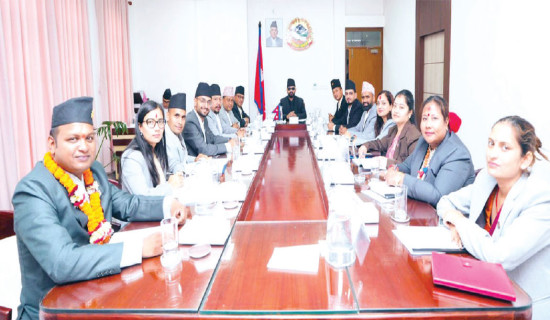
In a meeting held on Friday, the Commission decided to implement the code from Monday midnight to ensure clean, fair, transparent, and fear-free elections. The code will remain in effect until further notice, said EC’s Spokesperson Narayan Prasad Bhattarai.
The EC has directed the government at all three levels to make necessary arrangements for the implementation of the code of conduct.
The Nepal government, ministers, province government and their ministers, constitutional bodies and office-bearers, the government bodies at all three levels and officials there, local executive and its members, employees at the federal, province and local levels have been instructed to implement and abide by the code of conduct, said Bhattarai.
It also covers security agencies and personnel, offices and employees of government, semi-government, and public institutions, political parties and their affiliated organisations, candidates and related persons, election representatives, polling and counting representatives, and holders of public office.
Additionally, the code applies to monitoring committee officials and observers, media organisations and their staff, private and non-governmental institutions and their officials, educational institutions and their staff, voters, development partners, project staff, voter education organisations, banks, financial institutions, cooperatives, industrial and business enterprises, service providers, and any other persons or bodies designated by the Commission.
The Commission will also publish a formal notice of the code’s enforcement in the Nepal Gazette
Key provisions of election code of conduct
The election code of conduct bars political parties and candidates from producing, using, distributing, or displaying items such as garments, accessories, or any materials bearing election symbols, logos, or stickers.
The code of conduct also prohibited using children during electoral campaign, blocking public transport during rallies, assemblies, or meetings, and spreading false or divisive information on social media, including through artificial intelligence.
Likewise, the code of conduct has also prohibited from using government, semi-government and public institutions, as well as schools and universities for electoral campaign.
Similarly, the government employees, teachers and staffs are barred from participating in the election campaigns.
Furthermore, ministers who are themselves candidates are allowed to campaign within their own constituencies. They can also campaign for their parties.
However, they are barred from participating in officials functions like, groundbreaking or inauguration ceremonies, are banned during this period.
The code of also bars a candidate from use more than two vehicles for electoral campaigning.
Transfers of government staffs, except for those mobilised on election-related duties, are not allowed.
As per the code, campaigning is permitted only from 7:00 am to 7:00 pm and parties or candidates cannot use banners larger than 3 feet by 4 feet in size.
As per the code of conduct, newspaper advertisements regarding electoral campaigning are limited to one per day and broadcast on FM radio or television is allowed only four times in 24 hours.
Parties must provide at least 24-hour notice to the police regarding rallies, processions, or gatherings.
The code of conduct has made it mandatory for the candidates to pay the election-related expenses through designated bank accounts and disclose the estimated expenditure.
To enforce the code, a 11-member Central Code of Conduct Monitoring Committee, led by an election commissioner, will oversee compliance.
The enforcement will be supported by district-level monitoring committees under chief district election commissioners, thematic sub-committees, election code of conduct monitoring team, district code of conduct monitoring committee, code of conduct monitoring officers and micro-observers.
According to the EC, if the code of conduct is violated, the Commission may impose a fine of up to Rs. 100,000 or even cancel a candidacy, or bar from running for office for up to six years.
Meanwhile, the Election Commission has formally informed the government that the election code of conduct will come into force from Sunday midnight.
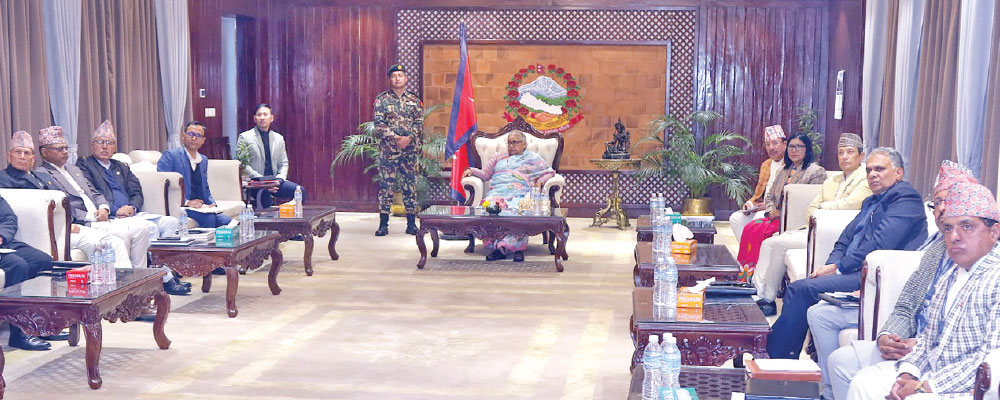
A team from the Commission, led by Acting Chief Election Commissioner Ram Prasad Bhandari, conveyed the decision during a programme held at Prime Minister’s official residence at Baluwatar on Sunday.
The Commission also made a special presentation outlining the provisions of the election code of conduct.
According to Bhandari, the meeting held on Sunday decided to enforce the code of conduct from 12:00 am Monday in view of the upcoming elections.
The programme was attended by Prime Minister Sushila Karki, members of the Council of Ministers, the Chief Secretary of the Government of Nepal, and senior officials from the Ministry of Home Affairs.