- Monday, 25 May 2026

Hold no qualms about March 5 elections

The Election Commission (EC) is working diligently to ensure a free, fair, and credible election to the House of Representatives on March 5, 2026. From assessing security arrangements and enrolling new voters to coordinating with political parties and stakeholders, the EC is focused on building public trust and ensuring smooth election management.
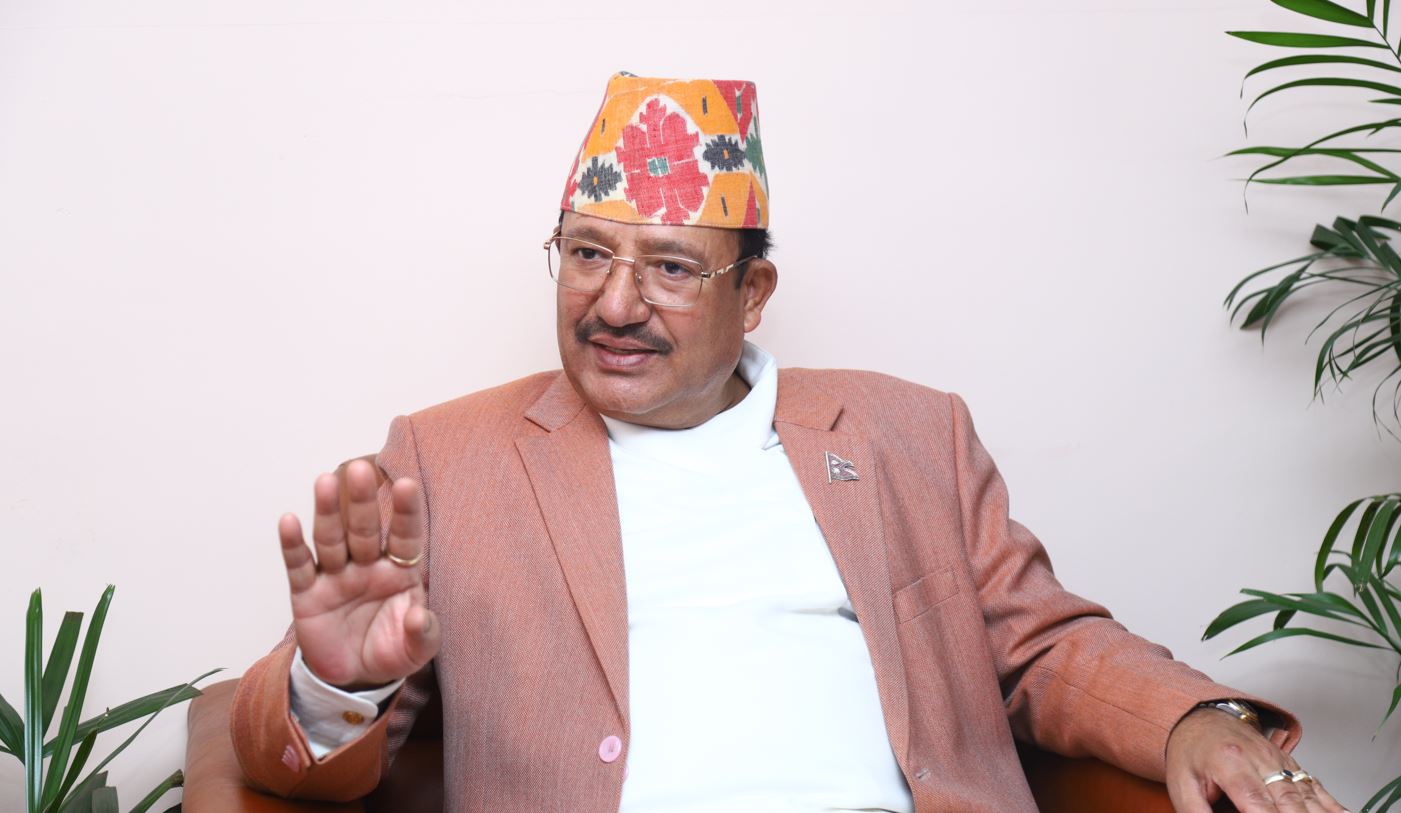
In this context, Arpana Adhikari of The Rising Nepal and a team from Gorkhapatra spoke with Acting Chief Election Commissioner Ram Prasad Bhandari about the Commission’s preparations, security measures, voter education, and strategies to conduct the election. Excerpts:
Could you share the Election Commission’s overall preparations for the House of Representatives elections?
The Election Commission begins its preparations immediately after the announcement of the election dates. Our main responsibility is the managerial groundwork, which includes identifying and arranging all materials required for holding the election. We have already prepared a detailed schedule, and over 60 per cent of the work has been completed, there is no issue regarding election management.
We previously listed 94 types of election materials, but after review, we now require only 79 types. Items that are easily available at the local level are being purchased locally, as per the new procedure and rules and guidelines the Commission has introduced. Earlier, all materials were procured centrally by the Commission, but decentralization of the process has made management more efficient. At this stage, we are focused on implementation, dispatching materials to electoral areas and completing logistical arrangements. All preliminary tasks have been completed.
The government, political parties, all four security agencies, and the Election Commission have been holding a series of meetings. Have these efforts created a positive environment for the elections, or you need further discussions?
The issue of a favourable election environment is often raised. But the reality is that the environment for the upcoming poll has already been created. The Commission has completed the necessary procedures, political parties are prepared to participate. We have been holding regular discussions with stakeholders, including political parties, civil society, former commissioners, and chief election commissioners, to identify good practices and address past shortcomings. Everyone agrees on continuing positive practices and avoiding the lapses of previous elections.
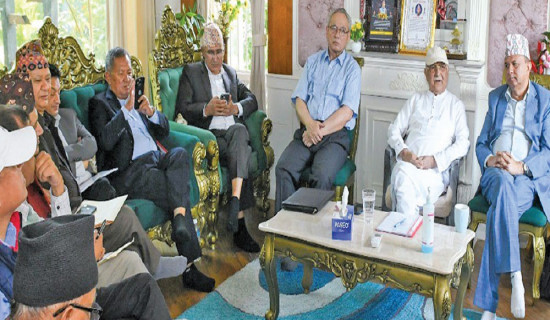
Recently, a meeting convened in the presence of the Prime Minister, ministers, political parties, the Commission, and security agencies focused on three major agendas: Favourable election environment, election management, and security arrangements. All political parties expressed strong interest in participating in the election, and top leaders have publicly said they want elections as soon as possible.
Security agencies have also assured that they are fully prepared, though they may need to deploy additional personnel and adjust strategies compared to previous elections. They have expressed confidence in managing election security. Therefore, there is no need to continue questioning the election environment, it has already been created. In terms of election preparations, the Commission has entered the second and implementation phase. The Commission is fully committed to conducting the election on the scheduled date.
Compared to previous elections, have the challenges increased this time? If so, what steps will be taken to address them?
Challenges cannot always be predicted in advance; they often arise during the process. The main thing is to turn these challenges into opportunities and resolve them effectively. In the past, limited personnel were deployed. The government was formed after the rebellion, and there were concerns about the possibility of lingering rebel sentiments. To address this, security agencies analyse potential risks and the Commission, along with the Home Ministry and security agencies, provides support and oversight. The Commission is confident that any challenges will be managed, allowing peaceful elections.
Following the events of September 9, when several police stations and courts were set ablaze. How challenging to make all necessary preparations for the elections in such a situation?
The incidents of September 9 should never have occurred. Our national heritage, public property and important records were destroyed, which was a condemnable act. Despite this, considering the circumstances, the President announced the election date for March 5, 2026. Following this announcement, all parties have become election-oriented. Many infrastructures, including polling stations and centers, were damaged. We have analysed and identified these issues and have briefed the relevant authorities about the situation. Reconstruction of the damaged infrastructures is nearly complete, ensuring that the polling stations and centers will remain in their original locations. Obviously, it will take a long time to fully repair the damages. However, the repairs must be carried out, and the elections must proceed as scheduled. We should move forward with the understanding that there is no alternative to holding the elections, and no one should doubt the EC in fulfilling its duty.
Over 800,000 voters have been added for the poll. Can all these new voters cast their votes on March?
Typically, voter enrollment is halted after the election date is announced. However, in coordination with the President and the government, the Commission issued a new ordinance reopening enrollment until mid-November. As the deadline for the voters' enrollment approached, number of aspiring new voters soared, creating pressure. The capacity of the online system was exceeded.
Under existing law, voter enrollment is conducted under the direct supervision of the Election Commission, which has the authority to direct other bodies if needed. Using this framework, the Commission completed enrollment through the regular process and integrated the biometrics from the National Identity Card. Those unable to visit election offices for biometric registration were included using their national ID data. The deadline was extended by five days, adding 836,094 new voters. As of November 2, the updated voter list stands at 18,168,230. The Commission is now reviewing the new entries to verify their authenticity, check for duplicates, and address any objections or complaints. The final voter list will be published between December 30 and January 4.
How many polling stations and polling centers will the EC plan for this election?”
Recently, we have added a few polling stations, bringing the total number to 10,966. Considering the number of additional voters, the final number of polling centers will be determined. The number of polling centres will be finalised only after mid-January next year.
Compared to past elections, the EC has reportedly classified more polling stations as highly sensitive from a security perspective this time. Does it not mean that holding polls is more challenging this time?
The Commission categorises polling stations as highly sensitive, sensitive, or normal, while security agencies conduct their own assessment. However, situations can change: areas classified as normal may face disturbances, while highly sensitive areas may remain peaceful. For example, in the previous local election in Kavre, a station marked as normal experienced disruption, requiring re-election. In contrast, highly sensitive areas proceeded smoothly after coordination between the Commission and security agencies. This shows that the situation on the ground can vary, areas classified as normal may experience disturbances, while some highly sensitive areas may have no incidents.
When polling stations are classified as highly sensitive, manpower and resources are concentrated there, while normal areas may still face unexpected issues. This is a matter to be studied and assessed by the security agencies' secret mechanisms, so it should not be over-discussed and must be left for the security agency. The Commission has conducted its own analysis and will request the security agencies to manage these areas. Despite these challenges, the Commission is confident that the elections will be conducted smoothly.
In many hilly and mountainous districts, polling stations are located at heights of 6,000–7,000 feet above sea level where snowfall is possible around March 5. In such extreme weather conditions, what arrangements has the Commission made to ensure that voters can safely reach the polling stations?
We need to understand that this is not a regular periodic election held every five years. The President announced this election date to address an urgent situation, not based on consultations with weather experts. Holding the election is a national necessity, and the responsibility does not lie with the Commission alone. Security agencies and voters also play crucial roles. Given the weather, some difficulties may arise, but we are obligated to conduct the election at any cost. There is no room to step back.
The Election Commission previously used e-voting in some polling stations in Kathmandu. Will e-voting be used in some constituencies this time?
I have already mentioned that this is not a periodic election planned years in advance. It is an election announced in an emergency situation. In such a context, the Commission has not had the opportunity to prepare the necessary methods and technology for e-voting. We must also consider the nation’s capacity.
The Commission is fully willing to conduct e-voting if the government provides the required systems and technology. We will never say that we cannot conduct e-voting; however, at this moment, the Commission cannot independently provide both the method and the technology.
A large number of personnel from the security agencies, civil service, teaching sector, and justice system must be mobilised to conduct the election. Has the Commission officially received their commitment for support and cooperation?
The Commission has already received commitments of support and cooperation from the security agencies, the government, and other stakeholders. Since all parties have expressed their commitment, there is no reason to doubt that the Commission will receive the support and cooperation needed.
There are reports that some district judges have refused to take responsibility for conducting the election due to security concerns. Is it true?
The Commission has no such information, and no one has claimed an inability to conduct the election. I have not received any complaints from judges. These appear to be rumours circulated by certain groups and have not reached the Commission.
The Commission had requested a budget of around Rs. 8 billion, but in the initial phase, the government provided only about Rs. 5 billion. Has the budget been revised?
I don’t understand how this issue arose. The government has never said it would withhold the required budget or asked us to cut costs. It is the Commission’s duty to conduct the election in a cost-effective manner, ensuring funds are spent only where necessary. Without proper allocation, the election cannot be held. The government has already assured a budget of over Rs. 7 billion. Since not all of it will be spent, there is no need to request for additional funds. Therefore, there is no issue requiring further discussion about the budget.
The Commission recently issued a 20-point directive to political parties, instructing them to field at least one-third women candidates. How does the EC plan to enforce this?
We should understand that this is not an instruction but a reminder to the parties regarding legal provisions and its obligation to enforce them. It should not be considered an order. Political parties are responsible for implementing the provisions of the law. If anyone fails to comply with the law, there are provisions for punishment, and compliance is generally ensured through the deterrent effect of these penalties. However, in the case of filing at least 33 per cent women candidates, as guaranteed by the Constitution, there is no clear provision for punishment. Some political parties have attempted to bypass this requirement by citing various reasons. In response, the Commission has reminded them to adhere to the constitutional provision in this election. Political parties are already aware of and experienced in democratic values, so the reminder is intended to ensure they field at least 33% women candidates.
The proportional representation electoral system was introduced with the intention of promoting inclusivity. It has become widely criticised because political leaders abused it. Is the Commission taking any step correct it at par the spirit of the Constitution?
Parliament is the institution where law and systems are determined. It is composed of people’s representatives who draft laws and send them to us for implementation. I want to point out that over the past two and a half years, we have prepared a draft of an integrated law by consolidating seven separate laws, which had created complexity, into a single law called the Election Management Act. Once this Act is introduced, it will address these problems and make the work much easier. Had the Act already been in place, this question would not even need to be raised, as it would have resolved these issues. But, we are conducting elections under the provisions of the old law.
What measures is the Commission planning to implement to minimise invalid votes in the upcoming polls?
We are prepared to conduct intensive voter education programmes. Various parties, leaders, and organisations have already been carrying out voter education initiatives, and the Election Commission has also developed a plan to reach people door-to-door. This education will enable voters to cast their ballots knowledgeably and choose candidates who contribute to good governance in the country.
What role does the Commission play in ensuring that political parties address the issues raised by the Gen-Z movement, including promoting youth participation in elections?
The recent voter enrollment has revealed a remarkable enthusiasm among the younger generation, marking a significant shift from previous elections. Unlike in the past, many youths who had never shown interest in the electoral process are now actively participating and engaging with the system. If this enthusiasm is translated into actual votes at the ballotbox, their voices will be truly heard, and they can play a meaningful role in shaping the governance of the country.
Will the Commission include the 'no vote' option in the election?
The existing law does not provision “no vote” option. However, this is not a major issue. If the law permits, adding a “no vote” option will not be a problem.