- Thursday, 7 May 2026

Memoirs Of Bureaucratic Journey
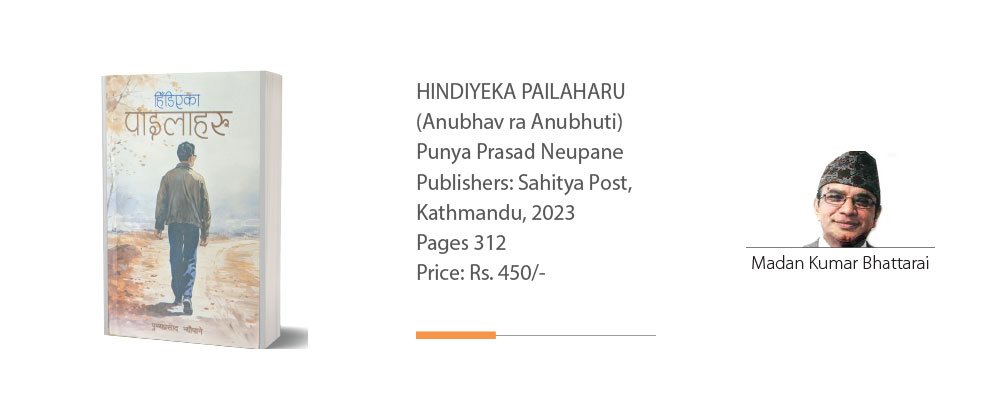

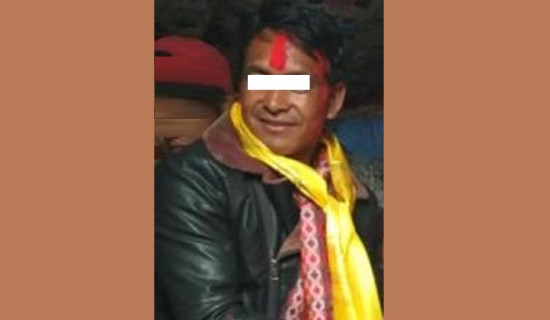
In yet another addition to existing literature on memoirs and autobiographies increasingly being published these days by our senior bureaucrats after their superannuation, Punya Prasad Neupane, who started as a teacher but went on to become a senior administrator, has recently come out with his own narrative.
In the foreword of the book, the author frankly confesses that his work is an output of long-time endeavours with recurrent and intermittent lapses in the work that got a fresh momentum only after the onset of COVID-19. He also states that instead of being a comprehensive depiction of his life, he has consciously tried to be more selective of topical events, issues, and possibly even persons that shaped his life.
In a country where there is virtually a rat race for doling out favours and seeking such patronages, Neupane seems to have had an entirely different experience at least two times. He got two such positions, the first that can be taken as virtually the first entry into civil service prior to its actual joining, District Education Officer.
The second and most vital assignment he was entrusted with in terms of importance after possibly major secretarial positions in the government was his last post-retirement assignment as Executive Director of the Nepal Administrative Staff Training College (NASC). He says that he got both positions rather accidentally and sans aspiration, effort, and endeavour.
The interesting book dedicated to his parents, Badri Nath Neupane and Ganga Devi Neupane, is entitled HINDIYEKA PAILAHARU (Anubhav ra Anubhuti) that can roughly be translated as Walked Steps (Experiences and Realisations) and intends to shed important aspects of the life and activity of the writer. The first five chapters' deal with the author's childhood days, education, and his service as headmaster of school and chief education officer prior to his formal joining of the country's civil service.
Born at Pipal Danda, Sindhupalchowk, on September 20, 1952, Neupane has neatly divided the book into various chapters. He credits two headmasters, Prayag Man Shrestha and Sushil Chandra Amatya, for shaping his student career during his education days at school at Chautara.
One aspect of immense satisfaction for the author is that some of his students reached senior positions in their careers. They include Major General Dr. Purna Bahadur Silwal, consultant radiologist Dr. Ananda Shrestha, senior engineer Dan Ratna Shakya, and Dr. Jayendra Shrestha, who served as member secretary of the Social Welfare Council.
It may be recalled that Sushil Chandra Amatya, who had a longer stint in education service and was also known as a leftist activist, later became a member of the Constituent Assembly, but only to resign the position to make way for Madhav Kumar Nepal, which ultimately resulted in his premiership. A close colleague of ours at Patan High School and a relative of senior politician and Ambassador Tulsi Lal Amatya, Sushil Chandra Amatya later served as Ambassador to Sri Lanka.
Amatya's disciples at school later occupied prominent positions. They include Amrit Kumar Bohara, Agni Prasad Sapkota, Gauri Pradhan, and Dipak Chandra Amatya, his own son.
The book eloquently highlights the multi-faceted experience of the author as he handled important positions as secretary to the government in various ministries and became Executive Director, NASC.
The sixth chapter is quite eventful and important in the sense that it deals with the Nepal civil service. It is elaborative in the sense that it is 90 pages long and deals with Neupane's three decades-long stint in the civil service that he joined in 1980.
It is, in effect, a microcosm of our bureaucracy, as he served as land revenue officer, local development officer, chief district officer, joint secretary in the central administration, and finally as secretary.
Even in respect of his assumption of the apex position in the civil service, Neupane, being the eldest in the family of three brothers, was quite lucky in the sense that he served as secretary in some of the key ministries of the government like Women, Children, and Social Welfare, Local Development, and Peace and Reconstruction.
It was interesting that his second brother, Netra Prasad Neupane, who had joined the civil service at least two years earlier, and his last brother, Indra Prasad Neupane, who had joined the police service way back in 1974, did not reach terminal positions in their respective careers.
The chapter deals with different manifestations of his life as a civil servant. Starting as a land revenue officer, he was later assigned as chief district officer. He retired as a secretary to the government of Nepal, and a few months prior to his retirement, he was asked to serve as Executive Director of NASC, Nepal's topmost civil service training institution that he headed for ten years.
Neupane has understandably devoted chapter seven, the longest in the book, accounting for 111 pages, to his work as Executive Director of the NASC, with details of its inner functioning and role in the field of training civil servants of Nepal, including the flagship scheme of the Senior Executive Development Programme involving orientation given to joint secretary-level officers of the government.
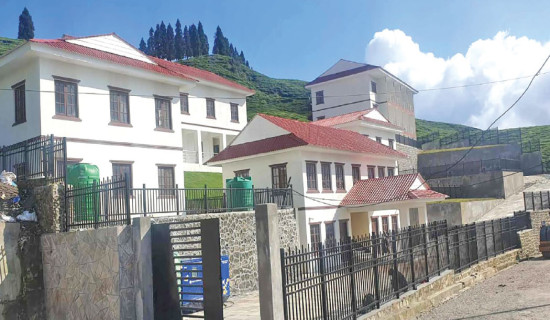
One notable factor mentioned in the book is the restoration and retrofitting of the old building of the NASC, once the private residence of the last strong Prime Minister of the Rana era, Shri Teen Maharaj Prime Minister Juddha Shumsher. It is most appropriately named Sampada Bhavan (heritage house) in the context of naming all buildings on the premises of the NASC.
Neupane has concluded his book with descriptions of his post-retirement life devoted to social works and development activities in his place of birth and other details about the family. There is a short appendix and photo gallery at the end of the book.
A cursory reading of the book finds a bit of disconnect between the rest of the book and references to the Philippines and East Timor with relatively brief portrayals of their internal conflicts. As he was Secretary, Ministry of Peace and Reconstruction, and had the opportunity to make a first-hand study of the two places as a reference to our bid to settle conflict, he might have thought it appropriate to include these items too.
I congratulate Neupane for the publication of the book, as it may inspire many retired bureaucrats to come up with their own accounts in the future.
(Dr. Bhattarai is a former foreign secretary, ambassador, and writer.)