- Friday, 8 May 2026

Sicilians deal so well with drought that tourists don't notice
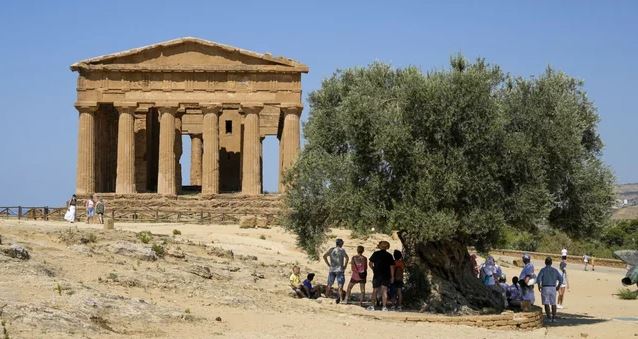

Italy, July 31: Lakes are dry and fields are scorched by heat in Sicily, but water is still gushing copiously for tourists.
After an almost totally rain-free year on the Italian island, fountains inside Agrigento's famous archaeological park are still flowing, and pools in rows of hotels are full.
Like many Mediterranean islands, people in Sicily are used to long spells without rain, but human-caused climate change has made weather more erratic, and droughts can be longer and more frequent. Islanders are surviving as they have for decades – they store as much as they can in cisterns and use tankers to deliver water – and do it so well visitors that don't feel the difference. But this year, the drought has gotten so bad that it's putting residents at even greater risk, even as water still flows to hotels and tourist sites.
The drought is punishing. The local water basin authority has tightly rationed water for almost a million residents – they are allowed as little as two to four hours a week — to get through the summer. And on Friday, the first Italian navy tanker ship arrived to supply 12 million liters (3.2 million gallons) of water to the most affected residents.
But Agrigento residents are among the most drought-resilient in Italy, and even with rationing, they still run their businesses, hotels, bed-and-breakfasts, and households without missing a shower, neglecting their garden or closing the swimming pool.
"Nobody can cope with water shortage better than southern Sicilians," said Salvatore Cocina, head of the local civil protection, who has the hard task of coordinating what little water is left on the island.
Water scarcity is not new as southern Sicily's terrain does not hold much water and the aqueducts are leaking. The region is also prone to dry spells, particularly in the summer.
Most residents own a private cistern that can hold at least a thousand litres (264 gallons) of water. The city's rooftops are dotted with large plastic tanks, and just as many are underground in gardens and basements.
Despite the water emergency, tourists continue to flock to the beautiful beaches of southern Sicily and line up to admire the vestiges of ancient Greek colonies.
"I did not have any problem with water," said New Zealand tourist Iain Topp, as he sweated under the blazing sun during a visit to the 2,500-year-old temple of Concord. But he added that he was "told to conserve water because there could be a shortage."
Gianluca, an Italian tourist from Lodi who didn't give his last name, said "there are no problems with drought" in his experience and "at my hotel, they told me they have their own reserves, their cisterns."
The Valley of Temples archaeological site, which its director said drew in over a million visitors last year, has also been prioritized, so doesn't suffer from water scarcity.
"We have water 24/7," explained director Roberto Sciarratta. "Our archaeologists are at work; the valley is open also at night with theatre plays. We have no problems with water supplies."
Meanwhile, water-scarce residents' tactics are working reasonably well for now, but they have been facing exceptionally difficult circumstances.
2024 has been the worst year for rainfall in more than 20 years according to the civil protection regional department. Lake Fanaco, which supplies water to Agrigento province, used to collect up to 18 million cubic meters of water during an average rainy season, which normally runs from September to April. But by April the lake's water was already below 2 million cubic meters and is now almost completely dry. (AP)