- Saturday, 6 June 2026

Tanahun villages rejoice Ghatu dance
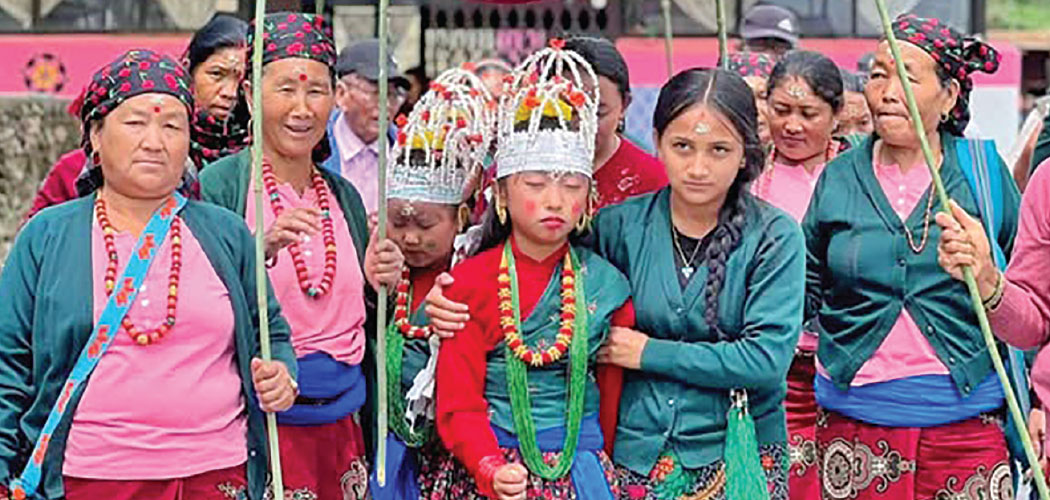

By Amar Raj Naharki, Tanahun, May 7: The traditional Ghatu Naach (dance) has brought vibrancy to various Gurung settlements in Tanahun district.
This indigenous cultural practice, which was on the verge of fading, is now being actively preserved, passed on to the younger generation, and linked with tourism. As a result, a renewed enthusiasm can be seen across different villages this season.
The rhythm of Ghatu songs and the beats of the madal are echoing in places such as Baspani of Bhanu Municipality-13, Arthumka in Bandipur, Bhoteshwara in Anbu Khaireni and nearby villages of the district headquarters Damauli, including Pulimarang Tutepani, Bandipur, and Hilekhark.
The festival, which began on the full moon day of Baisakha, has not only added liveliness to rural areas but has also attracted domestic tourists.
According to former member of the District Coordination Committee Tanahun, Gal Bahadur Gurung, Ghatu reflects the unique identity, unity and traditions of the village. “When Ghatu is performed in villages, the number of visitors increases, contributing to local tourism,” he said.
Tourism expert Hari Singh Gurung considers indigenous traditions like Ghatu as the backbone of rural tourism.
He added, “Tourists travel to villages to experience authentic local culture and living traditions. Ghatu dance is one of Nepal’s distinctive cultural heritages.” He further added that proper preservation and presentation of such traditions can play a significant role in boosting the rural economy and promoting tourism.
Believed to have originated around the 15th century, the Ghatu dance involves young pre-menstrual girls symbolically representing King Parashuram and Queen Yampawati.
In regions like Tanahun, Chitwan, and Gorkha, there is a unique tradition of selecting an odd number of girls to perform as Ghatu dance.
According to cultural activist Ranjit Gurung, special training was provided this year to transfer the skills to the new generation.
The dance is of two types ‘Sati’ and ‘Barahmase.’ Among them, Sati Ghatu is concluded each year on Panchami with special ritual worship at a sacred place such as Chandithan, followed by a ceremonial immersion.