- Sunday, 10 May 2026

End Project Delays


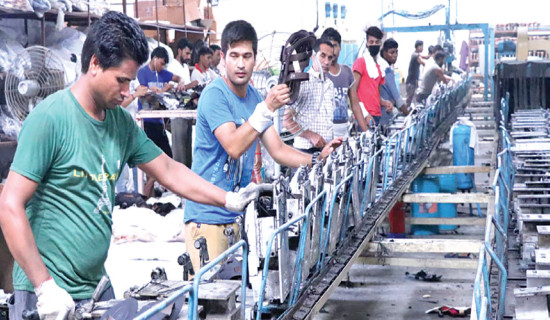
One major factor that holds back Nepal's development pace is the inordinate delay and soaring costs in the construction of big projects. These issues have once again come to the fore after Prime Minister Pushpa Kamal Dahal Prachanda virtually inspected the Sikta Irrigation Project and the third phase of the Mahakali Irrigation Project from the action room in his office on Monday. Such delays come at a heavy price that does not limit itself only to administrative upsets but also undermine the nation’s prosperity and erode the public trust in the state's ability to execute and oversee the development projects. This requires analysing the meaning of lengthy time spent on one project, budget restrictions, and the demand for a new paradigm shift in management.
The consequences, however, are widespread, as they cover the entire economy and lower the quality of life. As a means of averting such crises, it is important to emphasise that projects should be completed within the first estimated period and budget allocation. Inadequate budget allocations are considered a primary factor that contributes to project delays. Financial limitations inevitably affect both the quality and rate of project implementation. So, a complete reappraisal of budgeting is required. Provisioning of enough funds for the projects is one basic and imperative aspect of a smooth implementation and timely completion.
The Prime Minister's instruction to project heads, who oversee the delivery of tangible outcomes at their sites, is indeed a welcome step, demonstrating that projects must be outcome-based and not merely activity-driven. In addition, the change in work implications towards development and public service can be praised. Encouraging concerned officials to actively perform their duties as public servants, driven by the interests and aspirations of the people is the need of the hour. The directives with project timeline extension reduction and elimination of inappropriate financial pressures show an attempt to complete projects on time without compromising quality.
In the case of the Sikta Irrigation Project, one can notice how scarcity of resources undermines operational speed, thereby emphasising the release of cost-effective use. The project-time horizon as specifiied underlines a proactive attitude in overcoming such barriers and sticking with accepted terms. For a change, recent orders have focused on responsibility, cost-effectiveness, and technology solutions. This is a praiseworthy move towards the redefinition of the project management administration paradigm and improvement in service delivery.
Stakeholders, including government employees, project leaders, and concerned departments, have to work together so that the timely completion of the projects becomes a collective goal. But the success of these challenges is not only an issue of administrative efficiency; it is also crucial for restoring trust in the public, financial stability, and a prosperous future. Nevertheless, it is important to note possible criticism and areas for development. It can be acknowledged that the issue of project delays is complex and cannot be blamed on budgetary limitations alone.
However, a deeper analysis of project management practices, stakeholder connectivity, and external factors is required for a complete, viable solution. Equally strong monitoring systems should back the praiseworthy guidelines to ensure adherence. In conclusion, addressing project delays is not only an administrative issue but a shared responsibility that holds the key to the stability and prosperity of the nation. Performance in this regard should never be compromised and overlooked.