- Saturday, 30 May 2026

Trilateral Diplomacy: Handle With Care

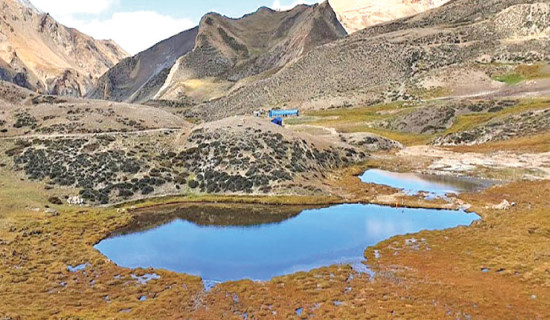
The proposed reopening of the Kailash–Mansarovar route through Lipulekh, primarily intended to facilitate the pilgrimage of Indian nationals to Mansarovar in China, has once again brought the longstanding Nepal–India border dispute over the Lipulekh–Kalapani–Limpiyadhura region into sharp focus. On 3 May 2026, the government of Nepal sent diplomatic notes to both India and China objecting to the proposed operation of the pilgrimage route through Lipulekh, an area Nepal claims as its sovereign territory.
India has been moving ahead with preparations to reopen the route through Lipulekh, effectively reviving a trade and transit point that had remained largely closed since the Covid-19 pandemic six years ago. Nepal, however, maintains that under the 1816 Treaty of Sugauli, Limpiyadhura, Lipulekh and Kalapani — territories lying east of the Mahakali River — are integral parts of Nepal. Kathmandu has reiterated that its position on the matter remains “clear and firm”.
Bilateral dialogue
Responding to Nepal’s diplomatic note, the spokesperson of India’s Ministry of External Affairs, Randhir Jaiswal, stated that Nepal’s territorial claims over Lipulekh were “neither justified nor based on historical facts and evidence”. He maintained that the Lipulekh route has long served as a traditional corridor for the Kailash–Mansarovar Yatra and Indo-Tibetan trade since 1954. At the same time, India reiterated that all outstanding boundary issues between the two neighbours could be resolved through bilateral dialogue.
What has frustrated many in Nepal, however, is the apparent contradiction between India’s repeated commitment to dialogue and its continued unilateral actions in the disputed area. Nepal recalls that it formally protested to both India and China in 2015 after the two countries agreed to use Lipulekh as a bilateral trade route without Kathmandu’s consent. Yet, despite Nepal’s repeated calls for meaningful negotiations since then, no visible progress has been achieved. This diplomatic inertia has deepened scepticism in Nepal regarding whether New Delhi is genuinely prepared to engage in substantive dialogue on the issue.
The border dispute between Nepal and India is a longstanding and sensitive issue. With an aim to strengthen bilateral relations by reviewing contentious matters related to the border, security, trade, transit, water resources, and the relevance of the 1950 Treaty of Peace and Friendship in a changing geopolitical context, an Eminent Persons Group (EPG) was formed in 2016.
The EPG was mandated to comprehensively review the entire spectrum of Nepal–India relations and recommend measures to modernise them in line with twenty-first century realities. After several rounds of consultations, the EPG finalised its joint report in 2018. The report is believed to contain important recommendations, including revisions to outdated bilateral arrangements such as the 1950 treaty. However, the report has not yet been formally received by the Indian Prime Minister, a situation many in Nepal interpret as reflective of the slow progress in addressing sensitive bilateral concerns.
Had the report been formally acknowledged by the Indian side and followed by structured political dialogue, longstanding issues such as Lipulekh, Kalapani and Limpiyadhura might have moved closer to resolution. This, in turn, could have further strengthened relations between the two countries and opened new avenues for mutually beneficial cooperation.
In 2020, Nepal revised its political map. India, however, rejected the revised map, describing it as a unilateral act. Responding to the development, India’s Ministry of External Affairs maintained that the concerned territories have historically been administered by India and that Lipulekh has long served as a trade and pilgrimage route. It further emphasised that boundary issues should be resolved through diplomatic dialogue. Yet, had both sides engaged earlier and more seriously with the EPG process and its recommendations, such disputes could arguably have been addressed in a more structured and lasting manner. The recent tensions stem from the recurring cycle of thesis and antithesis in Nepal–India relations, often shaped by perceptions in Nepal of asymmetrical bilateral dynamics. This is reflected, for instance, in India’s reluctance to formally receive the EPG report despite repeated requests from Kathmandu.
On the one hand, India firmly rejects Nepal’s territorial claims; on the other, it consistently reiterates its willingness to resolve outstanding bilateral issues through dialogue. However, this stated commitment has yet to translate into substantive progress, leading to growing frustration within Nepal. As a sovereign state, Nepal continues to seek meaningful engagement on bilateral concerns, including the border dispute across several points along the 1,751-kilometre open border shared by the two countries.
Mutual respect
China, despite its indirect yet significant association with the recent developments involving Lipulekh–Kalapani–Limpiyadhura, has so far maintained a measured diplomatic silence. The Chinese Embassy in Kathmandu, when approached by journalists, has reportedly indicated the possibility of providing “meaningful support” without offering any substantive clarification. This silence is notable given that China is not merely an external observer but also an indirect stakeholder in the broader connectivity and pilgrimage dynamics of the region. The Lipulekh pass forms part of the traditional route associated with the Kailash–Mansarovar Yatra, which carries both religious and strategic significance for China’s efforts to promote cross-border tourism and trans-Himalayan connectivity.
In this context, sustained ambiguity from Beijing raises questions about the extent to which it intends to engage with emerging sensitivities surrounding the tri-junction border discourse. Given its strategic interests and role in facilitating access to the Kailash–Mansarovar region, expectations remain that China will eventually articulate a clearer position. Nepal and India share deep historical, cultural and people-to-people ties that transcend periodic political disagreements. So, sensitive disputes such as Lipulekh, Kalapani and Limpiyadhura require sincere political commitment, sustained diplomatic engagement and mutual respect. Durable solutions cannot emerge through unilateral actions or prolonged silence, but through trust, dialogue and willingness to address difficult issues with maturity, patience and genuine statesmanship and restraint.
(The author is a freelance writer.)