- Monday, 11 May 2026

Season Of Celebrations

Parmeshwar Devkota
Some countries are so powerful that they can change or manipulate almost everything on this planet. The borderlines of a nation have been written with the blood of brave forefathers. Technologically sophisticated nations can change or try to modify national boundaries as well. Instead of their worldly immense power, they hardly dare to bring about any change to four seasons of a year. It is because, national boundaries are artificial, but the seasonal changes are due to celestial movements and are beyond their control.
Whether a season is harsh or pleasant, we must accept it. We, the people the Northern Hemisphere, have just celebrated the autumnal equinox which leads to the arrival of the autumnal season in this part of the planet. The autumnal equinox is one of the two moments of the year which brings equal days and nights with moderate temperature in the day time and cold breeze at night.
Putting aside the sufferings faced by animals due to cold in this season, autumnal season has beneficial for us on three grounds: First, it is the third season of the year and we have cultural attachment with it because our major festivals fall in this season. Now we are celebrating the biggest thoroughfare festivals, Indra Jatra, in Kathmandu in the presence of the national and international dignitaries and cultural experts, and with the joyful participation of hundreds of thousands of people daily. It is the harvesting season.
Prior to the greatest of festival Dashain, Sohra Shraddha has begun in which we remember our forefathers and offer prayers to them for their heavily comfort and ease. Tihar, the second biggest festival in Nepal, is the festival of colour and flowers. Similarly, Chhat is another festival which is marked from south to north every year. Guru Nanak Jayanti and many more big and small festivals in the pipeline are the presents of the autumnal season.
If one wants to know another significance of this season, one has to explore pre-historic event in Dwapar Epoch. The grand sons of Kuru -- Kauravs and Pandavs -- had fought a war in favour of the state and justice. The war is called Mahabharat, which was, in accordance with the Lunar Calendar, fought in the month Mangsir. It was probably the first great war in human history. So, in derogatory and metaphysical senses, this season is also known as the last season both in a person’s career and life.
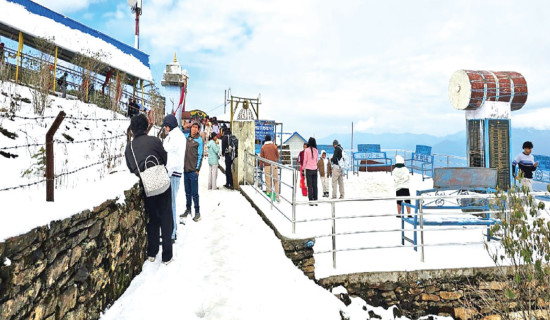
The third and final aspect of this season is more encouraging and assimilative rather than discouraging and sad as said before. The autumnal season is the season of outdoor activities as the rainy season is almost over and the sky remains clean. The temperature of the Terai and mountain regions remains moderately beautiful. Therefore, family members, friends and even travel agencies encourage us to visit places of our wish.
Amid festival celebrations, we can visit Pokhara, Hetauda and Khaptad in Sudurpaschim, Jumla, Dailekh and Kakrebihar in Surket. Visiting places in Koshi and Bagmati provinces are well-known worldwide for their scenic beauty and heritage legacy. So, it is the season of celebrations. If you are an enthusiastic person, you can arrange a picnic or go for bungee jumping.