- Wednesday, 3 June 2026

World Water Week For Innovation

Globally, water crisis is one of the significant threats to life. This has a major negative impact on human health, economic development, environmental sustainability. In addition, population growth, urbanisation, climate change, pollution and COVID-19 pandemic present unprecedented challenges to the provision of water, sanitation and hygiene services in low-income countries.
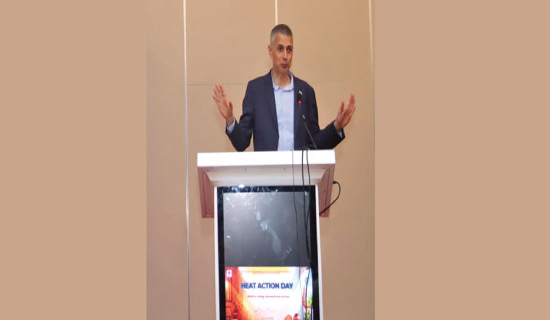
In this context, World Water Week recently welcomed international audience from 20 to 24 August at Stockholm Waterfront Congress Centre which is located at the heart of Swedish capital. The week was an important annual moment for collective action and stimulating water conversations across the boundaries. This has not only reaffirmed our commitments to the water action agenda but also explored different ways to solve concrete problems related to water and life in terms of fostering new forms of collaboration and partnerships at all levels.
Innovative solutions
With a theme “Seeds of Change: Innovative Solutions for Water-Wise World”, the week offered an important opportunity for policy makers, planners, experts and communities from all over the world to share their vast experiences, challenges and opportunities for building more resilient societies, thriving economies and business models to harness the power of water for humanity. From perspectives ranging geopolitical, climate, digitalisation, governance, financial, advocacy and cross-sectoral innovations, it is now high time to deep dive into the most cutting-edge research and innovations shaping water-related solutions that enhance the resilience of people and ecosystems.
In a broader sense, the innovations integrate behavioural change, governance and systems thinking on how water should be governed in the Anthropocene. At a time of unprecedented changes, there are critical issues of interest such as innovation, behavioural change, technology and governance. Drawing on the latest scientific knowledge and experiences, there have been consistent efforts to explore how water can be powerful tool to address the climate crisis, global warming, biodiversity loss, poverty, hunger, inequality and many other water-related challenges. Sadly, water is at the core of all these threats as human activities are triggering a global water crisis.
In an area of globalisation and climate change, we eagerly look for innovation and rethinking related to how people use, value and manage water. Most of our socio-cultural and political systems govern the culture that there will always be a reliable supply of water. This is, unfortunately, not the case. Moreover, frequent and severe droughts, floods, weather extremes and natural disasters limit our opportunities in accessing safe water for all.
Again, water is largely considered as a tool for global cooperation in order to address critical environmental issues such as global warming, climate change, insecurity, hunger, and injustice. Improved water management can significantly reduce greenhouse emissions. Understanding the notable challenges of access to water and sanitation resources, we need to reinforce our concerted efforts to improve equity of access, efficiency, cost and quality of the water and sanitation services at all levels.
On the other hand, there is an increasing focus on water governance which largely refers to the political, social, economic, and administrative systems that influence the use and management of water. Good water governance is necessary to achieve water security where societies govern their water resources to break the cycle of poverty. In addition, there is a critical need for an enabling environment that ensures effective implementation of the overarching water, sanitation and hygiene related policies, strategies, plans, incentive structures, legal and regulatory frameworks. At the core, strengthening water governance significantly promotes responsible actions and measures to protect and ensure the sustainability of water resources at large.
More significantly, we need to promote inclusion of poor, minorities and vulnerable groups everywhere. As a matter of fact, people living in poverty are disproportionately affected by climate change and environmental degradation. While human and societal benefits will further enhance water security, resilience and sustainability, we need to promote local and indigenous knowledge as an important resource for innovation. Furthermore, it is important to note that water and sanitation services are essentially human rights. They touch every aspect of sustainable human development such as hunger, gender equity, health education, livelihoods, ecosystems and sustainability.
Gender equity
Mainstreaming gender equity into policy at all levels is important to achieve the ambitious goal of water and sanitation for all. Hence, gender-responsive water, sanitation and hygiene is critical to the 2030 agenda for sustainable development. Considering the significant impacts of water and sanitation services on human societies, Nepal’s constitution has ensured these services as a fundamental right. The fifteenth plan (2019/20-2023/24) has given high priority for improving easy access to drinking water supply and sanitation services across the country. National review of Sustainable Development Goals (SDGs) conducted by National Planning Commission suggests that basic water supply coverage in the country reached 91 per cent of the population in 2019/20, while only 49.6 per cent of the households have access to piped water supply.
Apart from the government’s efforts, the role of partners such as UN-Habitat, UNICEF, WHO, WaterAid, and few others has been crucial in supporting national policies, strategies and plans related to water, sanitation and hygiene services in schools, health facilities and communities. Over the years, the government has started several initiatives to achieve universal and equitable access to safe and affordable drinking water for all. For this, Sectoral Development Plan (2017-2030) of Ministry of Water Supply needs to be effectively implemented, monitored and evaluated for sustained progress and tangible impacts.
(PhD in global health, Bhandari writes on health and development issues)