- Wednesday, 3 June 2026

Experts stress water, shade to combat heat
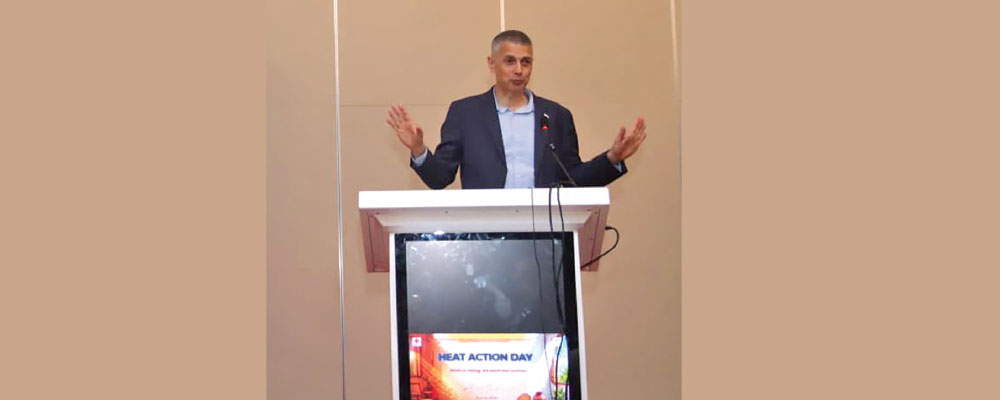

By A Staff Reporter, Kathmandu, June 3: Heat Action Day 2026 was observed in Kathmandu to raise awareness about the growing health and social risks posed by extreme heat. The event was jointly organised by the Nepal Red Cross Society (NRCS), the International Federation of Red Cross and Red Crescent Societies (IFRC), and its member organizations.
This year's campaign focused on the theme “Indoor Heat,” highlighting the health risks people face inside homes, schools, workplaces, and care facilities during periods of extreme heat. Representatives from government agencies, development partners, humanitarian organizations, the media, and the private sector participated in the event.
Addressing the programme, David Fisher, head of delegation of IFRC Nepal, said that extreme heat is becoming one of the deadliest climate-related hazards worldwide. He noted that children, older persons, outdoor workers, and vulnerable communities are among those most affected.
“While long-term solutions to climate change remain challenging, there are immediate actions we can take. Simple measures such as water, shade, and rest can save lives,” he said. Suresh Panthi, Joint Secretary and chief of the Disaster Management Division, stated that the Nepal government has approved a Forecast-based National Framework 2073 (2016/17) to strengthen preparedness and reduce the impacts of rising global temperatures and climate-related hazards. He emphasised the need for stronger collaboration among government agencies, communities, and development partners to enhance resilience against climate risks. The event featured exhibitions of heat-related information materials, innovations, photographs and videos, along with practical demonstrations of measures that communities can adopt to reduce heat-related risks.
Organizers said the campaign aims to strengthen awareness, preparedness and coordinated action to minimize heat-related illnesses and deaths while building long-term climate resilience. Experts also warned that this year, due to the influence of El Niño, above-average temperatures are projected across Nepal and other Asian countries during the monsoon period. Meteorologists have further indicated a likely decrease in pre-monsoon rainfall in the Tarai region, which could intensify heat conditions.
Climate experts have urged heightened caution, noting that rising temperatures disproportionately affect students, farmers, laborers, women, children, and older persons, who are among the most vulnerable groups to heat-related risks.