- Wednesday, 3 June 2026

FMTC fails to maintain mandatory minimum food stock level

By Laxman Kafle,Kathmandu, Aug. 14: The state-owned Food Management and Trading Company Limited (FMTC) has not been able to maintain the minimum stock of food grains.
According to FMTC, under the SAARC Food Bank and National Food Security Reserve, the minimum mandatory food stock should be 33,000 tonnes, but only 17,800 tonnes of food is available at present.
Among the mandatory minimum food stocks, there should be 8,000 tonness under SAARC Food Bank and 25,000 tonness under National Food Security Reserve.
This shows that the Company has only about half of the mandatory food stock.
The Company manages food stocks in the SAARC Food Bank and the National Food Security Reserve for food security.
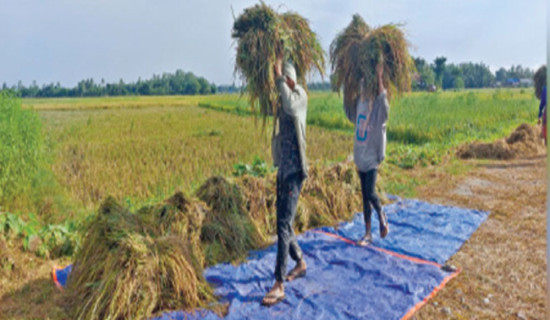
According to an official of FMTC, the Company is unable to maintain the minimum level of food stock due to the inability to purchase paddy according to the target from the farmers and purchase paddy and rice from the private sector through bidding as well.
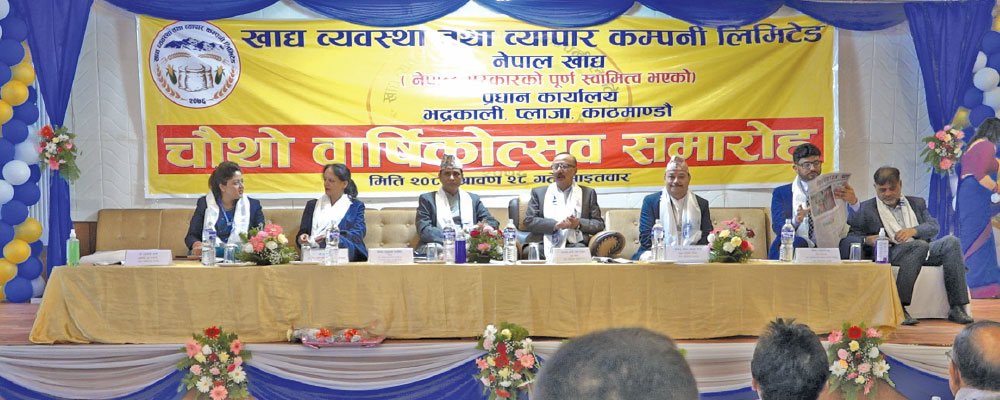
Addressing the 4th anniversary of FMTC formed after merger between then Nepal Food Corporation and National Trading Limited Sunday, Secretary of the Ministry of Industry, Commerce and Supplies Madhu Kumar Marasini said that the FMTC failed to keep the minimum level of food stock under the SAARC Food Bank and National Food Security Reserve.
"It is a must to keep at least a minimum level of food stock under the SAARC Food Bank and the National Food Security Reserve for food security. But the FMTC failed it," he said.
Stating that food security is an emerging issue in the world, he said that the FMTC, a state-owned enterprise working in food supply and maintaining mandatory food stock, should supply food to remote and other districts keeping at least the minimum level of food grains in stock. Marasini, who is also chairman of board of directors of FMTC, urged the FMTC management to purchase rice and paddy from farmers in time and improve the supply system, keeping in mind to maintain stock any time of the year.
Appreciating the role of FMTC to supply food in food-deficit districts and purchase local products of Karnali and sell them in urban areas, he also suggested expanding the scope of purchasing local grains from across the country.
"The market assurance of products will encourage farmers to produce more local corps which contribute to food security in the country and increase the income of farmers. As a government entity, the FMTC can play an effective role in this regard," he said.
FMTC needs long-term business plan
On the occasion, Minister for Industry, Commerce and Supplies Ramesh Rijal directed the FMTC to move ahead by making a long-term business plan to improve the supply system and for food security in the country.
As the constitution of Nepal ensures food rights for all, Minister Rijal said that the role of FMTC will be vital to ensure food rights of people as per the constitution and control artificial price hikes by traders in abnormal situations.
"I believe that the FMTC will conduct its business by maintaining good business practices in the days to come. The government is ready to support expanding its business scope, improve its services and food supply in the country," he said. Fund crunch hinders infrastructure development
Chief Executive Officer of the FMTC Mohan Prakash Chand said that due to lack of funds, the FMTC was unable to develop infrastructure for food stock.
"We have been unable to construct infrastructures in various places to enhance storage capacity by maintaining quality in the absence of finance. So, we request the government to provide funds in this regard and also disburse the dues in time," he said.
The government has to pay about Rs. 1.48 billion to the FMTC. The government has to pay the difference in the market price when the FMTC buys paddy at the minimum support price set by the government and transportation subsidy to supply food in remote food-deficit districts.
Similarly, when FMTC sells goods at a concessional rate during the festival period, the government has to give discount to the Company.
"There is a problem running even the daily activities of the Company after the government did not release such amount in time," he said.
"After the government does not reimburse the outstanding amount on time, the Company has also faced problems in running its daily business and other activities," he said.
Secretary Marasini assured that the government would pay the dues of FMTC even if there was a delay in the payment due to financial problems such as reduction in revenue collection.
CEO Chand said that the FMTC had been purchasing the local products of Karnali and supplying them in the urban areas to support the government plans to promote local crops and encourage farmers.
He assured that the FMTC would pay attention to maintain the minimum stock of foods and quality in the days to come.