- Wednesday, 3 June 2026

Father, son raise pheasants, run homestay
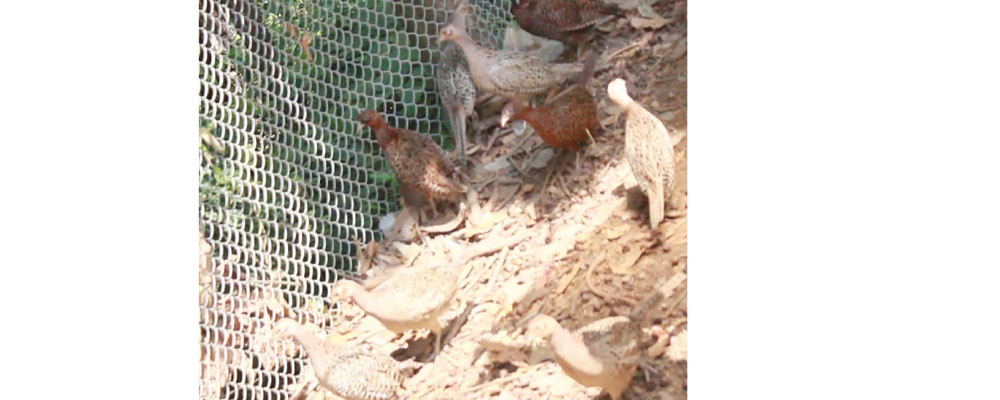

By Rajkumar Bhattarai,Khotang, Aug. 8: As soon as we think of pheasant (Kalij), a forest comes to our mind. That is also natural, because we have seen pheasants often in the forest.
But in recent years, commercial farming of this wild bird has started in many parts of the country.
Commercial production of pheasant has been started for the last two years in Suntale of Barahapokhari Rural Municipality-2 in Khotang.
A family of Chandramani Rai of Suntale is rearing pheasants commercially at the moment. After the cultivable land gradually turned into a forest due to the lack of people to work, pheasant farming and homestay are being operated in the same forest.
Chandramani said that he started pheasant rearing and ran a homestay as per his thought of running a homestay on his land in Harrechung Danda in Suntale and serving organic food to the guests.
At the same time, his son Mukesh Rai, who was in Japan, also returned to Nepal with the dream of becoming an entrepreneur in the village. After that, the father and son's dream of rearing pheasants and operating a homestay in the same place has now come true.
Chandramani said that he bought 600 pheasant chicks from Pokhara in 2078 B.S. After that, the chicks were growing up, and the homestay was also getting ready.
The Rai family, who came up with a plan to feed organic millet pudding and pheasant meat to the guests coming to the homestay, said that they sold pheasants after the construction of the homestay was not completed in the first year.
He said that a male pheasant is sold at up to Rs. 2800 and female pheasant up to Rs. 2,500. Nowadays, guests are coming to the homestay very often, he said.
The entire management of the homestay is still not completed.
At present, pheasants are reared in two ropanis of land.
The father and the son have the idea of doing business in the entire eight ropanis of land used for rearing pheasants, rearing fish and running a homestay.
Now the youths are going abroad and the fertile land of the village is turning barren in many parts of Nepal.
Mukesh said that he has a plan to teach those youths to return to their country and do something in their home country.
He said that he also left Japan and came to Nepal with that thought.
So far, about Rs. 8 million has been invested in pheasant farming and homestay construction.
Chandramani said that there is no subsidy from the government or any other organisation.
Rais, father and son, who are investing now, are working with the plan to make a profit gradually.