- Wednesday, 3 June 2026

Mideast countries that are already struggling fear price hikes after Russia exits grain deal

Cairo, Aug. 3: Ahmed Salah grew anxious when he heard the news that Russia had suspended a crucial wartime grain deal. The bakery owner in Egypt's capital is concerned it could mean global food prices soar.
“There mightn’t be immediate impact,” the 52-year-old said last week as he oversaw workers baking bread in his shop in Cairo, “but if they didn’t find a solution soonest, things would be very difficult.”
Russia pulled out of the deal brokered by the U.N. and Turkey to allow Ukraine’s grain to flow during a global food crisis. It helped stabilize food prices that soared last year after Russia invaded Ukraine two countries that are major suppliers of wheat, barley, sunflower oil and other food to developing nations.
Egypt, the world's largest wheat importer, and other lower-income Middle Eastern countries like Lebanon and Pakistan worry about what comes next. Struggling with economic woes that have driven more people into poverty, they fear rising food prices could create even more pain for households, businesses and government bottom lines.
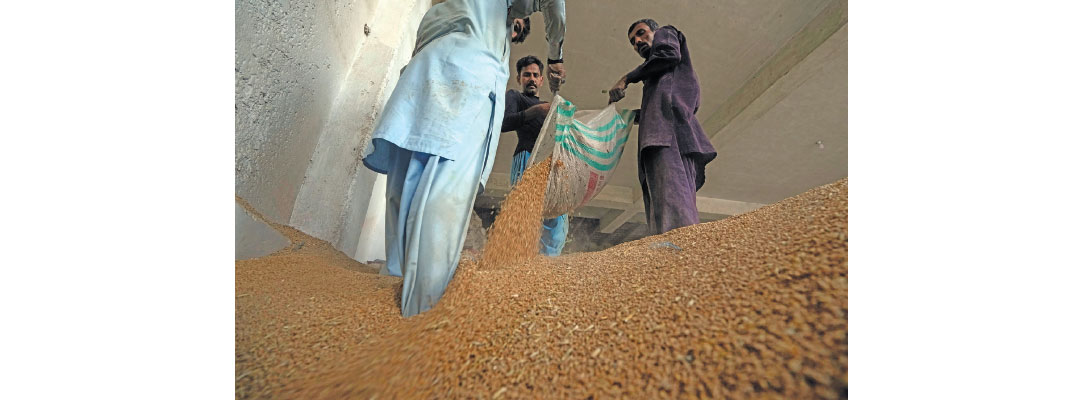
Many have diversified their sources of wheat, the main ingredient for flatbread that is a staple of diets in many Mideast countries, and don't expect shortages. Pakistan has even seen a bumper crop despite unprecedented flooding last year.
But the end of the grain deal is creating uncertainty about price hikes, a major driver of hunger.
It “is an unnecessary shock for the 345 million acutely food insecure people around the world,” said Abeer Etefa, a spokeswoman for the U.N.'s World Food Program.
Turkish President Recep Tayyip Erdogan told Russian President Vladimir Putin in a phone call Wednesday that he is pushing to extend the grain deal because the long-term cutoff of Ukrainian ports “does not benefit anyone” and low-income countries “will suffer the most,” according to a statement from Erdogan’s office.
Russia, meanwhile, is launching attacks on Ukrainian ports and agricultural infrastructure, leading global wheat prices to zigzag. Despite the volatility, the costs are below what they were before Russia invaded Ukraine, and there is enough production to meet worldwide demand, said Joseph Glauber, senior research fellow at the International Food Policy Research Institute.
But for low-income countries like war-torn Yemen or Lebanon that are big wheat importers, finding suppliers that are farther away will add costs, he said. Plus, their currencies have weakened against the U.S. dollar, which is used to buy grain on world markets.
“It’s one reason why you see food price inflation lingering in a lot of countries because even though world prices I mentioned are at prewar levels, that’s in dollars. And if you put it in, say, the Egyptian pound, you’ll see that Egypt wheat prices are actually up,” said Glauber, former chief economist at the U.S. Department of Agriculture.
“They’re certainly as high as they were during the high points of 2022,” he said.
That packs pressure on governments, which will have to pay more to keep subsidizing bread at the same level and avoid raising costs for households, he said. With many also seeing their foreign currency reserves dwindle, it could put countries in the Middle East and elsewhere in a more precarious financial situation.(AP)