- Tuesday, 2 June 2026

Missiles That Rain On Ukraine

Even as the much-hyped Ukraine’s preparations of a counteroffensive were to take off full scale, Russian missiles on June 11 rained on Ukraine, which reduced several highly vaunted Germany’s legendary Leopards and no less than 10 US built Bradleys to skeletal coffins or metal scrap within hours. By any measure, it was a stunning catch for a single day battlefield exploit. The myth of incredible invincibility was shattered. But Russia’s President Vladimir Putin can’t gloat over too much on a day’s triumph. Many more battles are to be fought.
However, the June strike stunned the over-confident Ukrainian leadership and presented a devastating sight as to how disastrous wars can be these days. The lethal onslaught was as if a Russian response to earlier taunt in some “internationally reputed” news outlets against a “cancer affected”, “limping”, “demoralised” and “dying” Putin who faced his people’s “anger” and “disgruntlement” within his fighting forces.
Conspicuously, much of mainstream media in the US, like The New York Times and The Washington Post, either did not see or hear about the goings on. Their newsroom gate-keeping unit found the story uninteresting or strategically fit to be spiked. Its tale is to be told and discussed at length some other time. They were the ones that imagined and spun the fiction that 100,000 Russian soldiers were “estimated” to have been killed as against only one-fifth of that casualty figure suffered by Ukraine.
Evil spill
NATO’s big band of mighty military alliance supports Ukrainian President Volodymyr Zelenskyy, whose people, bound by blinding blasts and deathly blazing from the skies, have frequently felt the full force of fury from a ruthlessly determined Putin. War is evil. In June, blown up dams in Europe’s poorest and one of the continent’s most corrupt nations showcased what modern war means when it comes to destruction and waste that accelerate hardships on especially civilians.
The US is on record claiming its right to use nuclear weapons when its core security interest is threatened. Well, so might Russia, China, North Korea and others in the fearsome nuclear weapons club be expected to come with similar argument in their own defence. This only calls for stepping up a peace process.
The key question is how horrible and for how long a war. Armed conflict in its various forms must end. A solution to the latest war in discussion rests somewhere between the 1962 Cuban missile crisis triggered by the Soviet Union’s move in Fidel Castro’s communist island nation and Russia’s large and immediate neighbour Ukraine’s 21st century bid to get aboard the NATO military alliance. Russia can’t afford to lose to a strategically placed hostile neighbour. Zelensky, too, is in a tight bind, having gambled too heavily and boasted of the so-far elusive success to come unscathed. It is literally a question of personal survival, not to speak of political existence.
Intense speculation is making the rounds whether the Ukrainian president makes decisions on his own or is overly reliant on foreign powers to pursue the course against Putin’s forces. With inflation and living costs hurting an average European across the continent in addition to adversely affecting the national economies of countries that back and fund Zelensky, the next course of operation is only a subject of educated guess.
Much will depend on Moscow and Washington — Putin and the US President Joe Biden — for stretching the war or seeking a reasonable peace agreement that ensures Russia’s security concern and Ukraine’s legitimate right to independence and territorial integrity. As hardships pile up against ordinary Ukrainians since 17 months, the former comedy actor could face a far worse situation whereby his foreign supporters might find him expendable. It highlights previous tragic consequence for leaders struggling for idealistic sovereign rights against the tide of geo-strategic realities pursued by bigger forces.
Sense & survival
Zelenskyy is wedged between the devil and the political black hole. Either of the option could land him in a severe quagmire. The most recent major disaster was that of the Ashraf Ghani regime in Afghanistan, instigated and assured by some two dozen foreign powers that hailed him as a Harvard educated leader with “World Bank” experience, but left him entirely alone to fend for himself when the Taliban came knocking on the doors of Kabul Gates.
The foreign forces pulled out in an obscene rush that their own people are ashamed of even two years after the withdrawal. Fearing that a brutal end might await him, a la Mohammad Najibullah’s after the Soviet occupying forces left Afghanistan, Ghani fled to the United Arab Emirates, reportedly with several jumbo size suitcases of cash and other riches to avoid facing the Taliban. The gravity of the problem is that Putin can’t afford to lose against a strategically placed next-door neighbour. The stakes are too high. Likewise, it is a question of risking career credibility and the prospect of condemnation for Zelenskyy if he were to concede to his Russian counterpart after losing so much since so long.
As events in the post-World War II decades have demonstrated repeatedly, armed conflicts fuel weapons productions, promote sales and fetch large business profits to the merchants of killing machines. Weapons manufacturers have their own interests in prolonging a war. It might sound a cliché, but there is no alternative to a negotiated settlement as the only way out for an enduring peace for the conflict-affected neighbours while offering relief to a non-partisan world that abhors war as an indelible stain on humanity.
The US-led invasion of Iraq in 2003 on the fictitious allegation that the oil-rich country’s President Saddam Hussein possessed banned weapons of mass destruction is a horrendous reminder what the war wrought on the local population. Some analysts estimate that well over one million men, women and children were among those killed in the initial phase of the conflict.
That casualty figure is one of the highest since the Iran-Iraq war in the 1980s. And, today, if Iran and Iraq come together as friendly neighbours after more than four decades, Russia and Ukraine, too, should be nudged to come to a peace agreement and prevent any more death and destruction. This means allowing sense to prevail.
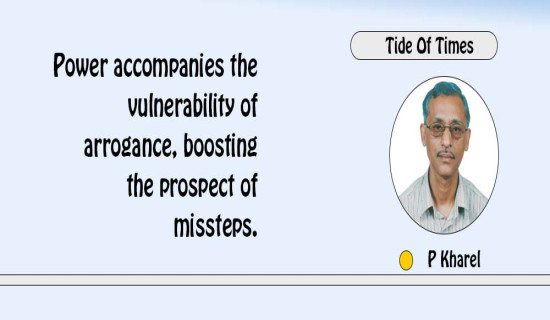
(Professor Kharel specialises in political communication.)