- Tuesday, 2 June 2026

Monsoon Season Begins

With the arrival of monsoon in Nepal on Wednesday (June 14), provinces like Koshi, Bagmati and some parts of Madhes and Gandaki have experienced moderate rainfall. People living in hot regions, especially Terai districts, have received a great respite from the scorching heat and heatwaves because of the rains. Generally, monsoon arrives in Nepal in the second week of June. But this year’s monsoon was expected to be delayed by some days owing to the late activation of the system. However, the onset of monsoon has now been recorded, bringing a glimmer of hope to all people, especially farmers.
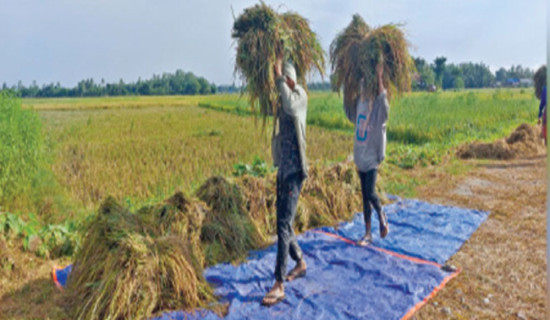
They were eagerly awaiting for rains in order to plant paddy. According to the Department of Hydrology and Meteorology (DHM), the monsoon will spread gradually across the country in the days to come. It may take some time for the rain causing system to spread to the remaining parts of the nation because of the effect of Cyclone Biparjoy that has emerged from the Arabian Sea.
Since most parts of the nation had not witnessed rainfall for more than two weeks, temperatures were rising at an alarming rate, turning life upside down. Places like Nawalpur had recorded 44 degrees Celsius, forcing the locals to bear the brunt of the unbearable heat. Even the Kathmanduites had to go through inconveniences due to the continuous rise in mercury. A lot of farmers across the country are dependent on monsoon rains because of the unavailability of adequate irrigation facilities.
As a spell of drought was recorded during the paddy plantation period, farmers were worried that it could trigger a fall in the production of this major staple crop of the country. The drought had affected even maize and other crops. When food production falls, people might be bound to pay higher prices for supplies in the months to come. However, farmers are now gearing up for planting paddy. This crop contributes about seven per cent to the gross domestic product (GDP) as it is the main source of income for many farmers.
A couple of days back, the DHM had forecasted that many parts of the nation could record less than average rainfall this summer. But the initial monsoon scenario seems to be quite encouraging. The Kunchha station in Lamjung recorded 106.2 mm of rain on Wednesday. This was the highest precipitation with the onset of the monsoon. The Daman station logged 92 mm while 76.4 mm rainfall was recorded by the Dhap Dam AWS station in Kathmandu. Likewise, the Jinakhu station recorded 69.2 mm, the Borlani station in Makawanpur measured 63.2 mm, the Bhojpur station in Bhojpur recorded 54 mm, the Jumleti station in Pokhara recorded 50 mm, and the Bajura station in Bajura recorded 59.2 mm rain in the last 24 hours until 6:30 pm on Wednesday.
Monsoon is a lifeline for an agrarian country like Nepal but the rains also often fall in destructive way and cause rain-induced disasters like flash floods, landslides and inundations during this period. The National Disaster Risk Reduction and Management Authority (NDRRMA) under the Ministry of Home Affairs (MoHA) has projected that more than 1.25 million people across the country are likely to remain affected by monsoon this year. Bearing this in mind, the MoHA has lately endorsed the Monsoon Preparedness and Response National Action Plan-2080.
The authority has also installed early warning sirens at 34 locations across the nation, acquired emergency collective rescue vehicles and ‘A Class’ ambulances. The government has also set up a volunteer management system to carry out search and rescue operations efficiently. It is equally essential for the people living in vulnerable areas to stay alert against potential monsoon calamities.