- Tuesday, 2 June 2026

Heatwave: A Burning Issue

The impacts of climate change are getting severer. The surface of earth has become hotter, with unusual rise in temperatures. A study states that earth’s temperature has risen by an average of 0.14° Fahrenheit (0.08° Celsius) per decade since 1880. The World Meteorological Organisation (WMO) has also forecast that global temperatures will reach record levels in the next five years. Its negative consequences have been felt widely. Rise in sea level, ocean acidity, heavy downpours, droughts, floods, landslides, heatwaves, wild fires, loss of biodiversity, and disease outbreaks have become common incidences across the globe. The ecological, social and economic costs arising from the climate-induced natural disasters are also increasing. The climate issue is now a political agenda of major international events and gatherings. There have been large-scale demonstrations to draw the attention of political leaders, international agencies, policy-makers and other stakeholders over the negative consequences of climate change.
In its report published last year, the Stockholm Environment Institute (SEI) and the Council on Energy Environment and Water stated that in many ways, the world is at boiling point – with extreme temperatures in South Asia and escalating fuel and food prices. It called for redefining humanity’s relationship with nature to address a web of crises, from rising prices to extreme heat and floods. Located in the vulnerable climatic zone, Nepal is now experiencing the hottest summer that has badly affected people's daily life, especially in the southern belt of the country. The Department of Hydrology and Meteorology states that this June has turned out to be the hottest month ever recorded in the nation’s history. The scorching heat has also hit the Kathmandu Valley and hilly districts alike, a phenomenon that was not heard in the past.
Despite generating negligible amount of greenhouse emissions, Nepal has suffered from the negative impacts of the global warming that is triggered by the climate change. It is bound to reel from the shift in weather patterns, resulting in the erratic rains, heatwaves and alterations in the distribution of precipitation and snowfall, among others. With the rising temperature, it is at high risk of Glacial Lake Outburst Floods (GLOFs) as seen in the Bhote Koshi River in 2016, and the Melamchi River in 2021. A news report in this daily relates to disturbing findings of Nature Reports that states South Col glacier on Sagarmatha (Mount Everest), which took 2000 years to form, has vanished within the last three decades because of the global warming.
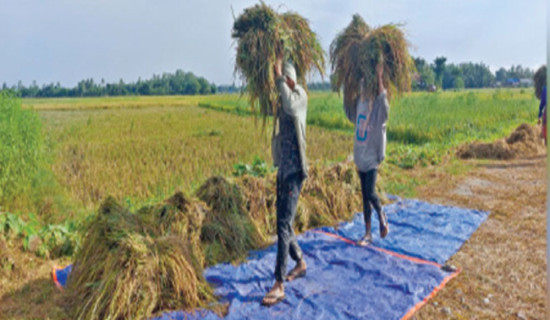
Himalayas are the great source of freshwater for the communities living downstreams. As the glaciers are melting due to the rising temperatures, there will be shortage of water volume in the snow-fed rivers, hitting agriculture, hydropower and other areas of economy. As the climate change affects public health, food security and overall resilience, it is imperative to adopt innovative policy to cope with its implications. This is a reason why the experts and environmentalists insist on bold science-based decision-making to rethink our way of living. Now time has come for promoting drought-resistant crop varieties that better suit with rainwater than that of the irrigated land. A strong political will is needed to accelerate the application of clean technology and reduce the use of fossil fuels. Then only can we be able to find solution to the climate crisis.