- Tuesday, 2 June 2026

'Education is our top priority'
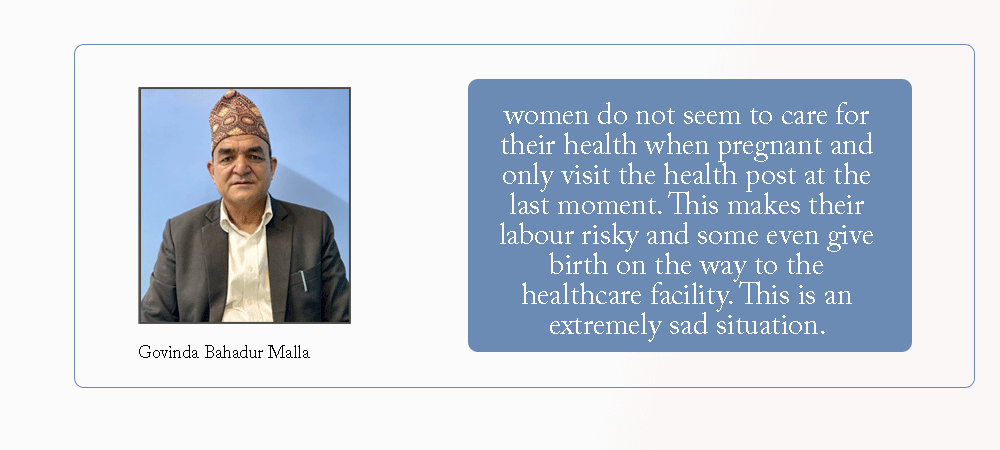

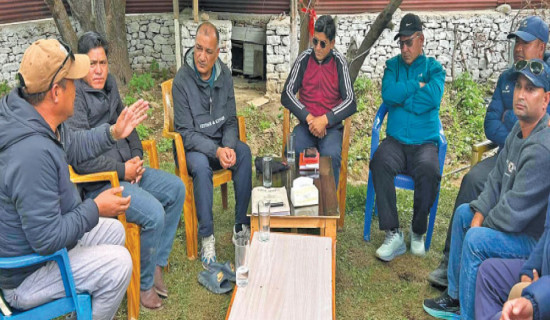
Bajura is one of the nine districts of the Sudurpashchim Province. There are nine local levels in this district, of which, Himali Rural Municipality is one of the remotest ones. The rural municipality is led by Govinda Bahadur Malla, who was elected for a second time in the last local elections from the Nepali Congress. The Rising Nepal's Bajura Correspondent Sher Bahadur Sarki sat down with him this week to talk about the works he did in his last tenure and the plans he has for his present one. Excerpts:
The remoteness of Himali's settlements had kept many children away from education in the past. What is the situation now?
Immediately after assuming office for my first tenure in 2017, I made education my top priority. I made it my mission to ensure that no child was deprived of education because of the geographical remoteness of their settlement and worked to establish basic schools at convenient locations for the communities.
At the time of my first election, many schools in our rural municipality were facing an acute shortage of teachers. We solved that by creating positions and managing teachers for Mathematics, Science, English and other subjects.
We have also been seeing to it that our students get their textbooks in time and that the schools have adequate physical infrastructure.
There are 23 schools in Himali Rural Municipality which taught 4,685 students, as per the admission figures of the Nepali year 2078. I can confidently say that all the children of our local level now have access to education.
We often hear news of women in Himali Rural Municipality having to give birth in risky conditions. Is it because they lack access to health services or because they are not aware of the need to visit health institutions?
We have made great strides in the field of health in the last five years. Every village in our rural municipality has at least one basic health post today. We have also appointed 43 health professionals to rural health institutions. We also conduct door-to-door health camps every month. Yet, women do not seem to care for their health when pregnant and only visit the health post at the last moment. This makes their labour risky and some even give birth on the way to the healthcare facility. This is an extremely sad situation.
So, we have begun conducting awareness programmes and have started seeing positive results. Women have started visiting health posts in time. This allows our doctors to thoroughly assess their situation and, if needed, refer them to better hospitals. If such a referral is necessary, the rural municipality provides financial assistance to the families.
Even when we have had women give birth while on their way to health institutions, we have sent health workers to minimise the risks for the mothers and the babies.
The people of Himali have never had easy access to safe drinking water. Have you been able to change this?
The people here, who, for generations, faced a lack of clean drinking water, now get it easily in their villages. They no longer need to spend an entire day walking and looking for water sources. In the coming days, we intend to further expand access to water by implementing the government's 'One House, One Tap' programme.
Himali also faces a lack of food. People complain that they do not get rice, even if they choose to pay high prices for it. What do you have to say about this?
Food shortage is, unfortunately, a problem of this entire region. Nevertheless, we have tried to mitigate it establishing a food and salt depot. We have established a food sales centre at Dhulachaur, the administrative centre of the rural municipality and have also been working with our residents to find a solution to this issue.
We have also coupled food security with fruit cultivation. We made it mandatory for every member of every household of our rural municipality to plant five fruit trees. And in return, we provide each of them with five kilograms of rice. There are 22 households in Himali.
This has helped provide some relief to the people.
What programmes has Himali Rural Municipality brought for the development of agriculture?
Himali Rural Municipality is known for its apples, walnuts, mangoes and lemons. Since fruit cultivation can be a great source of income, we have sought to encourage the locals to use their barren land to plant fruit trees. I have already explained how we have linked this with food security. We also provide subsidies for animal husbandry and shed management.
It takes over two days to travel from one ward to another ward in Himali. What have you done to improve the roads?
We have seven wards in our rural municipality. Among them, we have already connected wards 4 to 7 to roads and plan to begin work to connect wards 1, 2 and 3 this year. If everything goes according to plan, all wards of Himali Rural Municipality will have road access within the next two years.
Up until 2017, people here had to use mules and sheep to carry loads. Now they can use vehicles. In the past, if people needed to travel to Nepalgunj or Dhangadhi, they needed to walk two days to Martadi to board a bus. That is no longer the case now.
Many settlements in the rural municipality are at risk of landslides. What are you doing to get them resettled?
We can do very little in this regard. We have collected the data of such settlements and have forwarded them to relevant authorities.
You had promised to set up industries to provide the youth with employment opportunities. Is that possible?
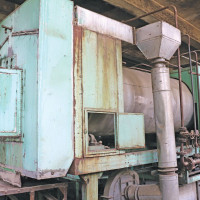
Yes, it is. Three years ago, we established a factory to make elephant fences at Bandhu, Ward No. 7 with an investment of Rs. 10.8 million. This factory has employed around 18 people. The rural municipality will continue prioritising industries.