- Saturday, 9 May 2026

Gas bottlers flouting safety standards, consumers at high risk
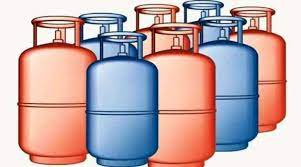

Kathmandu, Feb. 17: Officials have long warned of the danger of installing cooking gas inside the kitchen and lack of adequate safety tools in residential areas.
Jyoti Joshi Bhatta, Deputy Director and Spokesperson for the Nepal Bureau of Standards and Metrology (NBSM), likened cylinder installed inside the kitchen to planting bombs in the house.
Bhatta said although there are 55 bottler companies in Nepal, as many as 15 are yet to acquire the Nepal Standard (NS) certification. The NBSM has been repeatedly directing these bottlers to comply with the safety norms for some three years now.
Publishing a notice in Nepal Gazette on November 14, 2016, the government had directed all domestic gas companies to obtain NS certification from the government within three months. According to the NBSM, out of 55 gas companies, around one-fourth are still reluctant to abide by the guideline of the government body.
NBSM said that bottlers of LPGs will have to follow the prescribed rules on weight, valve, thickness and storage, and scrap old cylinders mandatorily.
“There are 55 companies supplying cooking gas in the domestic market. Many of them have been found to be selling cooking gas in substandard cylinders, posing a risk to users all the time,” Bhatta claimed. According to the NBSM, it has already issued safety norms which is mandatory in order to minimise possible risks to the public from the use of inferior cylinders.
Over the last three years, 12 people have been killed and several injured in over half dozens of incidents involving bad LPG cylinders, according to informal police report in absence of actual data of such incidents, said Nepal Police Headquarters.
According to Bhatta, after the new standard goes into effect, all the 55 gas bottlers will have to receive certification for the cylinders they issue. As per Nepal Oil Corporation’s records, more than 6.5 million cooking gas cylinders are in circulation, 30 per cent of which are suspected to be defective. The companies will also have to provide a bung code, a unique coding marked on the valve of gas cylinders, which is expected to prevent gas bottlers from switching cylinders besides minimising leakage.
Likewise, the companies are required to use safety caps on the cylinder valve. As per the NBSM, 2-3 per cent of the cylinders supplied by the bottlers are unsafe, primarily due to defective valves, Dinanath Mishra, Director General for the NBSM, claimed.
Similarly, hydrostatic testing of LPG cylinders has been made mandatory. It measures the cylinder’s capacity to withstand pressure. Generally, a gas-filled cylinder maintains a constant pressure of 16 MPa (megapascal). However, a standard cylinder has to sustain a pressure of 90 MPa for safety.
In addition, bottlers will have to clean the sludge inside cylinders regularly. If this is not done on time, it adds to the weight of the cylinder (the standard is 14-17 kg) and increases the risk of an explosion. “If the weight of a cylinder goes 2 percent beyond the accepted range, it poses a serious risk to users,” said DG Mishra.
The standard will also prohibit sales of cylinders with thin walls. As per the NBSM standard, the wall thickness of a cooking gas cylinder should be between 2.4 mm and 2.9 mm.
Gas bottlers need to meet security and infrastructural standards to acquire the NS certification. NBSM gives the NS 533 certification to bottling plants after inspecting the safety, security and technical aspects in the processes of receiving the LP gas, filling, handling and storage and delivery of the gas cylinders, cross-checking their weight and compulsorily using plastic cap to seal the valve.
According to the NBSM, it has directed bottling plants to install at least advanced equipment used for compact valve testing and hydraulic testing. “These two testing mechanisms ensure safety of LPG cylinders to a larger extent,” said DG Mishra. Gas bottlers have been complaining of a surge in the costs if they start abiding by the gas certification standards.
Bottlers must submit their plant registration document and ‘Quality Manual’ to the Bureau for NS certification.
Life of cylinder not set
The NBSM has not set the lifetime of gas cylinders. “If the weight of a cylinder decreases by 5 per cent or more, it has to be destroyed immediately,” said Mishra.
According to him, bottlers should carry out the first hydraulic testing 10 years from the date of manufacture. Around 150,000 cylinders are used in Nepal on a daily basis.
Nepal Police Spokesperson and DIG Posh Raj Pokharel said that the Headquarters does not have actual data on the number of accidents caused by explosion of cylinders. Since accident data are not available, the regulators do not question gas cylinder distributors who always claim their innocence and put blame on the users.