- Thursday, 28 May 2026

International Day For Elimination Of VAW
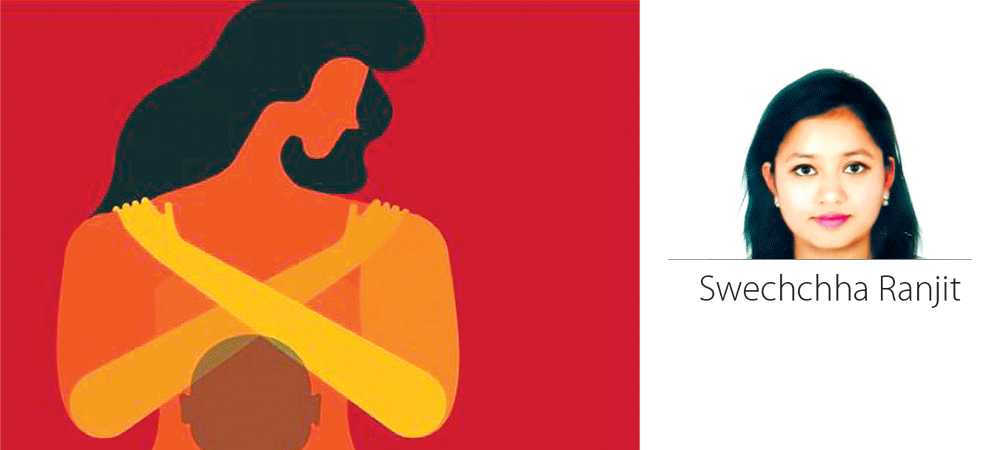

The United Nations General Assembly noted November 25 as the International Day for the Elimination of Violence Against Women (VAW). The day is marked to raise awareness around the world that women are subjected to rape, domestic violence, and other forms of violence. It also aims to highlight the scale of the issue that is hidden.
The level of violence against women is still not under control. Many women are victims of gender-based violence. One in three women worldwide experiences physical or sexual violence. Human trafficking (slavery, sexual exploitation), child marriage, child sexual abuse, stalking, street harassment, and genital mutilation are also faced by many girl children.
Activism to End Violence Against Women and Girls: UNITE!
Five years ago, the "Me Too" movement, founded by activist Tarana Burke in 2006, exploded and sparked global mobilisation, creating a sense of urgency in preventing and responding to violence against women and girls. Since then, unprecedented awareness and momentum have been created thanks to the relentless work of grassroots activists, women’s human rights defenders, and survivor advocates worldwide to prevent and eliminate violence against women and girls.
At the same time, there has been a rise in anti-rights movements, including anti-feminist groups, resulting in a shrinking space for civil society, a backlash against women’s rights organisations, and a rise in attacks against women human rights defenders and activists. Supporting and investing in strong, autonomous women’s rights organisations and feminist movements is key to ending violence against women and girls.
That is why the theme for this year is "Unite!"
The 16 Days of Activism is a campaign, led by the UN Secretary-General and UN Women since 2008, that aims to prevent and eliminate violence against women and girls around the world, calling for global action to increase awareness, promote advocacy, and create opportunities for discussion on challenges and solutions.
UNITE! Activism to End Violence against Women and Girls 2022 aims to mobilise all of society to become activists for the prevention of violence against women, to stand in solidarity with women’s rights activists, and to support feminist movements around the world to resist the rollback on women’s rights and call for a world free from VAWG (violence against women and girls).
While gender-based violence can happen to anyone, anywhere, some women and girls are particularly vulnerable—for instance, young girls and older women; women who identify as lesbian, bisexual, transgender, or intersex; migrants and refugees; indigenous women and ethnic minorities; women and girls living with HIV and disabilities; and those living through humanitarian crises.
Violence against women continues to be an obstacle to achieving equality, development, and peace, as well as the fulfilment of women's and girls’ human rights. All in all, the promise of the Sustainable Development Goals (SDGs)—to leave no one behind—cannot be fulfilled without putting an end to violence against women and girls.
In doing so, the United Nations invited governments, international organisations, and NGOs to join together and raise public awareness every year on that date. Twenty years on, the battle to prevent and eliminate violence against women and girls around the world remains a challenge worldwide.
Despite advocacy efforts, they continue to face challenges, regardless of their background or age. Many girls and women experiencing violence don’t seek help. Though they are suffering, they choose to suffer in silence due to stigma and shame. In the present world of gender equality, we expect the kind of development that is only possible if women are respected equally.
Source: UN CiST College