- Wednesday, 8 April 2026

Passport Pains

Every citizen expects effective and efficient service delivery from the state. People can get hassle-free services from the public offices only when there are sufficient human resources and functioning mechanism in place. This creates an important condition for ensuring good governance in the country. If the people face obstacles in getting basic services from the public offices, they gradually become sceptical of the ability of the state's mechanism and competence of the political leadership. There are several areas where people are unable to receive service in time and are forced to wait for days or months to get their work done. According to a news report published in this daily, people face unintended ordeals to get e-passports promptly owing to the large number of service-seekers and insufficient human and financial resources.
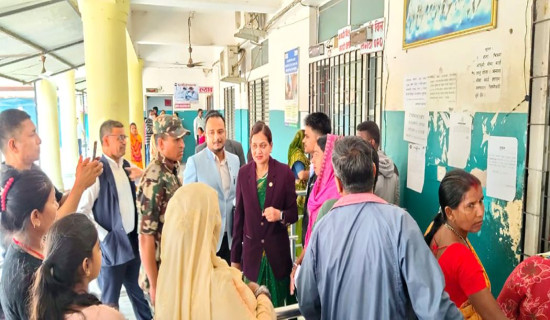
Thousands of people from different parts of the country visit the Department of Passports at Tripureshwor in Kathmandu daily to receive the e-passports. Around 4,000 persons formally approach the office – 2,000 to get passport and 2,000 to give their biometric data. Still many others come to acquire information and fill forms for their passports. They go to the Department after receiving an appointment date. Then they get divided into a number of queues inside the premises of the office for different processes – to submit forms, to get the photo clicked, to renew old passports or to replace the passports that are lost or stolen. In line with the guidelines of the International Civil Aviation Organisation, Nepal government started to issue e-passport on November 17, 2021 with an objective to deliver standardised passports in terms of security. More than 120 countries have already brought the e-passport into use. An e-passport bears important records of its holder, which help to prevent a chance of fraud and crime.
Earlier, Nepal used to provide hand-written and machine readable passports. The issuance of e-passport is a significant step towards ensuring quality service delivery but the service recipients are compelled to go through different problems to obtain them. A service-seeker has to first obtain National Identity Card (NIC) before applying for the e-passport. NIC number must be entered in the e-passport. Those who have acquired NIC undergo harrowing experiences. To get the e-passport, an individual should fill the pre-enrolment form through the Department’s website and apply for a date to visit the nearest offices providing the e-passports for biometric details. A service seeker, who shared his experiences with this daily, said that he tried all hours for days to pass through the pre-enrolment stage and underwent similar difficulty in selecting appointment location. After two-week long efforts, he finally managed to get his e-passport.
The Department officials said that they provide services to 6,000 passport seekers throughout the country based on a quota system because of limited human resource. They also said that the Department started to distribute the e-passports without making proper preparations for it. With the COVID-19 pandemic subsiding, there are increased flow of Nepali students to foreign universities and migrant workers to international labour destinations, causing dramatic surge in the number of passport-seekers. As per the federal set-up, the government has to establish province-level offices to provide passports to the people, which will lessen the pressure on the Department. Besides, the department and passport issuing offices should receive adequate fund to upgrade their resources and recruit additional employees and motivate administration offices.








-original-thumb.jpg)