- Monday, 8 June 2026

Revive Investor Confidence

The capital market is a crucial financial ecosystem where individuals, companies, and governments trade long-term financial instruments to raise funds for investment. It allows investors to participate in a company’s growth and earn returns through dividends or capital appreciation. The stock market, as a major component of the capital market, provides liquidity to securities issued through the primary market by allowing investors to convert their holdings into cash. Widely regarded as a “mirror” or “barometer", the stock market reflects investors’ sentiment regarding the future profitability of publicly traded companies, which are key drivers of economic growth. When the stock market rises, it often signals confidence in economic expansion, whereas a declining market typically indicates fears of slowdown or recession.
In Nepal, however, the NEPSE only partially reflects the country’s economic performance. This is largely due to the limited representation of the broader economy by publicly listed companies, as well as malpractices in share trading. The NEPSE index also tends to be highly responsive to political developments and frequent changes in government. The NEPSE index rose by around 250 points after the election but declined rapidly by more than 280 points following the formation of the new government. The sharp fall in the index has been attributed to government actions against businesspersons allegedly involved in questionable share market transactions. As a result of the steep decline, investors appeared increasingly panicked.
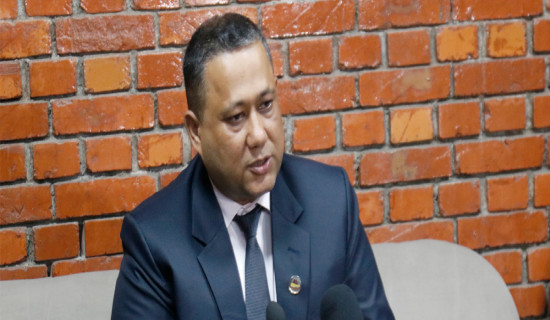
Responding to the market panic, Finance Minister Dr. Swarnim Wagle on Monday said that the government remains liberal towards the share market, which he described as an inherently transparent and professional sector, and that there is no reason for stakeholders to panic. During a meeting with associations of stock brokers and economic journalists, Dr. Wagle emphasised the importance of making the stock market more accessible to institutional investors while also ensuring stronger protection for individual investors. He stressed the need to strengthen the role of the Securities Board of Nepal in protecting retail investors. He also highlighted the crucial role of the private sector, noting that it provides employment to nearly nine out of ten people, and affirmed that the government has no intention of discouraging it. According to him, the government is committed to broadening the scope of private sector participation in the economy. He has clarified that the government’s ongoing investigations into certain businesspersons are long-standing cases that have now reached their final stages.
The finance minister also stated that removing Nepal from the Financial Action Task Force grey list is one of the government’s top priorities. He noted that Nepal’s inclusion on the grey list has harmed the country’s international reputation and negatively affected the investment climate, creating challenges in attracting foreign investment and maintaining investor confidence. Past efforts to exit the grey list were largely limited to paperwork and commitments, whereas the current government has now entered the implementation phase by enforcing necessary reforms, he claims.
The Finance Minister’s positive remarks about the share market appear to have immediately reversed the index into an upward trend, boosting investor confidence. However, if the capital market is to become less volatile and more resistant to price manipulation, share trading must be monitored more effectively. To ensure that share prices truly reflect companies’ performance and to reduce the risk of manipulation, a differentiated price-band system for low-cap, mid-cap, and large-cap stocks could be considered. Such a system may help control excessive volatility, particularly in smaller and less liquid stocks, while improving the credibility and stability of the market as a whole.