- Wednesday, 8 April 2026


TRN Online
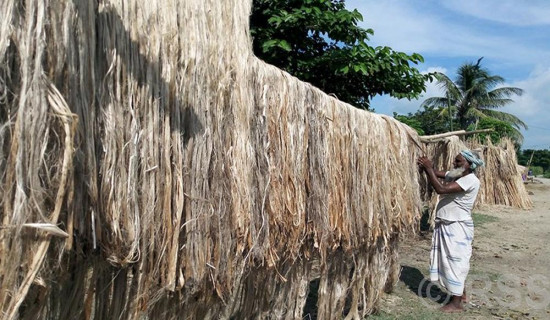
Farmers' attraction to jute farming waning
The farmers in the Tarai-Madhes region are gradually losing interest in the cultivation of jute, which was once the major cash crop of the region. Especially, jute cultivation was widely done in the Sunsari, Morang, and Jhapa districts of the eastern Tarai.

Possibility of light to moderate rain with thunder today
There is a possibility of light to moderate rain with thunder and lightning in some parts of the country today.
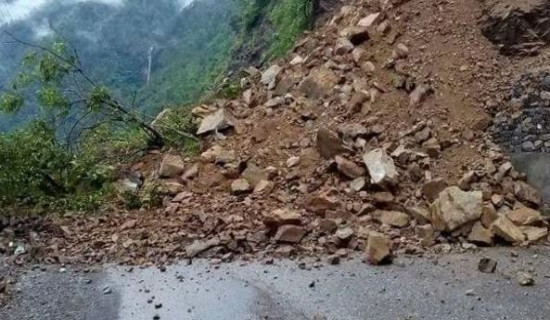
Jamune-Khaireni road blocked by a landslide
The Jamuna-Khaireni road under the Prithviraj highway has been blocked by landslides triggered by incessant rain since Saturday night. The highway has been shut for two-way traffic since this morning after a landslide occurred in Mauryodar, Myagde Rural Municipality-6.

Nepali boxer Ghimire in semi-final of K1 World GP 2022
Nepali young boxer Abiral Ghimire has reached the semi-finals of the 'K1 World Grand Prix 2022' kickboxing competition being held in Japan. He will face Thai boxer Jomthong Chuwatna for a place in the final in the 70 kg super welterweight category.

Madhesh Chief Minister Raut to contest from Parsa No. 1 (B)
Janata Samajwadi Party Nepal (JSP) has recommended the Chief Minister of Madhes Province Dr. Lalbabu Raut as a candidate for the Provincial Assembly Member from Parsa constituency no. 1 (b). In the previous election too, he was elected a member of the Provincial Assembly from the same constituency.

Emphasis on the promotion of diverse Madhesh culture
During a discussion on a working paper presented in the second assembly of Nepal Progressive Professors Association of Madhesh Province in Bardibas of Mahottari recently, the participants emphasized the promotion of different languages, cultures, art, and literature of Madhes.

Maize crop destroyed by armyworm
An outbreak of armyworm has destroyed corn crop in Byas Municipality-13. The farmers are worried about the attack by the armyworm just when the corn plant has started to bear fruit.
Unified Socialist At A Crossroads
With the federal and provincial elections scheduled for November 20, the political parties are bracing for another popular test that will decide their fate for coming five years. The country will see two alliances – one led by Nepali Congress (NC) and another by opposition CPN-UML – pitted against each other in the polls. This is the second general and provincial polls following the promulgation of the new co

Artificially Ripened Fruits May Harm Health
Recently, the Department of Food Technology and Quality Control (DFTQC) issued a notice requesting people not to ripen fruits artificially using calcium carbide and warned consumers that consumption of such fruits may cause serious health effects. Vitamins and minerals are abundant in fruits. They play a vital role in preventing deficiencies of Vitamin A and Vitamin C. A healthy diet containing fruits as a component has been shown to prevent many chronic diseases. For a healthy living, the World Health Organisation (WHO) recommends five servings of fruits and vegetables every day.Fruits have nutritional, commercial, and nutraceutical values and are considered an important component of a healthy diet. There is increased demand for fruits and is instrumental in the use of various artificial ripening methods in their production process. The ripening process determines the health benefits of fruits. The optimum benefits from fruits are obtained from naturally ripened ones. Therefore, fruits should be allowed to ripen on the plant itself. After proper maturity, fruits ripen in nature involving many physical and biochemical events. The process of ripening fruits is irreversible and leads to what is called senescence. Food safetyOnce ripened, the fruits become soft, change in colour, and develop characteristic aroma and flavour, with an increase in sugar level, and consequently, there is a reduction in acid content. During the process of ripening, many factors play an important role including temperature and relative humidity. Food safety and protection of public health should be the top priorities of any government for its citizens. Owing to increased demand and quick return, most fruit sellers and traders use chemicals like calcium carbide for ripening fruits. Calcium carbide itself is toxic to the human body and also it contains traces of arsenic and phosphorus. Banned in many countries of the world, it is freely used in developing countries, including Nepal, for artificially ripening fruits.There are various reasons for artificially ripening fruits and sometimes, it is not possible to wait for the fruit to ripen naturally. Oftentimes, they need to be transported over long distances and if they are harvested in a ripe stage, get spoilt before reaching the market. In such situations, farmers harvest them much before they get ripe and traders then ripen them artificially at the destination using specific chemicals. The ripening process of fruits starts due to the naturally occurring chemical compound called ethylene. In under-ripe fruit, the level of ethylene is very low, but as the fruits mature, they produce more significant amounts of this chemical that speeds up the ripening process. Ethylene regulates the expression of several genes, which are involved in the fruit ripening process. Several enzymes then convert complex polysaccharides into simple sugars and make the skin of the fruits soft. In the artificial ripening of fruits, this process is accelerated using chemicals. Chemicals such as chemically synthesized ethylene, methyl jasmonate, calcium carbide, ethephon, and ethylene glycol are used to replicate the ripening process artificially. Ethylene and methyl jasmonate are reported as non-toxic to human health but are expensive. The most commonly used chemical for ripening fruits is called ethephon (2-chloroethyl phosphonic acid). It penetrates the fruit and decomposes ethylene and initiates the ripening process. Another commonly used chemical is calcium carbide, which produces acetylene, an analog of ethylene. Calcium carbide breaks down the organic composition of vitamins and other micronutrients found in fruits. Besides, it changes only the skin color as the fruit remains raw inside. Industrial-grade calcium carbide is often found contaminated with trace amounts of arsenic and phosphorus, which are toxic to human health. The symptoms of arsenic and phosphorous poisoning include vomiting, diarrhea, weakness, burning sensation in the chest and abdomen, thirst, problems swallowing, burning of eyes, permanent eye damage, and also ulcers on the skin, mouth, and throat.Calcium carbide is a known carcinogen, which is implicated in causing cancer. Even in low amounts, the chemical is known to have harmful effects on the liver and other parts of the body. Sore throat, cough, wheezing and shortness of breath are other symptoms due of calcium carbide. Consumption of artificially ripened mangoes can cause gastrointestinal upset. It damages the mucosal tissue in the stomach and disrupts intestinal function. For a person who is continuously exposed to chemicals for a long time, there is a chance of peptic ulcers. Several studies have shown that calcium carbide affects the neurological system by inducing prolonged hypoxia and causes symptoms like headache, dizziness, sleepiness, memory loss, and cerebral edema,RegulationsIt is possible to distinguish the artificially ripened fruit. Artificially ripened fruits have uniform skin colors in fruits like mango, and papaya, and in the case of banana, the fruit will be yellow while the stem will remain dark green. The artificially ripened fruits have less flavor and shorter shelf-life in comparison to naturally ripened fruits. It is important to note that if the fruits are available before the season, it could mean they are artificially ripened. Washing and peeling the fruits before eating can minimize the risks due to calcium carbide.Despite reported acute cases, an increase in commercial calcium carbide for fruit ripening has been reported in recent times, especially in developing countries, as many vendors may consider the toxic effects/risks as negligible. Consumption of fruits ripened with calcium carbide can cause severe health problems; therefore, the use of calcium carbide for ripening is illegal in most countries. Nepal needs to implement Food Regulations, 2027 B.S. strictly in order to protect public health. The take-home message is to avoid eating fruits off-season and even if eaten, they should be thoroughly cleaned and peeled off.(Dr. Lohani is the clinical director at the Nepal Drug and Poison Information Centre. lohanis@gmail.com)

Province 1 local levels unprepared to regulate three-wheelers as deadline looms
Three-wheeler autos and e-rickshaws have been operating after being registered under Transport Management Offices since a driving license became mandatory to drive the vehicles. At the beginning, they started operating after getting registered with respective local levels. However, as the number of modern three-wheelers started growing rapidly displacing traditional pulling-and-paddle rickshaws, rules for driving license and proper registration in transport management offices were enforced. Vehicle and Transport Management (First Amendment) Regulation of Province 1 has entrusted the responsibility of registering and managing three-wheelers to local levels. Rule 4 (7) of the regulation states that three-wheeler rickshaws registration, renew and transfer will be performed by transport management offices until the end of Ashwin, 2079 B.S. (October 17, 2022). Following the provision, local levels of Jhapa district have already started preparations.

Underground power distribution line starts in Bharatpur
The Nepal Electricity Authority (NEA) has started automating the electricity distribution system of the area under the Bharatpur Distribution Center by undergrounding it and strengthening it. Former Prime Minister and Chairman of CPN (Maoist) Centre Pushpa Kamal Dahal 'Prachanda' and Managing Director of the Authority Kul Man Ghising laid the foundation stone of the construction work on Saturday. Under the Pokhara-Bharatpur distribution system strengthening project, 36 km of 33 kV line, 75 km of 11 kV line and 70 km of 400-volt line will be undergrounded in the main urban areas of Bharatpur.
‘NRB's working capital loan guideline will deteriorate industrial environment’
Confederation of Nepalese Industries (CNI) has said that guidelines regarding working capital loans introduced by the Nepal Rastra Bank (NRB) will deteriorate the industrial and business environment. The Confederation has made it clear that this policy will adversely affect domestic industries and make in Nepal campaign which is also taken ownership of by the government. According to the suggestion of the Confederation, the provision of the guideline such as ‘it is not mandatory for small borrowers who take loans up to Rs. 5 million, increase the limit to Rs. 20 million from Rs. 10 million’ while the system of audit has been welcomed.
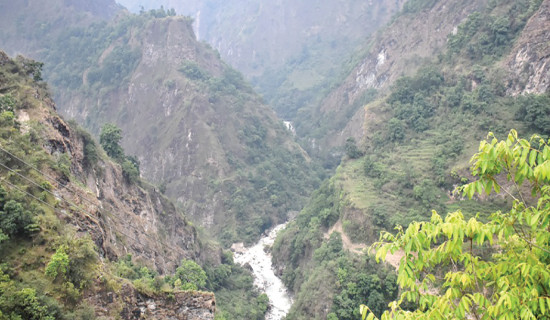
13 hydropower projects in one rural municipality
About 13 large and small hydropower projects within Dhaulagiri Rural Municipality of Myagdi have started the process of construction. The projects that have received permission from the Department of Electricity Development to operate electricity projects in the Myagdi river and its tributaries flowing through the foothills of Dhaulagiri Himalaya have begun the process of construction. The total production capacity of those projects is about 238 megawatts. Despite the possibility of hydropower development in this area, the projects were not able to proceed due to difficult terrain and lack of transmission lines.
-original-thumb.jpg)
Nepal's publicity among Buddhists across the globe a must-Minster Shrestha
Minister for Culture, Tourism and Civil Aviation Jeebanram Shrestha said it was spectacular to make wider publicity among Buddhist communities across the globe to impart a message that Nepal was a country to visit once

UML government after elections-Chair Oli
CPN-UML chairperson and former prime minister KP Sharma Oli has claimed that his party-led government would be formed after the upcoming elections
