- Sunday, 7 June 2026

Rare red panda spotted in Tilagufa

By Premraj Simkhada
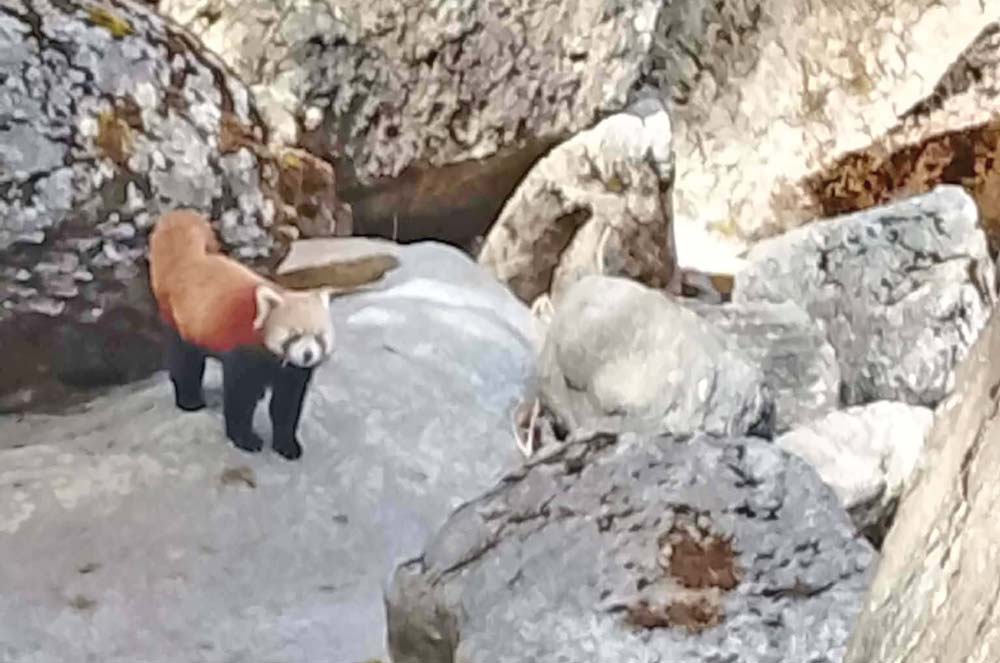
Kalikot, May 17: A rare red panda has been spotted in the Tilagufa area of Kalikot district.
The animal was seen in the Rudubanchu area of the Red Panda Conservation Forest in Tilagufa Municipality-10.
The red panda, known for its reddish body, black legs and white face, is a rare and protected species found in Nepal’s Himalayan and high hill regions. Locals believe the forests and natural environment of Tilagufa provide a suitable habitat for the species.
According to local Dhirendra Thapa, wildlife activity in the forest area has increased in recent years. He said the animal is sometimes seen moving around settlements. He added that the red panda occasionally enters nearby community forests.
Locals have expressed excitement after the sighting, while also stressing the need for stronger conservation efforts.
Forest and environment conservationists said the sighting is a positive sign for biodiversity enthusiasts. They urged local governments and concerned agencies to become more active in protecting red panda habitats, controlling poaching and preventing deforestation.
Mahawai Rural Municipality and Shubha Kalika Rural Municipality, along with Tilagufa Municipality, are considered important red panda conservation areas in Kalikot.
Locals said red pandas are also found in other parts of the district. A local non-governmental organisation has been running conservation programmes at the three local levels.
Red Panda Network and HURENDEC Nepal have been working together in Kalikot to raise community awareness about red panda conservation and habitat protection.
District coordinator of HURENDEC Nepal, Dilip Kumar Shahi, said conservation activities are ongoing in the three local levels, while people from other areas have also been reporting the sighting of red pandas in their regions.
The red panda is listed as an endangered species in Nepal. The animal, which mainly lives in cool bamboo forests, is considered important for maintaining ecological balance.