- Saturday, 30 May 2026

Children suffer from severe malnutrition in Baitadi
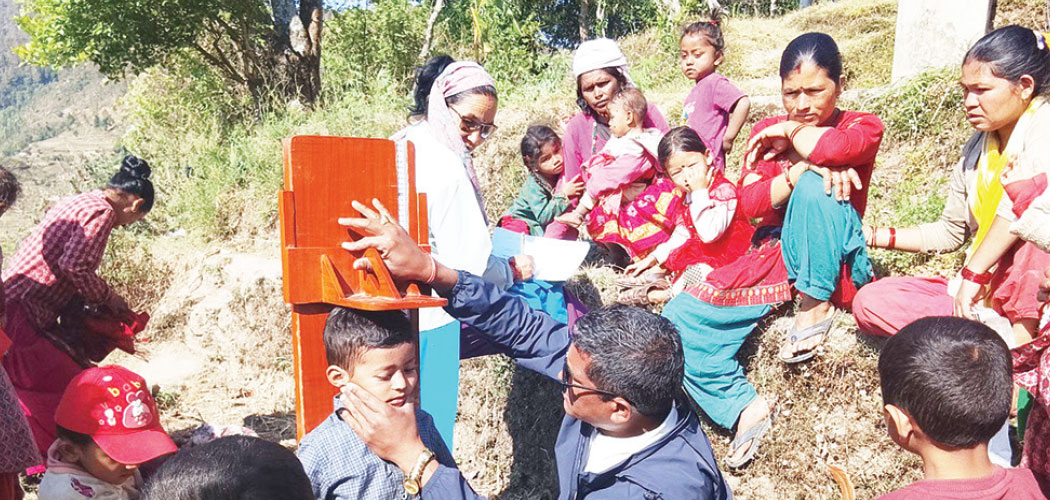
Searching for malnourished children in Ganjari, Sigas Rural Municipality–2.

By Gokarna Dayal,Baitadi, May 7: Children suffering from severe malnutrition are now being identified in almost every ward of the district due to a lack of nutritious food.
In just five days since April 28, a total of 152 malnourished children have been identified in Baitadi. Among them, 19 severely malnourished children have been brought under treatment. A National Nutrition Assessment Campaign is currently underway in the district.
According to Khagendra Karki, information officer at the Health Office Baitadi, the campaign runs from April 28 to May 13 and aims to conduct health check-ups of 22,000 children aged between six months and under five years.
During the assessment, four severely malnourished children were identified in Ganjari of Sigas Rural Municipality–2 alone, said Health Post in-charge Janak Singh Dhami.
He added that treatment has begun and efforts are being made to provide nutritious food to those affected.
According to data, Sigas Rural Municipality is among the ten poorest local units in the country, with a poverty rate exceeding 66 per cent.
Karki stated that the cycle of malnutrition cannot be broken as long as poverty persists.
He described the identification of 152 malnourished children within just five days as an alarming statistic. These children show significantly low weight for their age and height, along with visibly undernourished physical features.
“This year’s National Nutrition Assessment Campaign is also studying malnutrition across different caste groups,” he said. “Of the children identified in five days, 37 per cent are from Dalit communities,” said Karki.
Until last year, 1,934 children in the district were malnourished, including 312 suffering from severe malnutrition who received treatment at health facilities. Chief of the Health Office Baitadi, Tirtha Raj Bhatta informed that campaigns alone will not reduce malnutrition.
“All local governments in the district must focus on reducing poverty and ensuring access to nutritious food for everyone,” he said.
“The effectiveness of child nutrition allowances, maternity incentives, and the Deputy Mayor’s support programmes must be strengthened,” he added. Local governments in the district have been running programmes for new mothers under the Deputy Mayor’s initiative, including schemes like “A flag at the doorstep of pregnant, an egg in hand.”
However, health workers say that distributing items such as ghee, eggs, and blankets alone is not sufficient to tackle malnutrition.
The “Suaahaara” integrated nutrition programme, which had been in operation in Baitadi since 2016 to improve the nutrition of pregnant women and children under two, has now been discontinued.
Supported financially by the USAID, the programme aimed to improve maternal and child nutrition but was halted before achieving its targets.