- Sunday, 31 May 2026

'Imagining Nepal as a Country of 100 People' launched
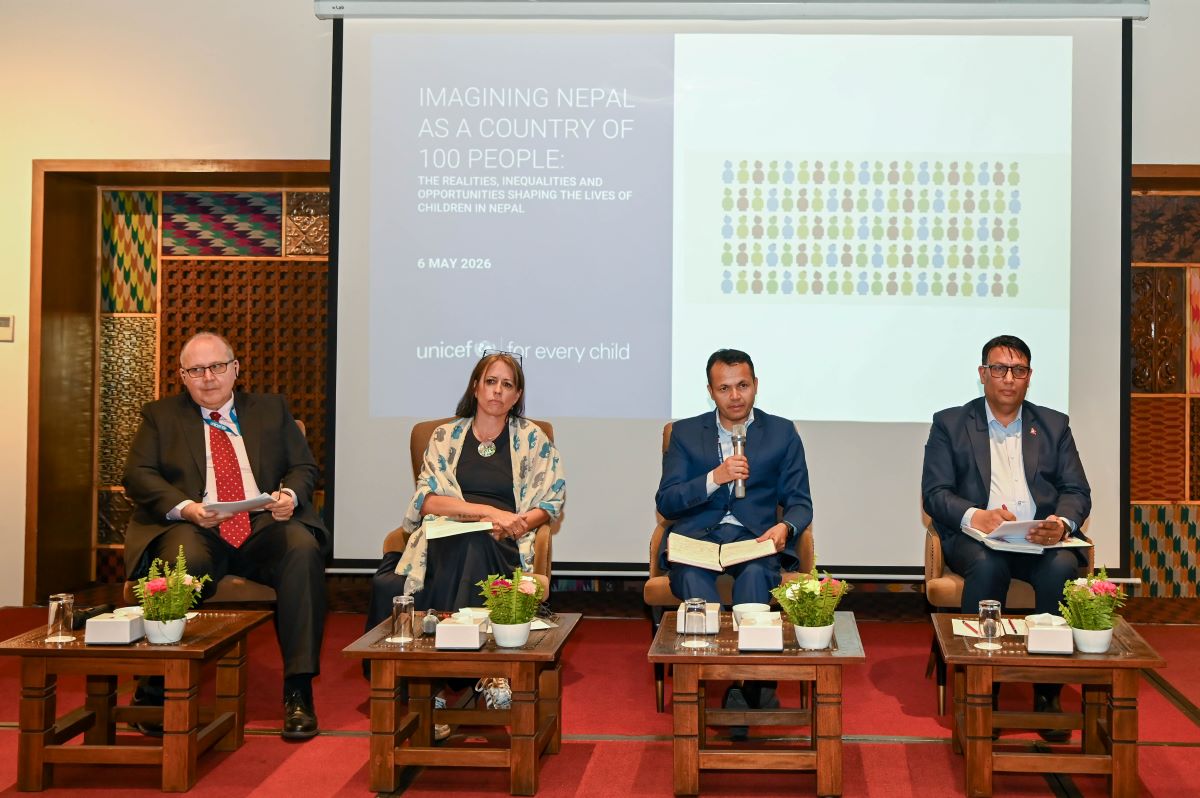
By TRN Online, Kathmandu, May 6: UNICEF today presented a new advocacy brief on the realities, inequalities and opportunities shaping the lives of children in Nepal titled “Imagining Nepal as a Country of 100 People.”
The publication draws on findings from the Nepal
Multiple Indicator Cluster Survey (MICS) 2024–25,
conducted by the National Statistics Office in close partnership with UNICEF.
The brief introduces an innovative way of
understanding data by reimagining Nepal as a country of 100
people. Through this lens, statistics are transformed from abstract numbers
into relatable human realities—making disparities clearer and more urgent,
according to a press release issued by the UNICEF.
“Nepal’s challenge today
is not only to accelerate progress, but to ensure that progress is
fair—reaching every child, especially those who have been left behind,” said Dhundi
Raj Lamichhane, Deputy Chief Statistician of the National Statistics Office.
By simplifying complex data into accessible
insights, the publication sheds light on both Nepal’s progress and the
persistent inequalities that remain hidden behind the national averages. These
include disparities between provinces, urban and rural communities, and across
wealth and social groups.
“At its heart, this
publication reminds us that behind every number is a child—their health,
education, safety, and future,” said Alice Akunga, UNICEF Representative to
Nepal. “While many children are thriving, too many still face disadvantages
that limit their opportunities from the very start of life.”
The brief emphasizes the importance of recognizing
and addressing these disparities to ensure that no child is left behind. It
also goes beyond identifying challenges by outlining actionable solutions for
the next five years. These include both transformative, large-scale investments
and practical, immediate actions that can accelerate progress for children,
stated the press release.
The recommendations are designed to support
government, development partners, the private sector, and the media in making
informed, equitable, and impactful decisions.
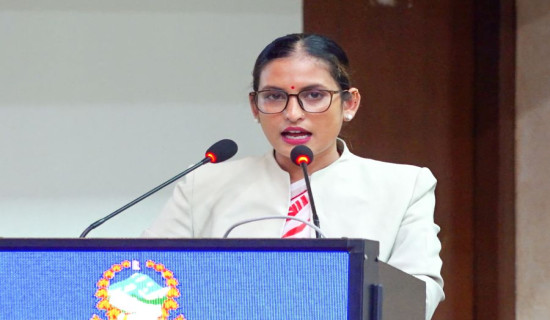
“I want to express our
commitment to this (children's) agenda very deeply and seek your partnership in strengthening
governance. In this year's policy framing, as a member of the National Planning
Commission informing the Ministry of Women, Children, Elderly, People with
Disabilities and Minority, as a member
enabling Ministry of Health and Ministry of Education, together with the
priority to increase our indices in the Social Development Goals 3,
4, 5 and 6, I
have recommended certain policy articulations that prioritize the expansion of
access to better healthcare services in the deep rural areas of Nepal,” said Reshu
Aryal Dhungana, Honorable Member of the National Planning Commission. “So, my
appeal and request to our bigger stakeholder community over here, international
development partners, everybody, is that let's enable this process.”
As Nepal continues its development journey, the
publication serves as a timely and accessible evidence base to guide policy and
investment decisions—ensuring that progress is inclusive, equitable, and
sustainable.
Ultimately, the brief is a call to action. By
imagining Nepal as a country of 100 people, every child
becomes visible, every disparity matters, and every decision carries a human
face.
UNICEF urges all stakeholders to act with urgency
and purpose to ensure that every child in Nepal—regardless of where they are
born—has the opportunity to survive, thrive, and reach their full potential.


-original-thumb.jpg)