- Monday, 27 April 2026

Earthquake and Gen Z uprising on canvas
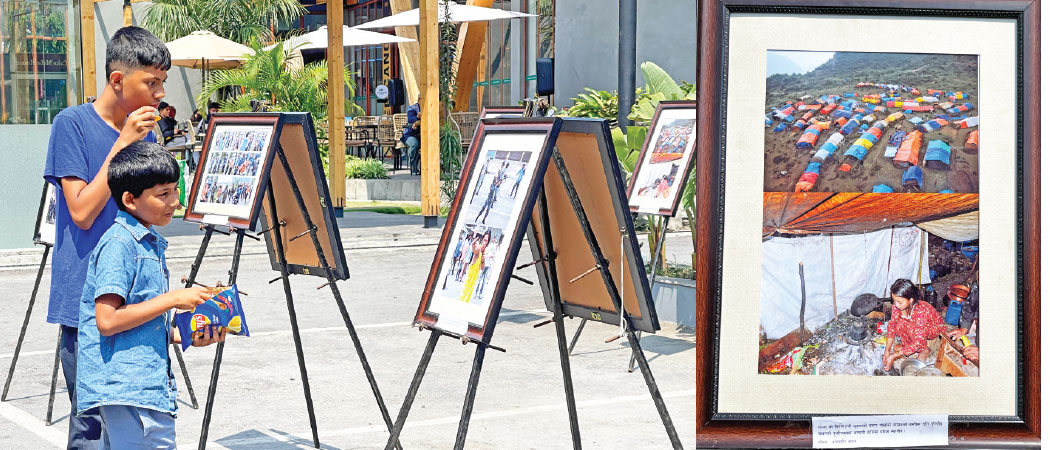

By Santosh Subedi,Kaski, Apr. 27: A small hut made of tin sheets. In one corner, a young girl is cooking food. Scattered around are utensils, clothes, and rags.
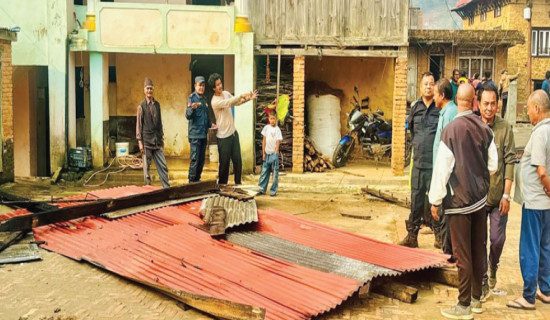
This scene describes the plight of earthquake-affected locals living in temporary shelters at Pupsi Pakha in Pokhara after the devastating earthquake of 2015 damaged the settlement of Laprak in Gorkha.
This particular photograph, taken by Pokhara-based photojournalist Krishna Mani Baral was also displayed at a photo exhibition organised in Pokhara on the occasion of the 99th National Photojournalism Day.
Not only this, nearly one hundred photographs taken by journalists from Pokhara were displayed in the exhibition.
The photographs included scenes of Barpak and Laprak villages in Gorkha destroyed by the earthquake, the condition of those injured in the disaster, youths taking to the streets during the Gen Z movement, as well as collapsed structures and burning government offices.
The photo exhibition portrayed the major events that took place from 2062 to 2082 BS.
Prakashman Udas, Chairperson of Ward- 3 of Pokhara Metropolitan City, said that photography is a medium not only to see but also to experience.
“A photograph is an art that tells history. In every image, someone’s eyes, dreams, and struggles speak. A photograph can be regarded as evidence of any event,” he said.
Dipendra Marsani, ward Chairperson of Pokhara Metropolitan City-9, said that while written words may not always be trusted as true, truth can be found in photographs. According to him, photographs reveal the realities of society exactly as they are.
Ram Gurung, Chairperson of the Nepal Photojournalists Association Kaski, said that exhibiting old photographs helps educate the new generation.
He said that photographs have always carried history, “With the development of photojournalism, diverse genres within the field have also begun to emerge."
At present, wildlife photography, nature photography, sports journalism, parliamentary journalism, as well as event, festival, entertainment, social, cultural, assembly, seminar, and press conference photography have become common, with photo features or lead photographs being used in various forms to make news more effective,” he said.