- Monday, 8 June 2026

SC's order to relocate Lumbini industries sparks uncertainty

By Laxman Poudel
Bharahawa, Apr. 11: The Supreme Court’s order to relocate polluting industries to protect the Lumbini area, a World Heritage Site, has left the industrialists in a state of uncertainty.
The Court’s landmark ruling directs the removal of more than 61 industries operating within a 15-kilometre radius of Lumbini, prompting entrepreneurs to seek clarity on the way forward. The full text of the order, issued in August last year, was made public a few days ago.
With the release of the full verdict, industrialists have forwarded three immediate options. Their first preference is to avoid relocation altogether, stating that they are willing to comply with pollution control standards. If relocation becomes unavoidable, they demand proper compensation along with adequate land arrangements.
The third option, they say, is to pursue a final legal battle by filing for a review.
Rajesh Agrawal, Managing Director of Arghakhanchi Cement and Chair of the Industry Committee of the Federation of Nepalese Chambers of Commerce and Industry (FNCCI), said their primary objective is to avoid relocation if possible. According to him, industrialists are prepared to operate by controlling pollution and meeting the prescribed scientific standards.
As a representative of nearly a dozen industries, Agrawal added, “If relocation becomes necessary, the state must ensure compensation for land, time, and costs.”
Similarly, Rishi Agrawal, Director of Nepal Ambuja Cement, noted that industries in the area provide employment to around 20,000 people and warned that hasty implementation of the decision could have serious social consequences.
“If industries operating with government approval are forced to relocate, the state must bear all associated costs and ensure the security of workers,” he said.
Krishna Prasad Sharma, President of the FNCCI, Lumbini Province, said that while industrialists fully support the conservation of Lumbini, the birthplace of Lord Buddha, the order has created uncertainty and insecurity regarding investment. “A balance between environment and development is essential, but decisions that destabilise long-term investments could discourage the private sector,” he said.
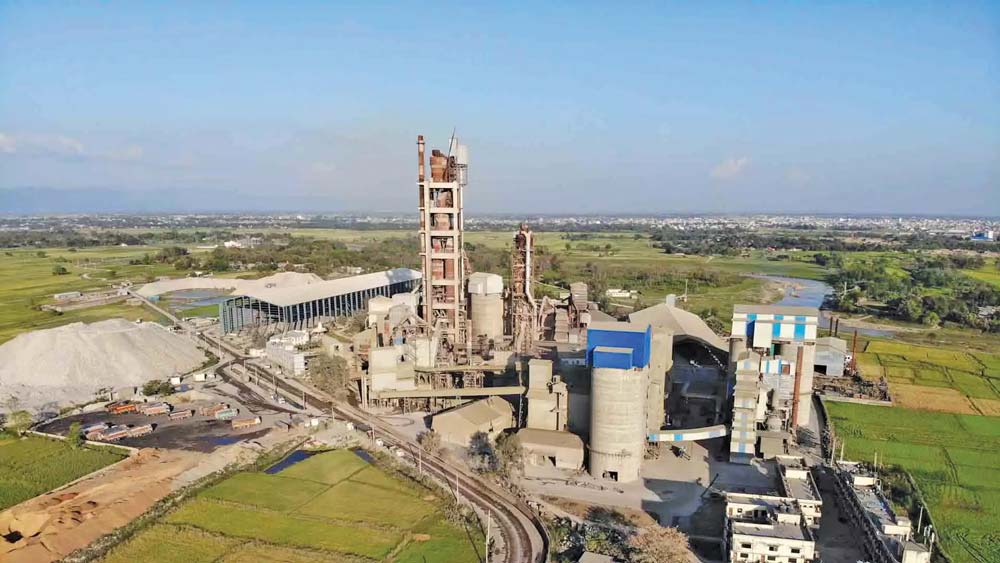
More than 20 large industries—including cement, steel, plywood, plastic, and food processing units—are currently operating in the Bhairahawa–Lumbini industrial corridor, contributing significantly to the regional economy.
Major industries such as Supreme Cement, Brij Cement, Jagdamba Synthetics, Ayush Brick Products, Ajay Brick Factory, P&P Brick Kiln, Sony Cooler Metal, Rajendra Saw Mill, Agni Cement, Reliance Cement, Jagdamba Cement, Jagdamba Spinning Mills, Everest Rolling, Nepal Ambuja Cement, Arghakhanchi Cement, Ambe Steel, Goenka Cement, Siddhartha Cement, Kailash Cement, Vishal Cement, Shyam Plywood, Himalayan Snacks and Noodles, and Siddhartha Oil, among others, operate within the 15-kilometre zone and are likely to be directly affected by the ruling.
Baburam Bohara, former President of the Rupandehi Industry Association, said it is unfortunate that industries established legally, with investments worth billions of rupees and operating for years, are now being asked to relocate or shut down. “A single industry is established on 10 to 15 bighas of land. The government must provide viable alternatives for relocation,” he said.
Meanwhile, Deepak Shrestha, Member Secretary of the Lumbini Development Trust, stated that industrialists must implement the Supreme Court’s order aimed at safeguarding Lumbini’s heritage. “We will also write to the government to ensure enforcement of the order,” he said.
Industrialists are now preparing to coordinate with the government to seek a practical solution. While committing to strictly implementing environmental standards, they have urged reconsideration of the relocation decision and indicated the possibility of pursuing a legal review if necessary.



-original-thumb.jpg)